The WNBA and WNBPA signed the term sheet for a new collective bargaining agreement on Friday, and subsequently announced officially that a tentative deal has been reached.
Both sides reached a verbal agreement on Wednesday morning after over 100 hours over marathon negotiations, but had yet to formalize the term sheet.
The process now moves to the players and the Board of Governors for a vote.
The WNBPA held 90-minute meetings throughout the day Friday, educating them on the details of the term sheet, according to a source familiar with negotiations. The voting process is expected to happen “soon” and last a “couple of days,” this same source said.
Many of the details of the new CBA have been previously reported, including a $7 million salary cap in Year 1 with 20% of it designated for the supermax salary at $1.4 million. The average salary will be $583,000 in 2026. Rookie scale contracts will increase in line with the new salary scale.
The new agreement will also open the door for star players on rookie-scale contracts to earn the standard max and supermax salaries, sources confirmed to Front Office Sports.
The “Exceptional Performance on Initial Contract” rule will allow players to renegotiate the fourth-year of their rookie scale contract to earn the standard max if they were previously named to the All-WNBA first or second team or the supermax if they previously won MVP.
The average revenue share is roughly 20% across the life of the deal.
The new CBA is a seven-year term, with an opt-out after six. By 2031—the opt-out year—the cap is expected to exceed $10 million.
Additional details include changes to the core designation, which will only be applicable to a player with six or fewer years of service beginning in 2027. Housing will be provided for all players for the first three years of the deal. In 2029 and 2030, only players making $500,000 or less will be eligible for team-provided housing, and by 2031, only developmental players will receive this benefit.
Expanded team staffing requirements will require players to have access to additional physicians, athletic trainers, strength and conditioning coaches, physical and massage therapists, and nutritionists. Teams will also be required to maintain facility standards that provide enhanced training and treatment resources.
Cap Exception for Minimum Salaries
The new CBA also includes a salary cap exception for minimum salaries, according to multiple sources.
There are five tiers of minimum salaries in the new CBA. The rookie minimum is $270,000. Players with 1-3 years of service will earn at least $277,500. The minimum for a player with 4-6 years of service will be $285,000, and $292,500 for 7-9 years of service. The minimum for players with 10 or more years of service will be $300,000. All of these numbers will grow each year over the course of the seven-year term.
Under the exception, a team can sign a player to a minimum contract at the fourth tier value or higher but it will only account for $277,500 off the cap sheet. For example, if Liberty forward Isabelle Harrison signed for the veteran minimum in 2026, she would earn $300,000—but it would only account for $277,500 of the team’s cap.
There were two minimum salary tiers under the previous CBA. The veteran minimum (3+ years of service) was $78,831 and the standard minimum (0-2 years of service) was $66,079. Under this system, many experienced veterans saw their opportunities dwindle as general managers worked to fill out the end of their benches with more affordable salaries.
The new CBA includes additional salary cap exceptions for injured players and pregnant players. Teams will also be required to get consent before trading a pregnant player. The minimum roster size has expanded to 12 players plus two developmental roster spots.
Improvements to player benefits include increases to 401(k) plans, life insurance benefits, family planning benefits, expanded mental health coverage, a mental health reimbursement benefit, and a one-time recognition payment for veterans and retired players based on years of service.
The CBA also raises WNBA award bonuses significantly.
A’ja Wilson’s MVP bonus in 2025 was $15,450. In 2026, the MVP will receive $60,000. The Rookie of the Year will earn $15,000, up from $5,150.
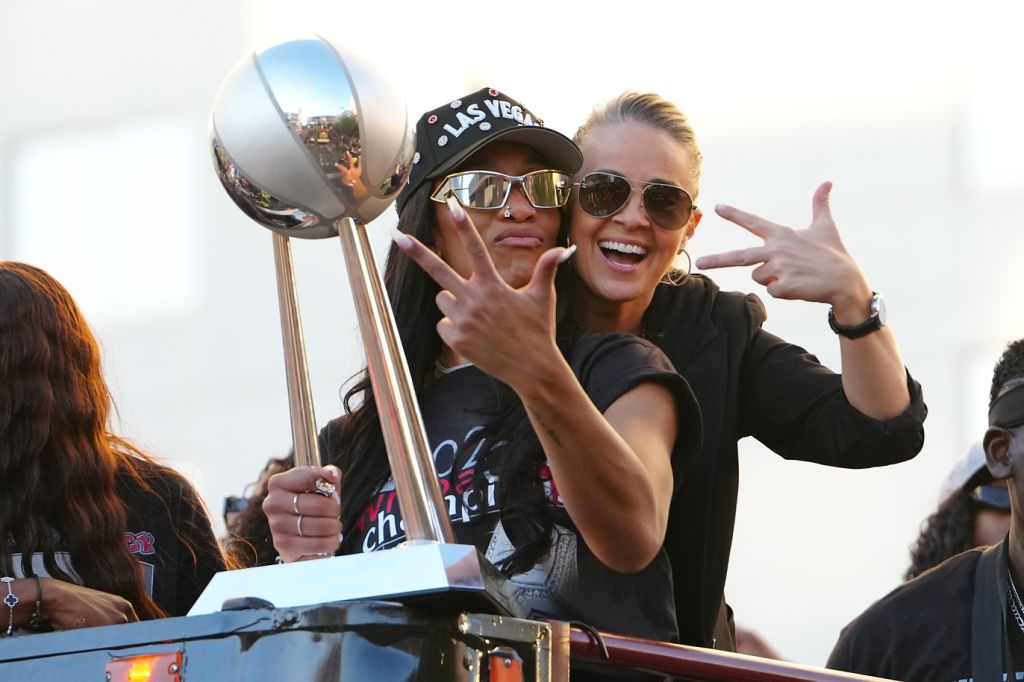
Every member of the WNBA championship-winning team will receive a $60,000 bonus, up from $22,908, and the championship runner-up will earn $20,000 per player.