Vicious Infighting Is Jeopardizing the Future of Women’s Baseball
As college sports continue to break viewership records, the entertainment ecosystem around them is ballooning, too. Athletic departments across the country are rapidly expanding their creative capabilities to produce multimedia content that attracts top-rated recruits, deep-pocketed donors, and new fans.
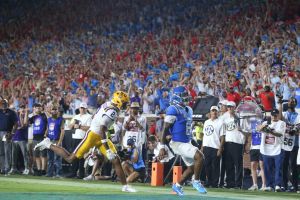
But not all operations are created equal. A few ambitious programs—namely Clemson and LSU—are taking the strategy a step further by turning their athletic department content teams into full-on revenue generation hubs.
While each school is using a different approach, together they point toward a future in which storytelling infrastructure becomes nearly as important as facilities for college athletics. Content, after all, can be distributed and monetized 24/7 in ways that tickets, stadium sponsorships, and other game-day-confined assets cannot.
Clemson: Fully In-House
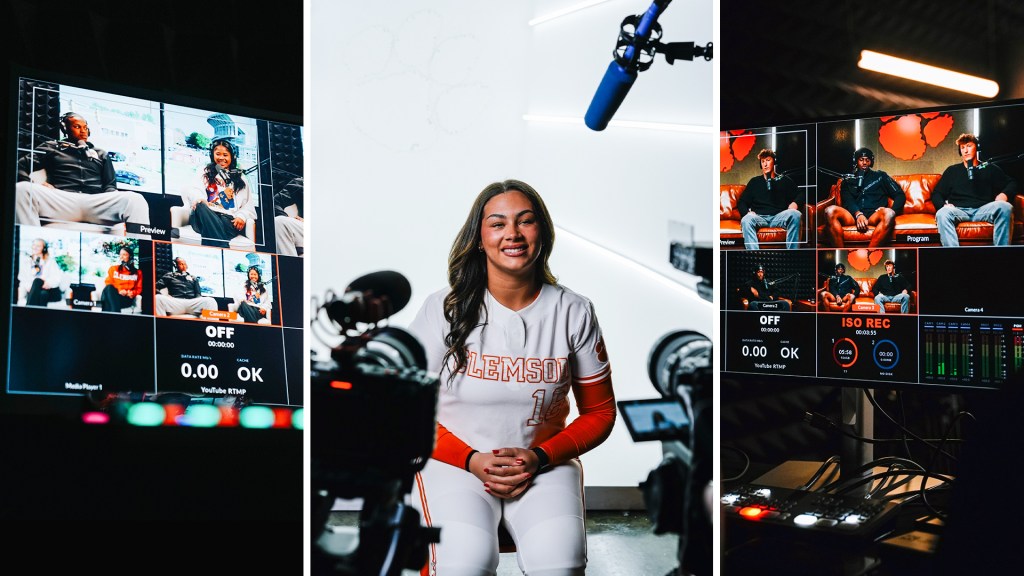
In 2023, Clemson University added a 12,000-square-foot extension to its already enormous Poe Indoor Practice Facility. With two photo studios, two video studios, a podcast studio, and rows of editing bays and sleek conference rooms, the multi-story space looks more like a setup on a Hollywood lot than a college campus.
That’s the point.
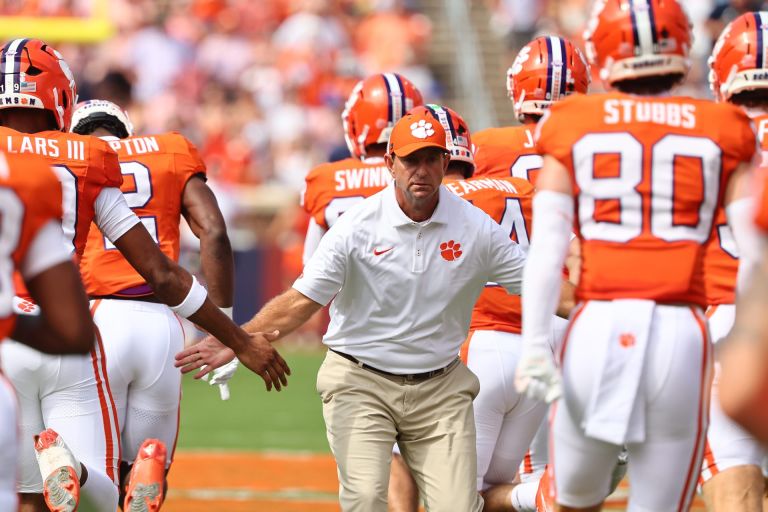
The Clemson Athletics Branding Institute, or “The CAB,” as Tigers head football coach Dabo Swinney nicknamed it, is a symbol of the school’s all-in bet on content creation.
“We look completely different than any other program, and that’s on purpose,” says Kevin Richardson, VP of content at Clemson Ventures, which is a separate entity created by the school’s athletic department in mid-2024 to generate revenue on its behalf—in part through media.
Instead of reporting to an athletic director and a university president, Richardson and his colleagues now report to a chief executive and a board of directors inside Clemson Ventures itself. The operation produces all of its own programming, sells sponsorships tied to this content, and distributes it across multiple platforms.
In less than two years, Clemson Ventures has built a 900-hour content library spanning many formats, including behind-the-scenes team documentaries, athlete-focused original shows including “House Call,” where cameras follow star Clemson players back to their hometowns, and sport-specific podcasts and branded series such as “Clemson Versus presented by Gatorade,” where college athletes compete in low-stakes challenges (think crowning an ultimate cornhole champion).
“Most content teams will make one piece of content, share it on social media, and then it kind of dies. It doesn’t really get repurposed again,” says Richardson. “My job is to figure out how we can elongate the life cycle of every piece of content.”
To date, the answer has mostly been through distribution agreements with regional and national broadcast networks; Clemson treats its content not just as marketing collateral but also as intellectual property it can repeatedly monetize.
“We’ve struck up cadenced licensing deals with Gray Media, which owns Fox affiliates across the South, the ACC Network, and ESPN,” he explains. “Through those, a single episode of ‘House Call’ may run for a certain number of hours on Gray networks in the spring, on the ACC Network in the summer, and then again on ESPN in the fall—all before landing on [standalone subscription-streaming platform] Clemson+.”
Richardson says one recent deal generated several million dollars in guaranteed advertising revenue for Clemson Ventures, on top of licensing fees. But for now, the organization’s most lucrative projects have been branded content created in partnership with corporate sponsors, like the “Versus” series with Gatorade.
Clemson Ventures also generates revenue by acting as a full-scale production agency for individual NIL deals, thanks to its CAB resources. “If a brand wants to work with one of our athletes, we have the ability to shoot and produce everything right here on-site,” says Richardson. “We’ll charge a fee if they want to use Clemson marks or do anything super crazy.”
LSU: Bigger Studio, Bigger Stars
LSU’s content operations remain within the structure of the athletic department—but they’re uniquely large.
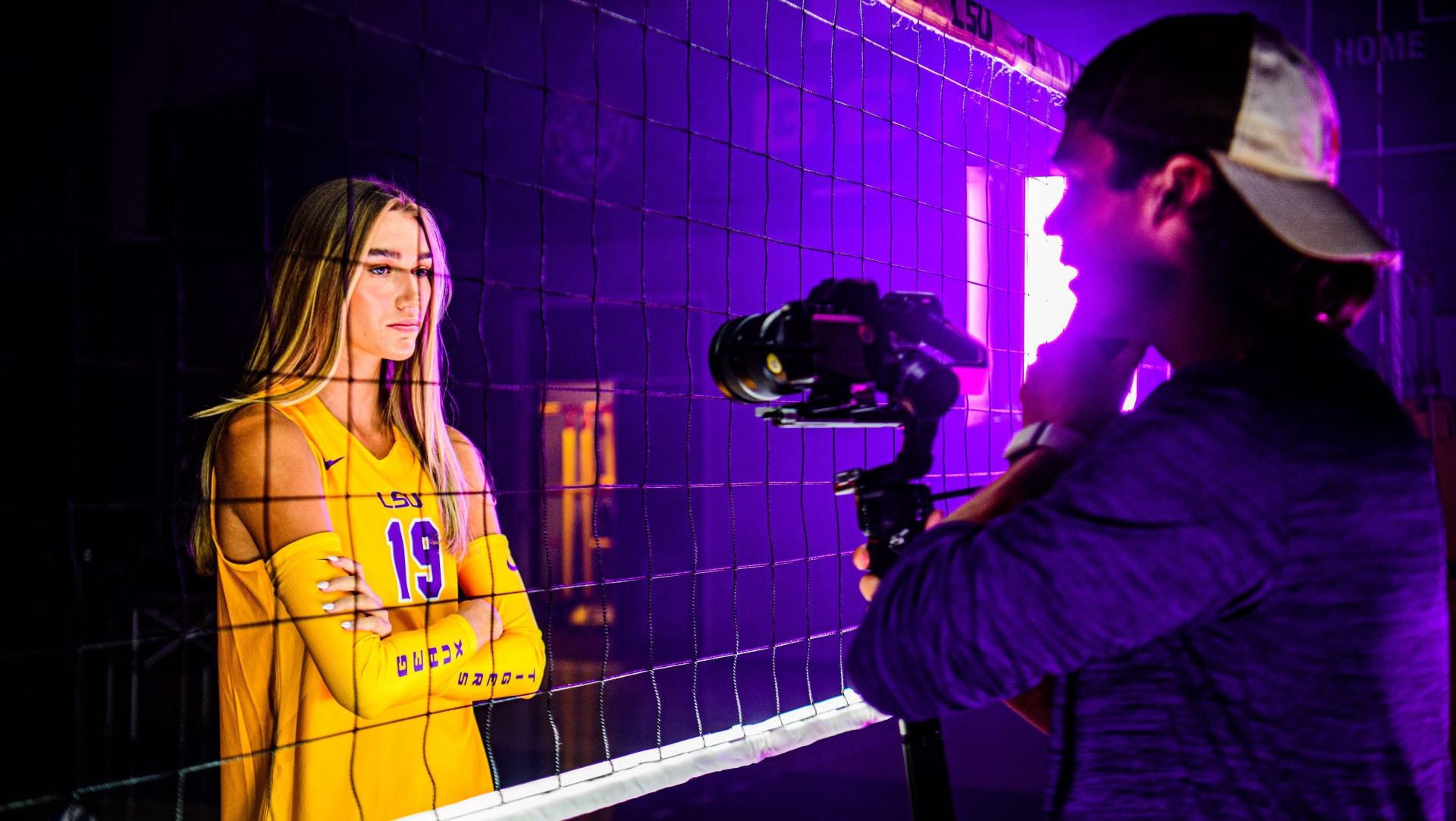
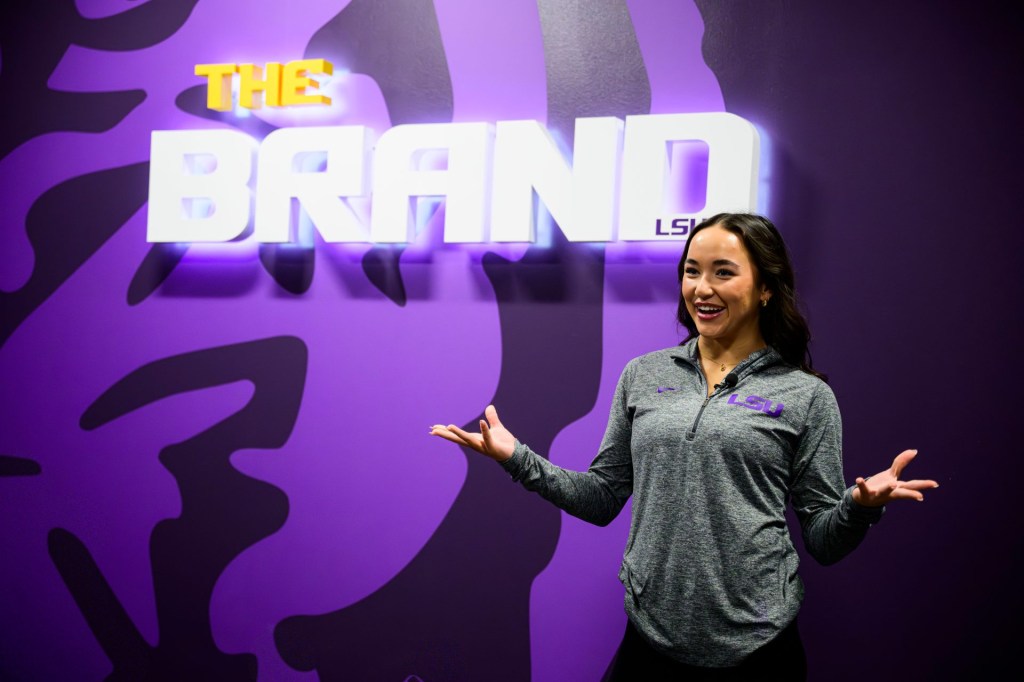
Known formally as The Brand, the school’s creative unit employs roughly 60 full-time staffers and another 90 part-time student interns and graduate assistants across all functions: photo, video, and podcasts, as well as graphic design, broadcast production, and NIL services.
“I feel like we’re running a hybrid between a front office and a marketing agency,” says Zach Greenwell, LSU’s deputy athletic director for external affairs. “We serve both the broader LSU brand and our student athletes.”
The Brand’s scale rivals the creative departments of some professional sports franchises—and even full-fledged media companies. Sarah Ramundt, executive director of creative content at LSU, says it allows staff to specialize rather than juggle multiple responsibilities: “We don’t have to wear 10,000 different hats here. Everyone can show up and do what they’re best at, and that’s a real differentiator.”
The size also allows athletes to get individualized attention from the start. When LSU recruits first arrive on campus, they have a series of “brand discovery meetings” with staffers assigned to their sport to get to know who they are and what they care about. It also enables the content itself to push traditional limits: “We like to take athletes’ natural personalities and interests, and then dial them up to 11,” Greenwell says. “It’s why so many of our athletes become household names while they’re here.”
In the past few years, these names have included Joe Burrow, Angel Reese, Flau’jae Johnson, Livvy Dunne, and Paul Skenes. Greenwell says creating national stars serves the bottom line: “The LSU brand is already extremely strong, but the presence of individual athletes with their own brand power can exponentially increase our valuation and revenue-generating capabilities.”
Like Clemson Ventures, LSU monetizes its content—which also runs the gamut from documentaries and podcasts to social-first video series—through a mix of ad sales, broadcast distribution, and its own streaming platform, LSU+. But The Brand is not structured as a standalone profit center; it’s not financially self-sustaining at this point, and it also outsources some functions, including the execution of certain rights deals, to third-party providers such as Playfly Sports.
Instead, LSU views The Brand as a way to multiply the value of the school’s broader commercial portfolio. Part of that now includes jersey patches: According to Greenwell, The Brand played a “significant role” in LSU’s multiyear, multimillion-dollar jersey patch partnership with Woodside Energy in February, providing all of the creative assets for the announcement.
“College athletics didn’t change for decades, and now it seems to change every five minutes,” Greenwell tells FOS. “No matter what happens moving forward, the power of brand, for both schools and athletes, is going to be more important than ever before. So we’ll be ready.”
The Next Gen
While Clemson and LSU are far along in their operations, other schools are also entering the fray with boundary-pushing setups.
In February, Oregon announced the launch of @GoDucksW, a social media initiative dedicated to spotlighting Oregon’s women athletes. “We were looking at places like ESPN or Barstool that have a main brand account and then so many branches underneath it, and wanted to do something like that,” says Ian McFarland, Oregon’s assistant athletic director of creative and digital media. “We have @GoDucks. We have @GoDucksW now. We may eventually have five or ten non-team accounts that all create value for the Oregon brand.”
As the Ducks build @GoDucksW, McFarland foresees a lot of that value coming in the form of sponsored content with women-centric partners, like makeup or skin-care brands.
And on Tuesday, UConn debuted a partnership with digital media company Overtime to build a content studio on campus. For the duration of March Madness, members of the Huskies women’s basketball team will stop by the space—located inside Gampel Pavilion—among practices and games to produce branded content on behalf of blue-chip brands including Wendy’s and Google’s Gemini.
Of course, no school’s efforts will work unless athletes buy in. Leaders tell FOS they do. Today’s recruits arrive on campus as fully forged digital natives, with many having already spent several years building personal brands online. Media appearances and content shoots are no longer novel; they’re simply another part of college athlete life, like weights, practice, or class.
“They really do love it,” says Oregon’s McFarland. “And they’ve gotten so good at it; they know how to pose, they know what to do.”
Although the content leaders FOS spoke with declined to share specific figures, they say college athletes are getting a healthy cut of the funds their appearances are netting—whether through direct name, image, and likeness payments or revenue-sharing agreements.
They also say they’re being mindful of content overload. “We don’t want to do stuff just to do stuff,” explains McFarland. “Even with revenue generation in mind, we’re going to keep asking ourselves, ‘Why are we doing this? Does this actually serve our audience?’”
For Richardson of Clemson Ventures, the reason is clear. “There’s only so many tickets you can sell, but content is infinite. Through it, we can create new fans every day.”