Max Kellerman, LeSean McCoy Off DAZN Boxing Show As Mario Lopez Joins
Want more from Front Office Sports
in your search results?
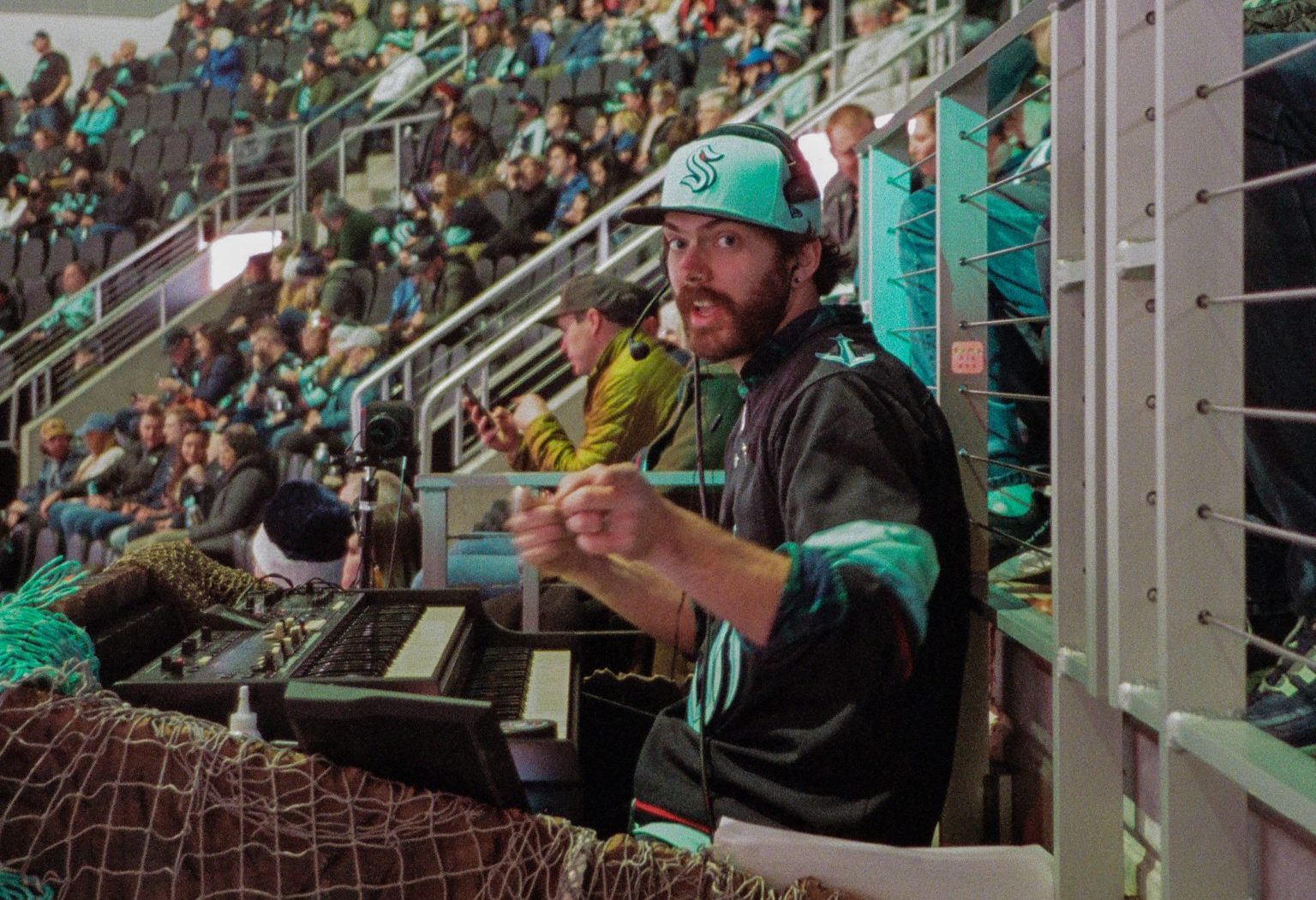
Ben Wooley—better known around Climate Pledge Arena as Benny Drawbars—is back in planning mode.
With the NHL season commencing, the Seattle Kraken’s resident organist is running through his annual prep ritual: learning summer hits, experimenting with new playlists, and stretching his fingers before opening night against the Anaheim Ducks.
“I’m going to try and see if I can’t figure out ‘New Noise’ by Refused,” he tells Front Office Sports. “It’s fun to think of stuff that might be on theme.”
Throughout the past three years, Drawbars has become one of the Kraken’s most unlikely but beloved attractions. Usually decked out in team gear, he perches behind his Hammond SKX Pro organ just beneath the arena’s cathedral-like windows, where fans nestle beside him, craning their necks to watch and listen amid the on-ice action.
Like other organists, his role sits somewhere between entertainer and pop-culture curator. He mixes chants, riffs, and unexpected anthems into a soundtrack for Seattle hockey. Drawbars preps specifically for each matchup, doing recon on opponents, noting special guests, and figuring out ways to incorporate timely references in his music. He’s also cultivated a strong following on his social channels posting game performances and asking Kraken fans for song requests.
Yet for as beloved as they are, sports organists are a rare breed: mostly part-time employees often competing with high-volume digital music productions that keep getting more and more sophisticated.
Still, after the profession’s notable decline in the mid-aughts, the instrument has endured. Its tones remain a fundamental part of many game experiences—the last threads tying today’s hyper-orchestrated spectacles to their roots. At a time of automation and algorithms, the sports organist survives—and, depending on the venue, thrives—as both a throwback and contemporary maestro.
“I liken it to bridging the gap,” Drawbars says. “I’ll get so many 9- or 10-year-old girls who will come up and want to hear Taylor Swift. It’s keeping this tradition alive in ways that it’s still exciting for young people.”
In 1929, Chicago Stadium owner Paddy Harmon installed a massive pipe organ in his approximately 25,000-seat arena, the one of world’s largest indoor venues at the time. Harmon hoped the sounds from the 3,663-pipe Barton organ would fill the cavernous space and elevate basketball and hockey games into full-fledged spectacles. Other venues eventually followed, including Wrigley Field in 1941.
Soon afterward, the Brooklyn Dodgers hired Gladys Goodding as MLB’s first permanent organist. That decision sparked a lineage of women behind the keys—most famously the White Sox’ Nancy Faust. Throughout the 1970s, she transformed the role by introducing walk-up songs, taunting opposing teams, and turning organ music into a dialogue with both fans and players. (Faust came out of retirement this year for a few special games.)
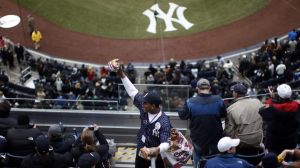
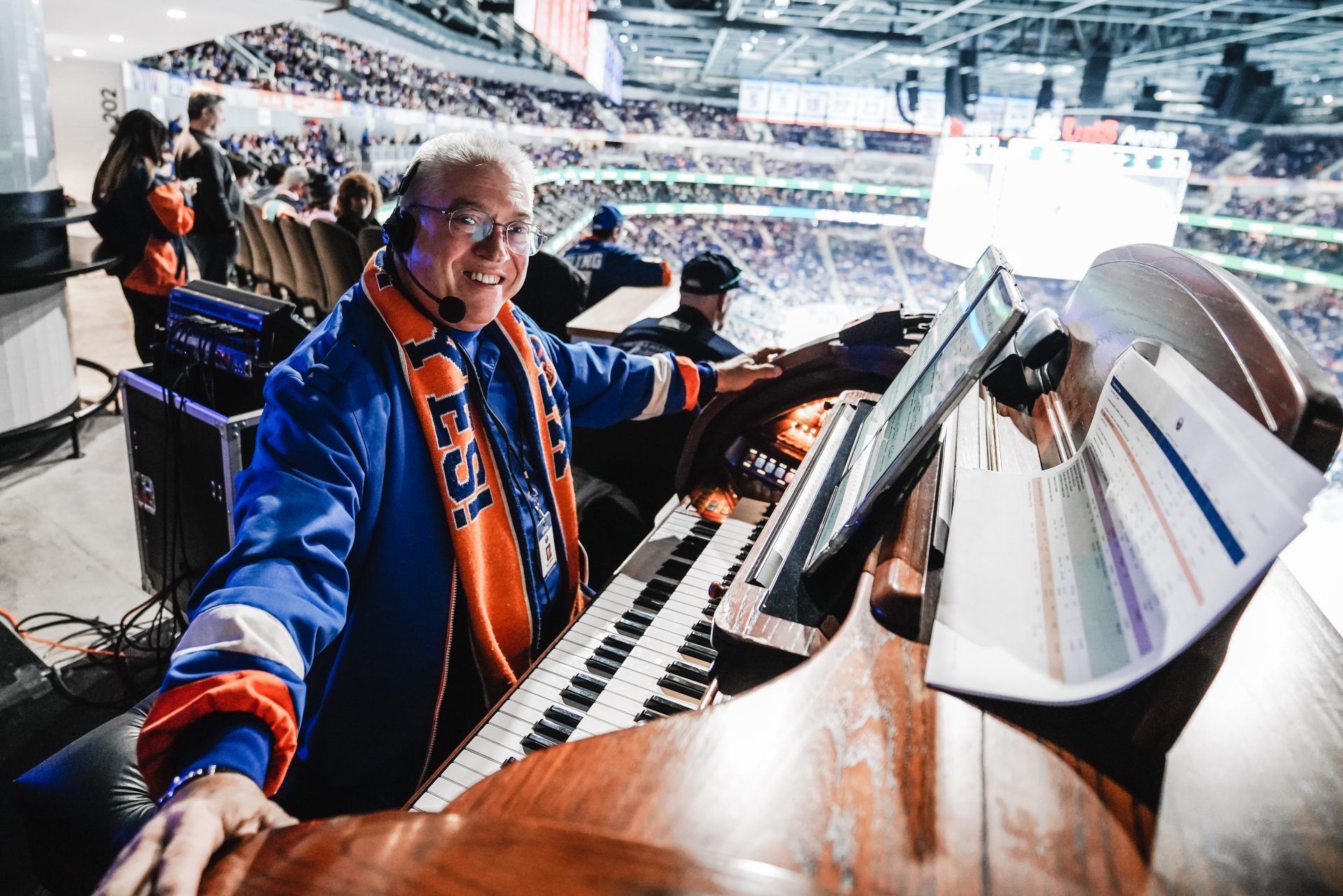
Most organists have had a winding path to becoming fixtures in their arenas. Paul Cartier ended up at the keys for the Islanders and Yankees after a lot of bouncing around. In the 1970s, he began as a fill-in at Nassau Coliseum; by the early 1980s, during the Islanders’ dynastic championship run, Cartier claimed the role entirely.
But in 1985, the team brought in a new music production crew, which didn’t need Cartier’s talents. “I kept my foot in the door that entire span and often got to do a game or two in a season just because somebody was missing,” he tells FOS. His persistence and patience eventually paid off. When Eddie Layton—who had eventually become the Islanders’ organist and spent nearly four decades behind the keys for the Yankees—retired in 2004, Cartier finally had the chance to return to his hometown hockey team and, for the first time, step into the world of baseball.
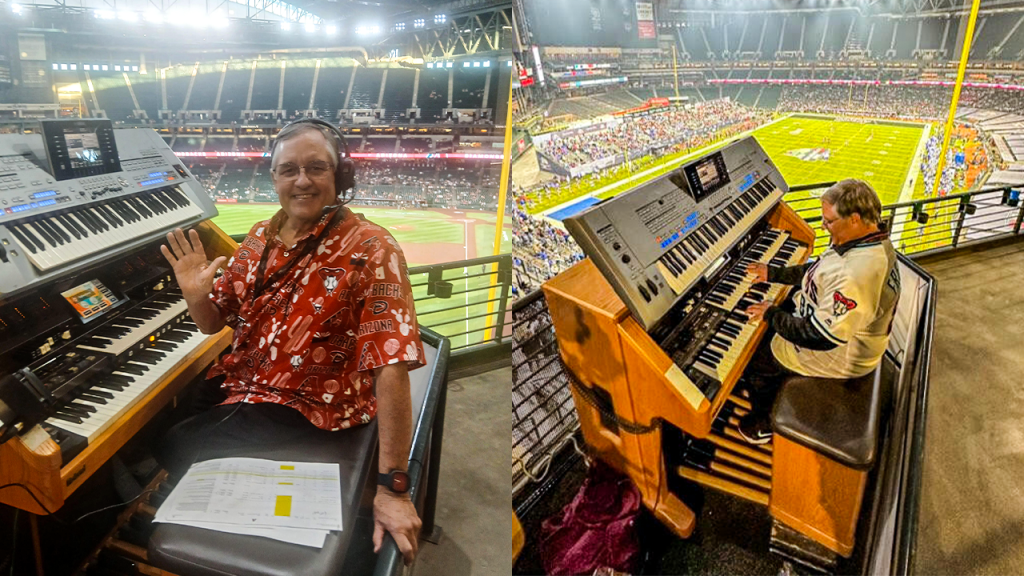
Bobby Freeman also had a unique entry point. In the late 1980s, his wife introduced him to members of Minor League Baseball’s Phoenix Firebirds at her company picnic. The team had an opening, and soon, he was providing medleys from the press box, starting an unlikely 36-year career. Freeman graduated to Cactus League spring training games, then to the Suns, Coyotes, and ultimately, the Diamondbacks ahead of the team’s inaugural season in 1998.
For the past two decades, he’s taken his perch along the left-field open-air concourse, interacting with fans and keeping a close eye on the game. “The fan expectation now is that everything’s on a computer,” he says. “[But] when they walk out and they see a real organ guy, it’s like, ‘Wow.’”
The gig doesn’t pay all the bills. Throughout various parts of Cartier’s tenure with both clubs, he served as a Long Island air-traffic controller and volunteer firefighter. Now retired, Freeman spent his extra hours as a traveling organ company sales representative and product specialist.
Even Drawbars, on the younger side of the organist community at 32, stays close to the niche industry. He spends each day in a shop building church and university organs before heading to the arena in the afternoon. “I don’t know anybody that’s considered full-time,” Cartier says of his organist peers.
Now, loud noise and programmed music is almost constant during games. At swaths of baseball stadiums, snippets of hype songs and cheer-inducers blare between every pitch. At many basketball arenas, a stream of bouncy beats populates every possession. Organists are still playing—but there is increasingly less time for them to do so.
Freeman thinks it dilutes the fan experience. “You’re playing all the loud music, but that doesn’t give the fans a chance to clap,” he says. “They want to clap. They want to stomp their feet. They want to yell, ‘Charge!’ That’s the whole fan experience at a sporting event.”
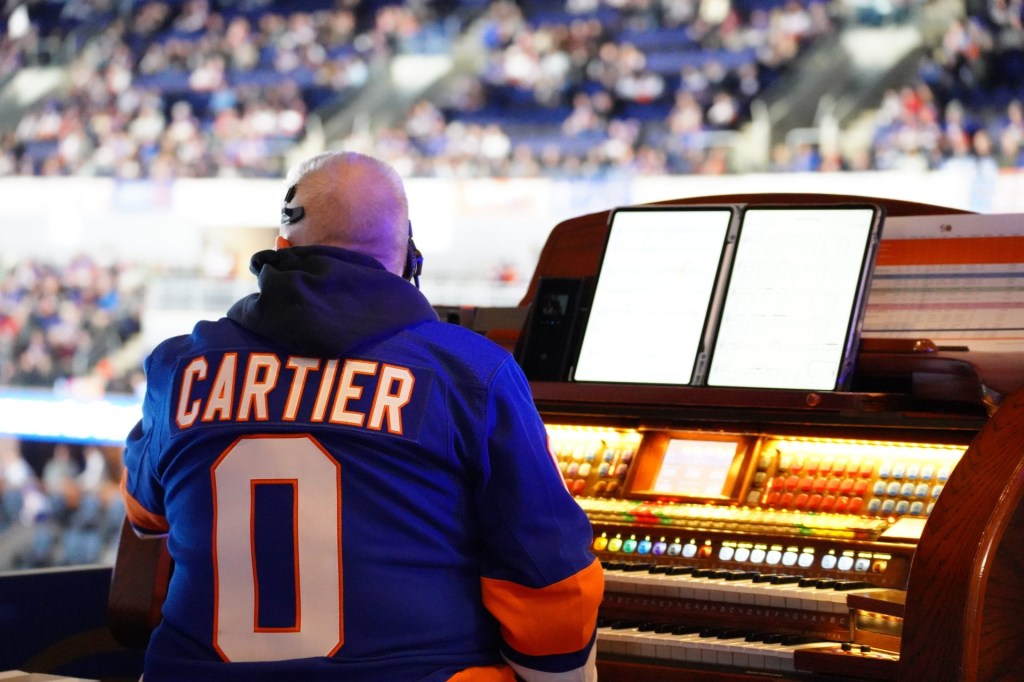
It’s not that venues want to nix the organ sounds, but the shift toward programmed music has caused some to implement digital versions instead.
Last year, the Texas Rangers replaced organist Dustin Tatro with prerecorded electric guitar and electronic riffs. And recently, when Freeman needed surgery, the Diamondbacks implemented “Bobby in a Box” in his absence, using organ recordings that would sometimes awkwardly cut off—instead of smoothly transitioning into—a pitcher’s windup.
These moments make the case for live organists, who sense the rhythm of games and know when to cut in and out before the puck drops or the next pitch is thrown.
“If you’re just going to use recordings, it’s just always going to be the same,” Cartier says. On a recent trip to see the Yankees’ Triple-A affiliate, he recalls listening to “pitiful” digital organ riffs over the P.A. system. “I don’t know where they got their organ tracks, but it sounded like a kid on a little Casio or something.”
The organists think there will always be a place for their instruments: They say nothing can replace their off-the-cuff riffs that immediately seize on momentous occasions, boost energy, and merge past and present. “That kind of human connection is part of what makes sports exciting,” Drawbars says. “And having a human being behind an organ is keeping that connection.”
Download the FOS App
The business of sports, in your pocket.



Scan the QR code to get the app now.