Friday, June 26, 2026

Trump’s DOJ Files Brief in Zeigler NCAA Eligibility Case

Trump’s DOJ appears to be breaking from the pro-athlete policies of the agency under former President Biden.

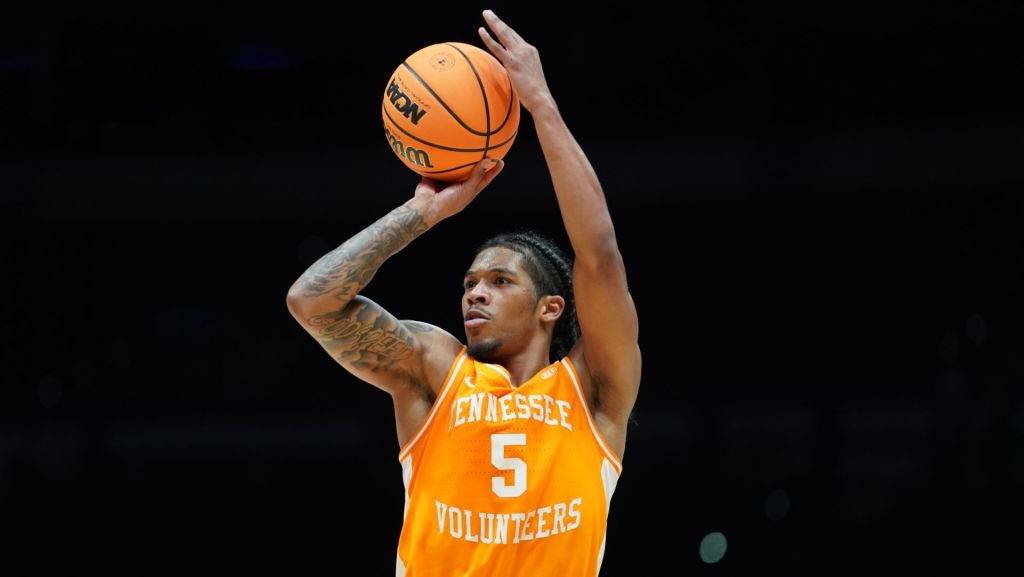
Mar 30, 2025; Indianapolis, IN, USA; Tennessee Volunteers guard Zakai Zeigler (5) shoots the ball against the Houston Cougars in the first half during the Midwest Regional final of the 2025 NCAA tournament at Lucas Oil Stadium.
Robert Goddin-Imagn Images

On Tuesday, the U.S. Department of Justice filed a statement of interest in Zeigler v. NCAA, a case challenging the NCAA’s transfer restrictions on antitrust grounds. 

The brief, which does not take a formal stance but appears to lean in favor of the NCAA, is hardly the first the agency has filed in a college sports case. But it is the first time the DOJ has weighed in on an NCAA eligibility case specifically. 

Trump’s DOJ appears to be breaking from the pro-athlete policies the agency had under former President Biden, demonstrating more leniency when scrutinizing potential NCAA antitrust violations. “It’s definitely pro-NCAA,” Boise State law professor Sam Ehrlich tells FOS.

Given that this is the first college sports antitrust brief filed by this Trump administration, it could suggest a slightly pro-NCAA tilt going forward.

Zeigler v. NCAA was filed in Tennessee federal court on May 20 by former Tennessee men’s basketball player Zakai Zeigler. Zeigler played four years at Tennessee already, and is now asking to play a fifth year within the five-year window allowed under NCAA rules as he attends graduate school. While Zeigler’s is just one of several lawsuits challenging the NCAA’s existing transfer restrictions, the case is unique in that it tries to torpedo the NCAA’s rules that players can only play four full seasons.

If Zeigler prevails, the NCAA could lose one of the core rules guiding its eligibility: that players only have four seasons to compete while they are enrolled in school—whether it be undergrad or one year of grad school.

The DOJ’s statement does not take a position on the merits of Zeigler’s position. Instead, it asks a procedural request of the court: to offer a “flexible” antitrust analysis, or to potentially recognize that some restrictions have competitive justifications, and therefore can be upheld in the eyes of antitrust law. “It takes no great leap of logic to see how rules tying eligibility to education-related requirements could serve that goal,” the brief reads, “though of course the analysis will turn on the evidence presented.”

“It takes some pains to not specifically choose a side, but there are certain passages that might as well have been written by NCAA counsel themselves,” Ehrlich says of the DOJ’s brief. 

For one, the DOJ suggests that the NCAA’s eligibility restrictions may fall into a protected category. The brief cites how schools brought in older “ringers” in the 1800s to play on collegiate teams, and how that harmed undergraduate athletes.

It also praises the value of the “student-athlete” position, Ehrlich notes. The agency said it has a “strong interest in ensuring that student-athletes fully benefit from the nation’s unique system of intercollegiate athletics,” and that the positives are “not limited to financial benefits.”

“It’s definitely pro-NCAA,” Ehrlich says.

However, it’s unclear whether this marks a major shift in antitrust policy during the Trump administration.

Typically, the antitrust division of the DOJ has been less subject to changing political winds, with many of the same attorneys spanning multiple administrations. That was the case during the adjudication of NCAA v. Alston, the Supreme Court case challenging the legality of the NCAA’s restrictions on education-related benefits, which began during the end of the first Trump term and ended during the beginning of Biden’s term. (The DOJ filed a similarly minded brief during the Alston Supreme Court case over educational benefits, and the brief cites this “flexible antitrust scrutiny” position.)

But during the Biden administration, the DOJ often landed more squarely on the athletes’ side. 

In January of 2024, the Biden-led Department of Justice signed onto a lawsuit filed by several state attorneys general challenging the NCAA’s previous restriction on how many times a player could transfer without facing penalties. Ultimately, that lawsuit created the current situation of unrestricted free agency, as the NCAA was forced to change its rules to allow players to transfer as many times as they wanted. 

And in January 2025—just days before Biden left office—the DOJ submitted a statement of interest in the House v. NCAA class action lawsuit, arguing that the proposed settlement would impose caps on athlete earnings that could violate antitrust law. (Notably, Trump’s DOJ did not send a representative to argue its position at the settlement’s final approval hearing in April, suggesting it would not continue to advocate the Biden-era position.)

But now, the DOJ appears to be more lenient when applying antitrust laws to key principles in college sports—at least when it comes to eligibility rules.

This field is for validation purposes and should be left unchanged.

Sign up for
The Memo Newsletter

Get the biggest stories and best analysis on the business of sports delivered to your inbox twice every weekday and twice on weekends.

This site is protected by reCAPTCHA and the Google Privacy Policy and Terms of Service apply.
Linkedin
Whatsapp
Copy Link
Link Copied
Link Copied

What to Read

NBC’s John Fanta: College Hoops ‘Has Never Been Stronger’

The NBC broadcaster said the college basketball product has never been better.
Phoenix Mercury forward Alyssa Thomas (25) scrambles to get up over Indiana Fever guard Caitlin Clark (22) on Wednesday, June 24, 2026, during a game at Gainbridge Fieldhouse in Indianapolis. The Phoenix Mercury defeated the Indiana Fever, 111-109.

Caitlin Clark’s Status Unclear After Apparent Throat Punch, Back Injury

The WNBA gave Alyssa Thomas a one-game suspension on Thursday.

The Clippers Have Innovated the NCAA Draft-and-Stash

No. 57 pick Narcisse Ngoy will still play for Auburn this season.
Apr 12, 2026; New York, New York, USA; Charlotte Hornets guard LaMelo Ball (1) dribbles up court against the New York Knicks during the first half at Madison Square Garden. Mandatory Credit: Vincent Carchietta-Imagn Images

LaMelo Ball Trade Marks New Era for Wolves and NBA

The deal comes hours after the conclusion of the NBA draft.
podcast thumbnail mobile
Front Office Sports Today

6/25/26 – Austin Reaves’s Record Deal, IOC to Pay Every Olympian, Taylor Swift’s MSG Wedding, College Eligibility Lawsuits

0:00

Featured Today

Italian Americans Have Severe World Cup FOMO

Bars and restaurants in Boston, Philly, and beyond are missing the Azzurri.
Indiana Fever guard Lexie Hull (10) celebrates a three-point basket Monday, June 22, 2026, during the game at Gainbridge Fieldhouse in Indianapolis. The Indiana Fever defeated the Phoenix Mercury, 86-77
June 24, 2026

Female Athletes Are Trying to Build the ‘Athleisure of Beauty’

“Performance cosmetics” have emerged alongside the women’s sports boom.
June 18, 2026

Why U.S. Open Host Sites Are on a 25-Year Plan

The U.S. Open has already picked out 22 future sites through 2051.
Wisconsin Badgers forward Laila Edwards, left, and defender Caroline Harvey celebrate after Edwards scored against the Minnesota Gophers in the first period in a game Saturday, February 8, 2025, at LaBahn Arena in Madison, Wisconsin.
June 15, 2026

Two Rookies Are Rewriting Women’s Hockey Stardom

Their platforms are a mutual boon for the PWHL and its players.
Ai sports slop
June 5, 2026

How Sports Became Ground Zero for AI Slop

The category is the perfect breeding ground for AI content churn.
Nov 22, 2025; University Park, Pennsylvania, USA; Penn State Nittany Lions running back Kaytron Allen (13) runs the ball into the end zone for a touchdown during the fourth quarter against the Nebraska Cornhuskers at Beaver Stadium.

Court Hands NCAA, Conferences Win in Fight Over NIL Enforcement

Schools are still going above the revenue-sharing cap.
June 23, 2026

NCAA Approves New ‘Age-Based’ Eligibility Rule

Two attorneys are preparing lawsuits on behalf of at least 50 players.
Mar 16, 2026; Dayton, OH, USA; Detailed view of the “NCAA” logo during the Howard Bison a practice session ahead of the first four of the men's 2026 NCAA Tournament at University of Dayton Arena.
June 24, 2026

Players Sue NCAA Over New Five-Year Eligibility Model

The players are suing after being excluded from the new policy.
Sponsored

How Daktronics Is Reshaping the Modern MLB Ballpark Experience

The technology powering baseball’s next chapter.
Mar 21, 2026; Storrs, CT, USA; Iowa State Cyclones guard Jada Williams (8) returns then ball against the Syracuse Orange in the first half at Harry A. Gampel Pavilion.
June 23, 2026

Women’s Basketball Players Blast College Sports Bill

“Where we disagree is—Congress shouldn’t be deciding who makes those rules.”
Sen. Ted Cruz (R-TX) listens as Sen. Maria Cantwell (D-WA) speaks during a hearing on the “Protect College Sports Act” before the Senate Commerce Committee, on Capitol Hill in Washington, D.C., U.S., June 3, 2026.
June 18, 2026

Ten Pro Sports Unions Criticize Bipartisan College Sports Bill

“The bill further silences college athletes’ voices on the job,” the AFL-CIO said.
Jan 28, 2025; Washington, DC, USA; Senator Ted Cruz (R-TX), Chairman of the Senate Committee on Commerce, Science, and Transportation, begins a hearing to examine the Panama Canal and its impact on U.S. trade and national security, focusing on fees and foreign influence on Tuesday, January 28, 2025. Mandatory Credit: Jack Gruber-USA TODAY
June 18, 2026

Landmark College Sports Bill Advances Toward Senate Vote

The SEC and Big Ten remain opposed to the bill.
Sen. Ted Cruz (R-TX) listens as Sen. Maria Cantwell (D-WA) speaks during a hearing on the “Protect College Sports Act” before the Senate Commerce Committee, on Capitol Hill in Washington, D.C., U.S., June 3, 2026. REUTERS/Evan Vucci
June 16, 2026

Amended College Sports Bill Leaves SEC, Big Ten Concerns Intact

The amended bill doesn’t alleviate the Big Ten and SEC’s biggest concerns.