Want more from Front Office Sports
in your search results?
Judging by its fiscal fourth-quarter and first-quarter results, the biggest sports brand in the world has much to fix. Shares are down 25% year to date. It’s lacking in compelling new products, too busy whittling down its glut of unsold Air Force 1s and Air Jordans.
“Nike sucks right now,” WearTesters told their 880,000 YouTube subscribers. Nike “ran off course,” Business of Fashion wrote. The Drum pinpointed Nike’s “dwindling cultural equity.”
To read these headlines, you’d think the once-iconic brand is headed to the grave.
Hardly.
Nike is bruised, but still owns an undeniably dominant slice of the sportswear market globally, as well as in most of the key individual markets, says David Swartz, retail analyst at Morningstar. The brand, he says, is “going through a tough period now, but I anticipate that it will come back strong. It still has all the advantages in terms of exposure, awareness, marketing, product development, and distribution.”
Certainly some challenger sportswear and sneaker brands—Hoka, On—have caught fire and seen rapid success recently. But the industry is big enough for multiple successful companies, Swartz says. The sportswear market is not winner takes all. And Nike isn’t going anywhere.
The company’s recent litany of problems has been well documented but bears repeating.
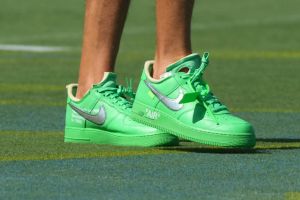
First, during the COVID-19 pandemic Nike decided to pull back on its new product pipeline. That meant it leaned hard on perennial top sellers, essentially flooding the marketplace with the Dunk, Air Jordan 1, and Air Force 1 models. After a couple of years, those weren’t selling out as quickly as they had.
Second, in another pandemic overcorrection, Nike took its products out of many of its trusty brick-and-mortar retailers and “naively believed they would recapture all that business on Nike.com,” says Matt Powell, senior advisor with BCE Consulting. The company sold fewer products, which “forced them to be more promotional on their website,” Powell says, adding that discounting isn’t healthy for a brand known to be aspirational.
When customers constantly see a brand’s products marked down, it cheapens the image.
Third, Nike went through multiple aggressive staff reductions this year under previous CEO John Donahoe and lost many years of institutional knowledge. That has landed “some inexperienced people in positions of power who are not necessarily making the right decisions,” says Powell.
In June the Beaverton, Ore., sportswear giant reported a 1.7% decline in revenue for its fiscal fourth-quarter 2024, said its full-year outlook would miss expectations, and warned of a 10% sales decline for its first quarter; on Oct. 1 it reported the anticipated 10% drop for the quarter that encompassed July through September and withdrew its guidance entirely for the year.
With all those problems, Nike’s global market share (for sneakers and apparel) has dropped less than one percentage point, from 17.1% in 2022 to 16.4% in 2024, according to Euromonitor data. Its closest competitor, Adidas, holds a 9% market share (down from 9.5% in 2022, but up slightly from 2023).
After that, it’s Chinese sportswear brand Anta with a 3.7% market share, and Puma with 3%.
Nike’s size and budget are key to its long-term competitive advantage. “The brand has no parallel in history when it comes to North America size/scope,” BMO Capital Markets analysts wrote in an Oct. 7 note. “With a leading ad budget fueling industry-leading dollar growth, we expect ongoing gains.” The investment bank rates Nike an Outperform. (Wall Street analysts are, for the most part, neutral to positive on the stock.)
“I don’t think Nike gives up the No. 1 spot, but it wouldn’t surprise me if they have a smaller share in the U.S.,” Powell says. “They already have a smaller share than they had five years ago.” The distance between Nike and its competitors is still vast enough for now that it can stand to lose a percentage point of market share.
The ‘Cool Factor’
Many Nike onlookers have blamed Donahoe, shown the door last month, for letting the retailer lose some of the cultural relevance it once had in spades. Regardless of how much of that can be put on one executive, “cool factor” is an elusive badge that can be hard to win back once it fades.
“Nike isn’t going anywhere, but when you compare Nike to how it was from around 2000 to 2010, that was a really innovative period for the brand,” says Mike D. Sykes, who writes “The Kicks You Wear,” a sneaker newsletter. “The basketball shoe was booming, it was the start of LeBron James’s career, the end of Michael Jordan’s.”
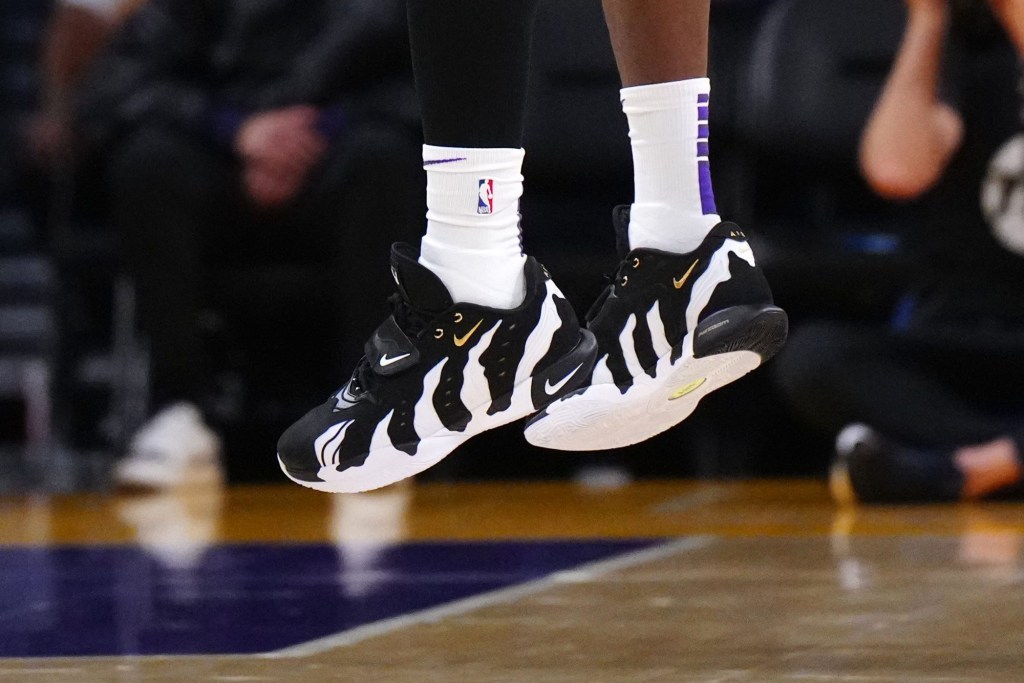
Part of the problem for Nike now, Sykes says, is that it has strayed from putting athletes at the center of the brand’s story. From around 2015 until today, the brand has partnered mostly with so-called “macro influencers” like rapper Travis Scott and fashion designer Virgil Abloh. Around the same time, Adidas went big on its partnership with Ye (formerly Kanye West).
“I think that stuff still works; it still has a place,” says Sykes. “But I think it’s important for Nike as a brand to rediscover its identity in athletic gear—its core identity.”
For any consumer-facing brand to be considered cool, it has to own the teenage demographic. And here, too, the dynamic reflects how the larger market looks despite Nike’s recent fumbles. According to investment bank Piper Sandler’s semiannual teen survey, which asks teenagers about their consumption habits, Nike remains the No. 1 brand for all teens in both apparel (34% share) and footwear (59% share).
Nike’s “mindshare” with teens fell year over year, but to illustrate the gap between Nike and others, consider that Adidas is the No. 2 footwear brand with just a 7% share.
Nike and Adidas have been the No. 1 and No. 2 for years, but don’t look now: The footwear brand that gained the most mindshare with teens in this year’s survey was 114-year-old Boston brand New Balance.
Download the FOS App
The business of sports, in your pocket.



Scan the QR code to get the app now.