The NCAA women’s basketball tournament is entering its fifth year since adopting the March Madness moniker with significant momentum.
The tournament has seen extensive growth sparked by back-to-back title runs from Caitlin Clark and Iowa in 2023 and 2024, including the 2024 title game that drew 18.9 million viewers to the 2024 title game, four million more than the men’s game.
Like the men’s tournament, the women’s side has also been given a unit reward system, which gives conferences a monetary reward for programs qualifying and advancing in the tournament.
But the women’s tournament still has plenty of room to grow, especially with names like Clark and Paige Bueckers in the WNBA, and JuJu Watkins sidelined with an injury.
FOS compiled a few storylines to watch throughout the tournament.
First Four Showdown
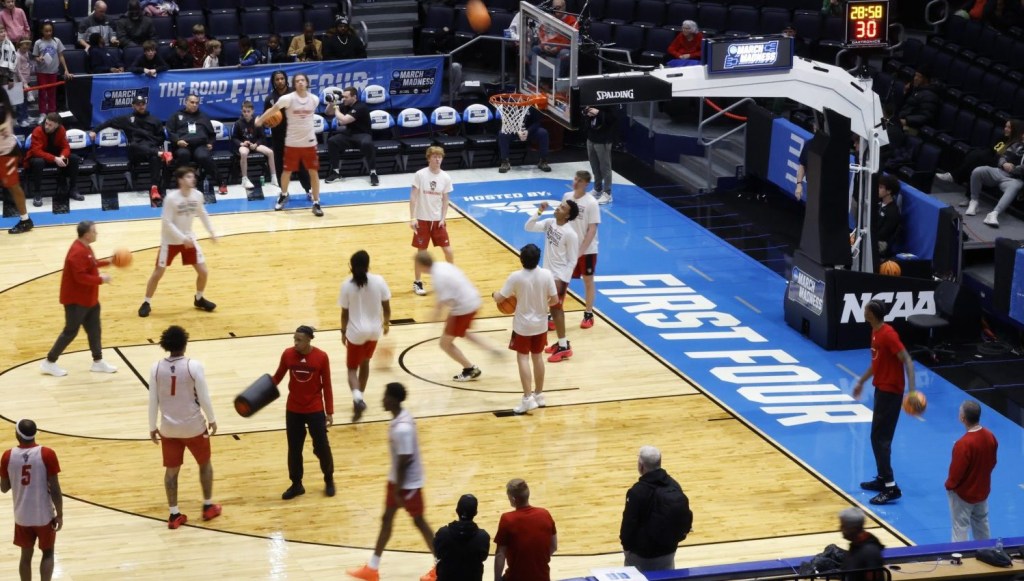
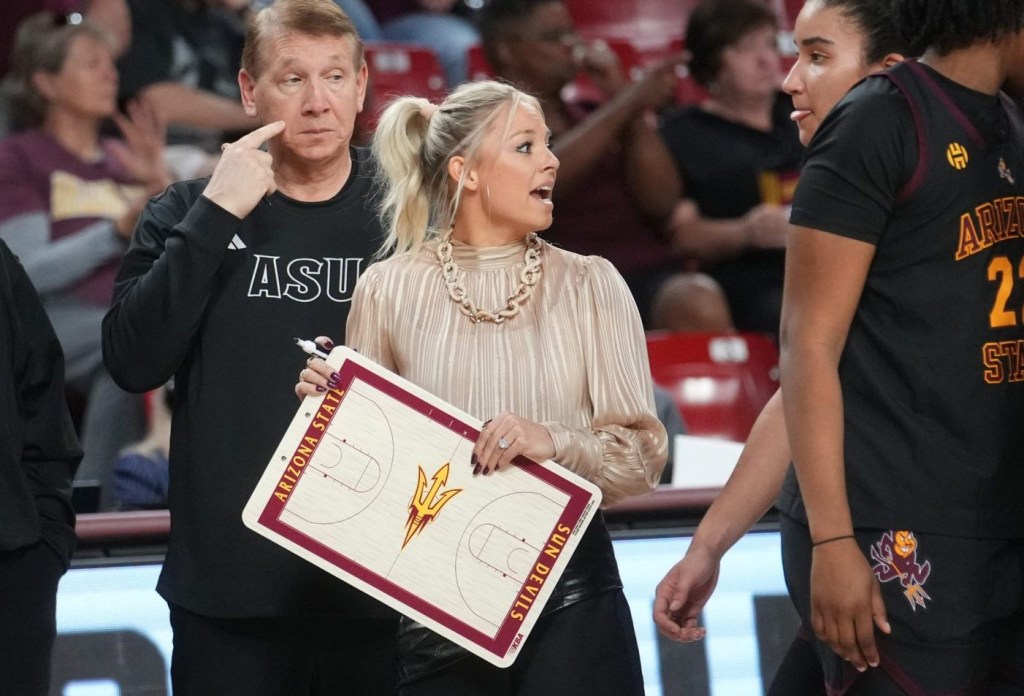
While the First Four portion of the tournament is often filled with throwaway games, there is a notable matchup between two programs making a much-awaited return to the Big Dance: Arizona State and Virginia.
Arizona State is dancing for the first time since 2019, sparked by the hiring of head coach Molly Miller. The Sun Devils finished with a 24–10 record (9–9 in the Big 12), after finishing 10–22 last season. It’s their first winning season since 2020–21.
It’s only the second time since 2010 that Virginia has qualified for the tournament, but the program used to make deep runs perennially. Dawn Staley led the Cavaliers to the 1991 title game, along with two other Final Four appearances.
After finishing near the bottom of the ACC in the 2021–22 season, the program hired head coach Amaka Agugua-Hamilton, who has slowly lifted the program back to relevancy.
A trip to the First Four is likely already a success for both programs; a win would be icing on the cake.
Early-Round Upsets?
The viewership numbers for the tournament final are unlikely to immediately replicate the highs of Clark’s peak. Last year’s championship game between UConn and South Carolina drew 8.5 million viewers, behind only Iowa’s two title runs for the most-watched title games, but still 10 million less than 2024.
But the true growth for the tournament comes from its early rounds.
The first two rounds of the tournament trailed only 2024 as the most watched. It helped that ESPN started putting first- and second-round women’s basketball games on its main networks in 2020, and it has continued to expand that coverage in recent years.
The problem with the early rounds of the women’s tournament is that there are not nearly as many upsets as in the men’s tournament. Last year, only six lower seeds won games—and none were significant upsets. There were also huge blowouts—including a 69-point win from UConn over Arkansas State in the first round.
There’s little to suggest that anything will change this year, but any changes could signal potential growing parity in the sport.
Undefeated Season
The four No. 1 seeds of the NCAA tournament are the same four teams that made the Final Four last year: UConn, South Carolina, UCLA, and Texas. It’s no surprise, considering the history of each of the programs and the stars some have kept.
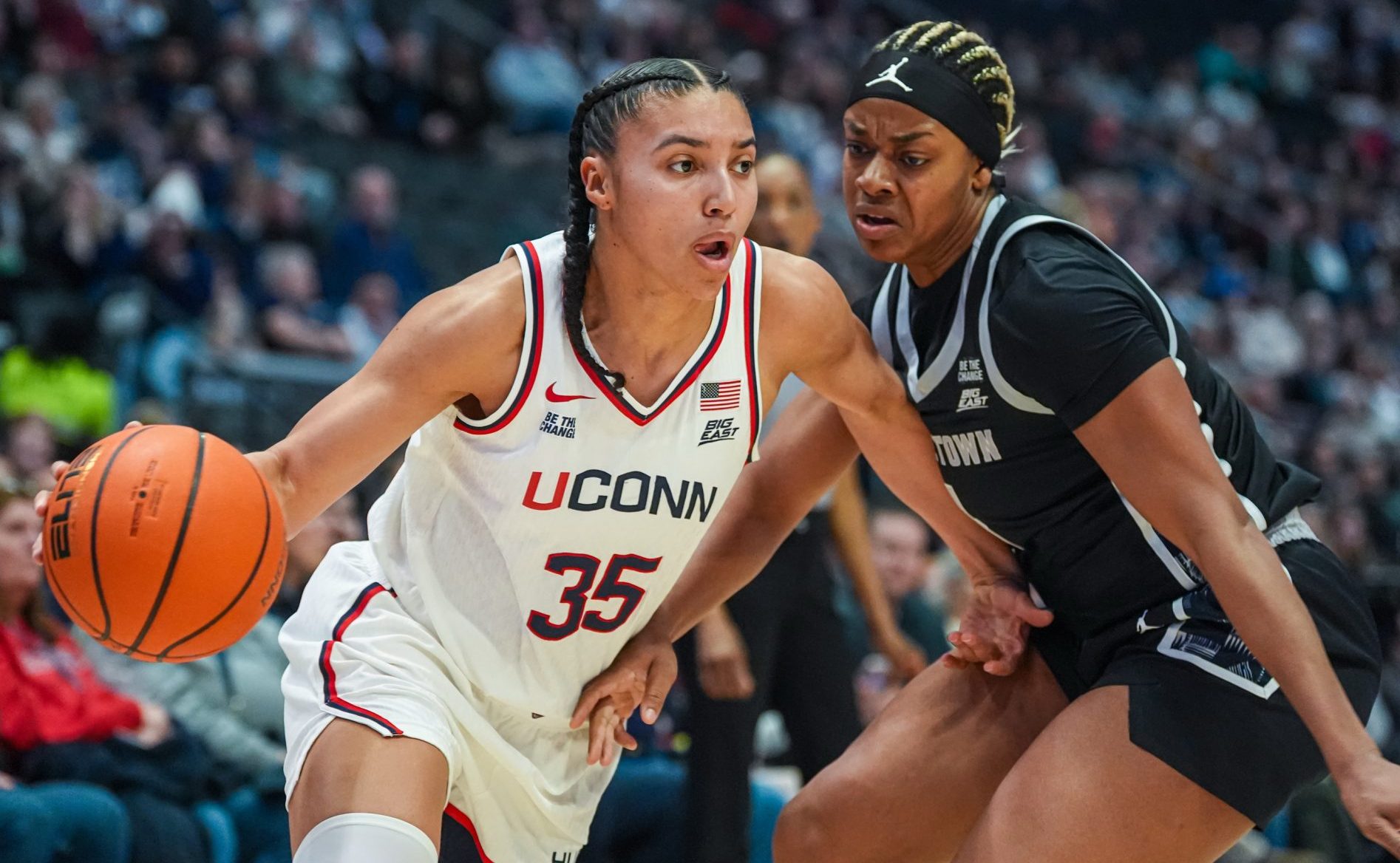
But defending champion UConn is the team to watch as it tries to chase history. Despite the loss of Bueckers, the Huskies finished the season undefeated (31–0) and are looking to be the first team to finish undefeated since the 2015–16 season.
That achievement was also done by a Geno Auriemma–led Huskies squad that featured eight future WNBA players, including Breanna Stewart and Napheesa Collier.
This year’s UConn squad is led by potential 2026 WNBA No. 1 pick Azzi Fudd and Sarah Strong.
WNBA Watch
The women’s college tournament has always served as a proving ground for future professionals because of the quick turnaround to the WNBA season. The WNBA draft falls two Mondays after the national championship game, meaning players who played in the title game—like Paige Bueckers last year and Caitlin Clark in 2024—have just eight days to prepare.
Players often declare their intentions to stay in college or go pro immediately after their team finishes in the tournament. But that may not be the case this year.
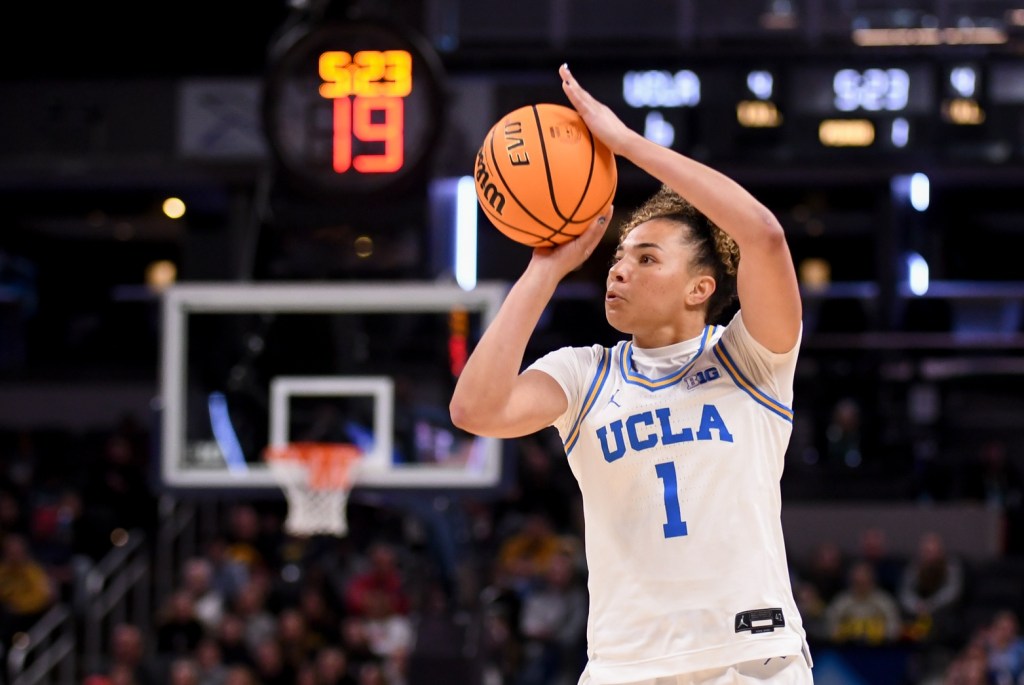
Still, there are several names whose tournament performances could affect their stock for the eventual WNBA draft. Some of the names worth watching that could be first-round picks:
- Lauren Betts, UCLA
- Kiki Rice, UCLA
- Gianna Kneepkens, UCLA
- Raven Johnson, South Carolina
- Flau’jae Johnson, LSU
- Olivia Miles, TCU
- Ashlon Jackson, Duke
- Marta Suarez, TCU
- Cotie McMahon, Ole Miss
- Azzi Fudd, UConn
- Ta’Niya Latson, South Carolina
- Gabriela Jaquez, UCLA
While NIL has put money in the pockets of many NCAA players, incoming WNBA players would go pro at an opportune time. Rookie deals in the past made a maximum of $78,831 in the first year, but those are expected to exponentially increase under the new CBA.
There will also be more opportunities to be a first-round pick with the WNBA expanding to 15 teams for the upcoming season.