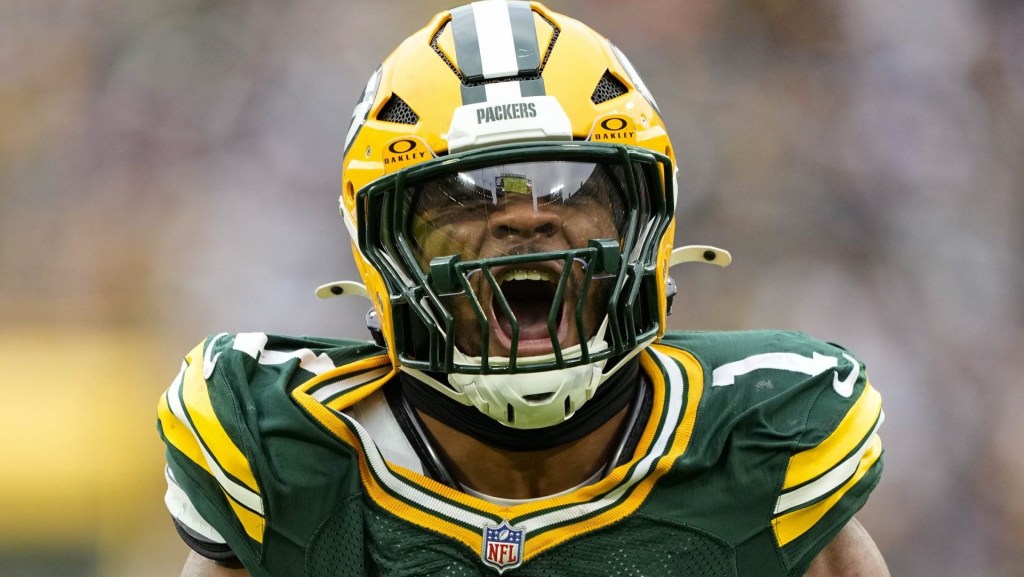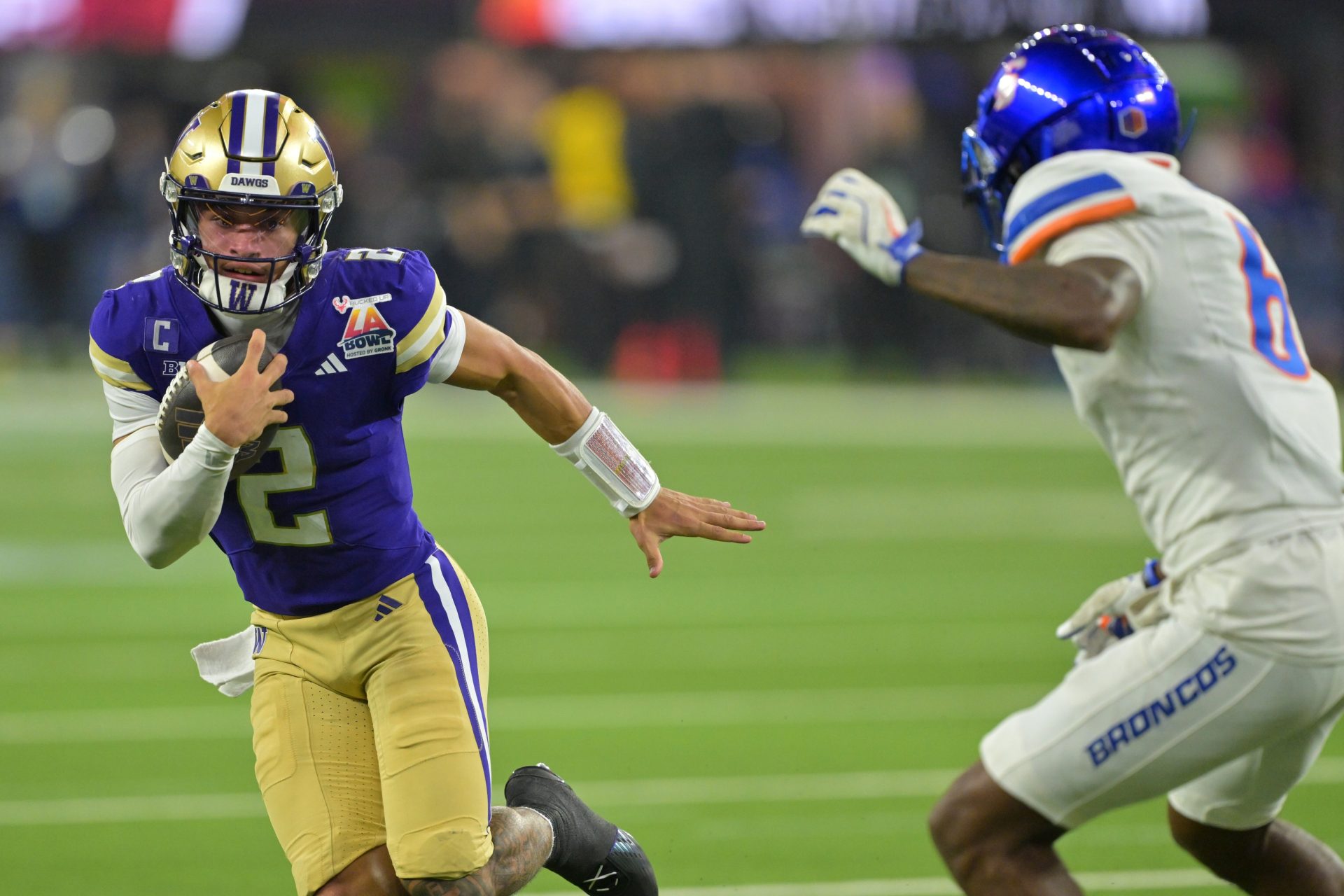
On Tuesday, Washington quarterback Demond Williams announced he would enter the transfer portal—just a few days after signing a revenue-sharing and NIL (name, image, and likeness) contract with the Huskies.
Now, the school is considering legal action, a source familiar with the matter tells Front Office Sports, confirming multiple reports. The source specified that Washington’s goal would be to hold Williams accountable for certain provisions in his contract, signed just a few days ago, that require some sort of buyout since he is leaving before the agreement expires.
As a result, Washington has not yet submitted Williams’s name to the transfer portal, despite an NCAA bylaw requiring schools to do so, the source said, in an attempt to force him to comply with bylaws before he leaves Washington.
The situation tests the enforceability of revenue-sharing agreements, as well as a little-known NCAA requirement for schools to submit players’ names into the transfer portal upon their request. If Washington prevails, it could help give schools some power in the unrestricted transfer portal, where players can transfer as many times as they want without penalty.
Williams’s contract was a variation of the template provided to schools by the Big Ten, the source said. The contract reportedly includes a provision preventing other schools from using a players’ NIL—thus making Williams’s next school unable to do so. The source said certain paybacks for funds already paid to Williams and damages may also be part of the contract.
The enforceability of these types of provisions has been questionable. NIL collectives in particular have attempted to include buyout clauses in their contracts with players who leave before their contract is up, though it’s unclear how successful they’ve been in enforcing them.
One high-profile example: Madden Iamaleava, the younger brother of UCLA quarterback Nico Iamaleava, left Arkansas last offseason to join his brother in Los Angeles before suiting up for the team, but after signing a contract with Arkansas Edge.
At the time, two prominent sports attorneys told FOS the enforceability of these buyouts could lie in the language used in the contract (i.e., that using the word ”damages” might be more enforceable than using “penalties”) as well as the amount of money requested.
To avoid dealing with damages, many schools sign one-year contracts with players, knowing they could leave in the next portal window. But even those contracts can’t prevent a situation like that of Williams.
The NCAA and power conferences have language addressing buyouts for revenue-sharing contracts specifically. In the scenario presented, a school could include a buyout provision in a player’s contract, and the player’s new school would be required to pay it; that money would count toward the new school’s $20.5 million revenue-sharing cap. The buyouts, as with revenue-sharing agreements, would be overseen and enforced by the College Sports Commission.
Beyond any buyout or damages, the Williams situation could shed light on a school’s ability to withhold a player’s name from the transfer portal as a form of leverage.
Williams’s contract reportedly says the school is not obligated to submit his name into the portal if he asks. Washington’s goal is not to force Wiliams to stay, the source said, but rather to ensure he complies with the terms of his agreement before he is released from Washington. But questions remain regarding whether that would run afoul of NCAA rules.
The Williams situation echoes that of Xavier Lucas, who had an agreement with Wisconsin in 2024 and then decided to enter the transfer portal. The Badgers refused to enter his name into the portal while it was open, but that didn’t stop Lucas from leaving. He un-enrolled from Wisconsin and then enrolled and began taking classes at Miami. So far, he has not been punished—he’s currently gearing up to play for the Hurricanes in their semifinal berth against Ole Miss on Thursday night.
Wisconsin decided to not pursue action against Lucas. Instead, the school filed a lawsuit against Miami alleging tampering. The litigation is still ongoing.
The Huskies ultimately might be interested in pursuing legal action against the school Williams signs with if there is evidence that school committed tampering—but that’s not the focus at this time, the aforementioned source said.