The U.S. sports betting industry is at a crossroads.
The country’s two biggest sportsbooks, FanDuel and DraftKings, are charting a separate path from the American Gaming Association—one of the most prominent industry advocacy groups—even as both sides continue to push for legalized, regulated sports betting nationwide.
DraftKings and FanDuel left the AGA—just like they recently withdrew from Las Vegas—after it became clear that their entry into prediction markets put them at odds. Both sports betting giants will launch prediction-markets platforms soon; FanDuel said its app will come online in December, while DraftKings said its own platform will be available “in the coming months.”
On Tuesday, the AGA accepted requests from DraftKings and FanDuel to “relinquish their membership, effective immediately,” an AGA spokesperson said in a statement.
“We wish them the best, and we expect to maintain close ties in our mission to promote and protect legal, regulated gaming,” the AGA spokesperson said.
Representatives for both FanDuel and DraftKings confirmed the companies decided to split from the AGA.
The AGA—and a growing number of state regulators—have raised concerns that prediction markets circumvent established gambling laws, exposing consumers to products that fall outside the traditional regulatory framework. The advocacy group says on its website that prediction markets “openly flout sports betting’s state and tribal oversight in offering sports event contracts.”
Despite the separation, the two sides still have common ground in that they ultimately want sports betting legalized and regulated across the country. Both DraftKings and FanDuel will launch sports event contracts in states where online sports betting is not legal. FanDuel specified that these contracts will only be available in such states, and that when a new state legalizes online sports betting, the contracts will no longer be available there.
The move comes amid an eruption in prediction markets, a sector that has sparked both interest and legal controversy. Platforms like Kalshi, Robinhood, and Crypto.com are navigating court challenges in multiple states, while Polymarket recently cleared regulatory hurdles and is relaunching in the U.S. after having been barred for three years under the prior administration.
What’s the Difference?
The legal battle centers on whether there is any distinction between traditional sports betting and sports event contracts. Traditional sports betting is regulated on a state-by-state basis in the U.S., while prediction-markets platforms like Kalshi have been offering sports event contracts in all 50 states. Currently, 38 states and Washington, D.C., allow some form of online betting (Missouri is set to become the 39th state on Dec. 1).
Nigel Eccles, who cofounded FanDuel in 2009, recognizes that on the surface it’s hard to tell the difference between sports betting and trading on event contracts.
“A bet on the Giants feels like a bet on the Giants,” he tells Front Office Sports.
The distinction lies in the details. With sportsbooks, users bet against the house, which profits when players lose. Prediction markets operate as peer-to-peer exchanges where participants bet against one another, prices adjust dynamically, and the platform makes money through fees.
“There’s a difference, even though at the core it looks similar,” says Eccles, who now runs BetDEX Labs, a betting exchange based in Scotland, as well as BetHog, a crypto-based company out of Belize that offers online casino games.
Kalshi and Polymarket, viewed as the two primary platforms, have each ballooned in value recently. Both companies raised money over the summer—Kalshi landed $300 million at a $5 billion valuation, and even more recently raised $1 billion at an $11 billion valuation, according to TechCrunch. Polymarket, meanwhile, reached a deal for the operator of the New York Stock Exchange to invest up to $2 billion at an $8 billion valuation. Both have reportedly received recent takeover interest.
They may be considered the incumbents, but the market is getting crowded. President Donald Trump’s Truth Social platform is getting in on the game through an “exclusive” agreement with Crypto.com, and other players include PrizePicks, Underdog, and Novig. Fanatics is also plotting a prediction-markets platform, and Coinbase is reportedly working on a prediction-markets platform that will be powered by Kalshi.
“This market has exploded so quickly, 12 months ago it barely existed,” JB Mackenzie, VP and GM of futures and international at Robinhood, recently told FOS.
A Friendlier Administration
The explosion comes during a presidential administration that has been more favorable to prediction markets than its predecessor. The CFTC had opposed prediction markets under the Biden Administration.
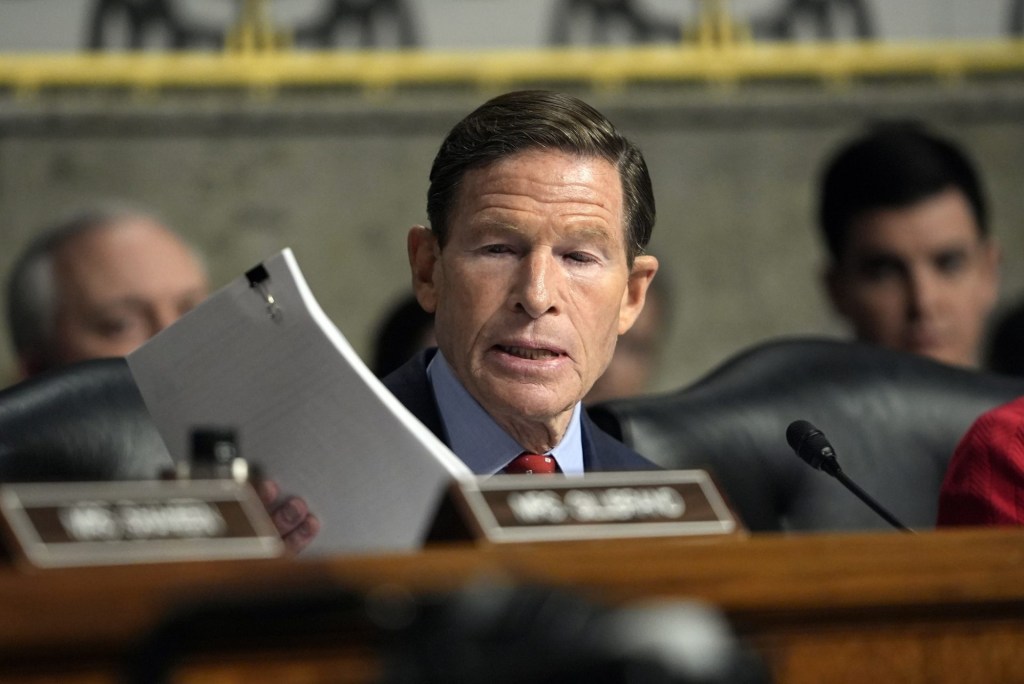
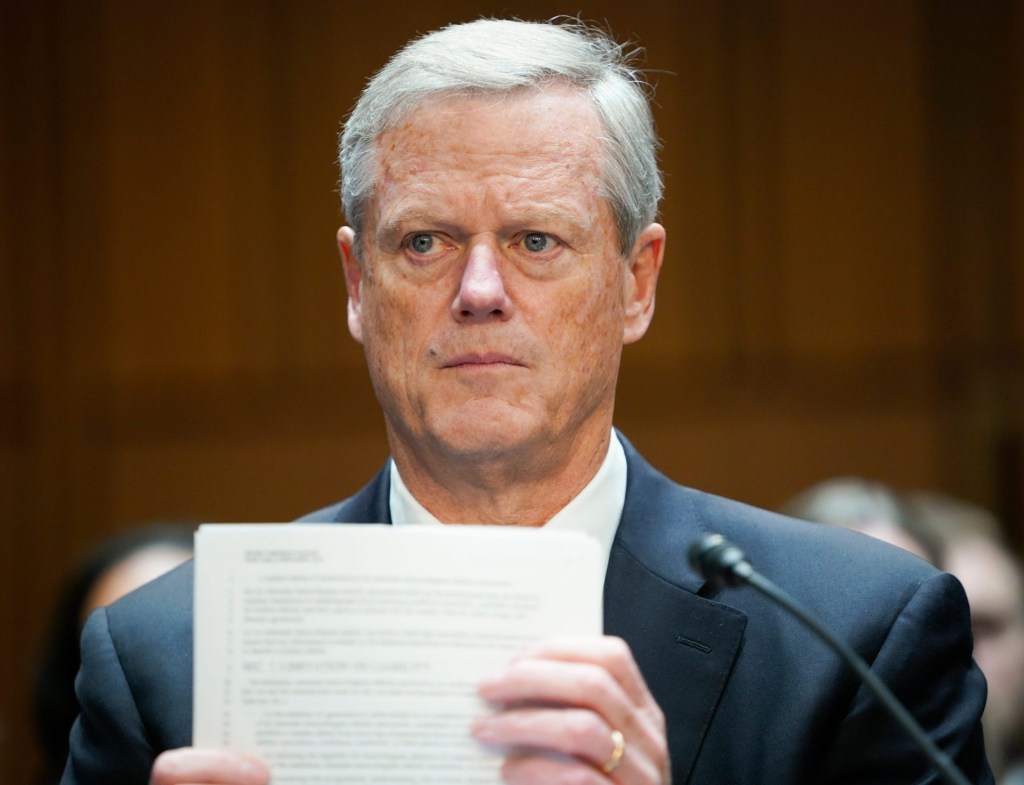
Mike Selig, Trump’s new nominee to chair the Commodity Futures Trading Commission—the federal regulator charged with policing event contracts—continuously deferred to the courts when asked about sports event contracts by a panel of lawmakers Wednesday. On Thursday, the Senate Committee on Agriculture, Nutrition, and Forestry voted to advance his nomination. The vote was along party lines, with 12 Republicans voting yes and 11 Democrats voting no. His nomination now moves to the full Senate. It is not clear when that vote will take place.
It’s been a frenetic few months in the world of prediction markets. How will this all shake out? Depending on who you ask, you get a different answer.
Gaming law and sports betting attorney Daniel Wallach has been critical of the CFTC taking no action and effectively allowing prediction-markets platforms to self-certify event contracts—an approach that platforms then cite as evidence that they have federal oversight. He has called this a “regulatory capture.” He and other legal experts think this issue could wind up in front of the U.S. Supreme Court; Andrew Kim, a litigator at Goodwin Procter, recently pointed out on social media that Kalshi, Crypto.com, and Nevada’s gaming regulator have all hired “experienced Supreme Court counsel as their outside counsel.”
Greg Bettinelli, a partner at The Chernin Group, said during last month’s inaugural FOS Asset Class summit in New York that while it’s still the “early innings” in prediction markets, he doesn’t think consumers overwhelmingly want the product.
“I think the owners of prediction markets want prediction markets,” he said. “It’s an overly complex product for the everyday sports fan and bettor.”