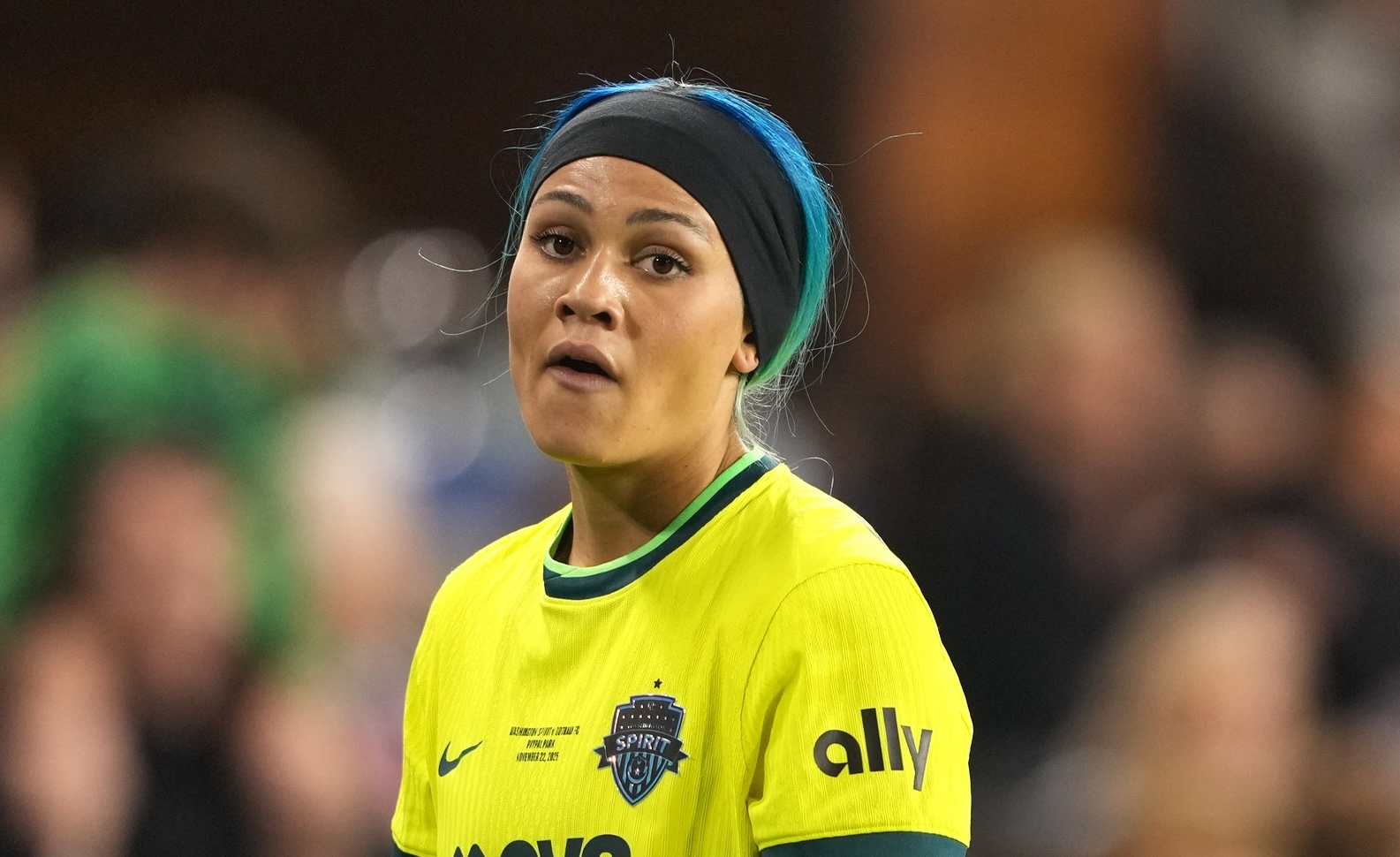
The battle over Trinity Rodman’s future could reshape the NWSL.
After a four-year multimillion dollar deal that was agreed to by Rodman and the Washington Spirit was vetoed by NWSL commissioner Jessica Berman, the star forward’s future in the league is not off the table yet. The NWSL board of governors is voting on a proposal that would allow teams to pay star players beyond the restrictions imposed by the salary cap, a source confirmed to Front Office Sports.
The proposal was first reported by ESPN.
Under this new roster implementation, teams would be allowed to spend a set amount of money outside of the salary cap on designated players. The league has a scheduled board of governors meeting next week, but a decision on the new proposal could be made before then.
This week the Spirit’s new president of soccer operations Haley Carter said the league was actively discussing creative solutions to keep star players in the NWSL.
“Obviously Trinity is the No. 1 priority right now,” Carter said. “As part of that there is a holistic conversation that’s going on around the potential for league level solutions. The reality is our current salary cap structure was built for a different era of women’s soccer. This is a global game. As the sport continues to grow globally, international clubs—the Chelseas, the Arsenals—are increasing their investment, we’re going to need mechanisms that allow NWSL clubs to compete for not only players overseas but our own players.”
The salary cap in the NWSL in 2025 was $3.3 million per team and will increase to $5.1 million by 2030 as laid out in the collective bargaining agreement ratified in 2024. There is a projection that the salary cap will see further increases based on the negotiated revenue sharing model.
Carter added that the league’s board of governors was “working daily” to come up with a solution to keep stars in the NWSL. The league has already lost star multiple players in 2025 to European clubs. In January, Chelsea announced it had acquired USWNT defender Naomi Girma from San Diego Wave FC. Eight months later, Chelsea paid Angel City a $1.3 million transfer fee to get USWNT star forward Alyssa Thompson.
Rodman, whose contract is up at the end of December, could be the third. Last week the NWSLPA filed a grievance after the league rejected the multimillion dollar deal agreed to by Rodman and the Spirit. The grievance stated, in part, that the league’s decision improperly restricted Rodman’s free agency rights.
The structure of the NWSL gave it extra say in Rodman’s contract negotiations. The league is a single entity that owns all of the teams; franchise owners are invested in the league.
Rodman’s agent, Mike Senkowski went on CBS last week and said that European teams had made her offers of “greater value” than the one the NWSL rejected.
Rodman also received an offer from DC Power of the Gainbridge Super League that is more than what any NWSL team could offer her under the current salary cap restrictions.
The new proposal is similar to MLS’s designated player rule, but would have more restrictions. Instead of clubs being able to finance any amount that exceeds the maximum salary, as is the case in the MLS, each NWSL club would have a set amount to spend. In 2025 the MLS maximum salary was $743,750, but under the designated player rule, Inter Miami was able to pay Lionel Messi a base salary of $12 million.
The NWSL does not have a maximum salary in the CBA.