Brian Babz says he was “born into greatness.” By that, he means he had the good fortune of being born in New England three and a half decades ago, making him a Boston sports fan who has enjoyed a steady drip of professional championships for his entire life.
Babz began sharing his fandom on social media in 2017 under the handle @BabzOnTheMic, and has since racked up roughly 70,000 followers across Instagram and X. But a few weeks ago, he moved beyond the world of niche Boston sports personalities to become the figurehead of an online campaign targeting the sports conglomerate Fanatics, known as #EndFanatics.
Despite the name, Babz has no desire to actually take down Fanatics. Instead, he told Front Office Sports in an interview Wednesday that the #EndFanatics is simply calling for better merchandise quality and consistency from Fanatics—which has licensing partnerships with all major professional sports leagues—as well as a wider array of product price points.
The effort is breaking through: Babz has an in-person meeting with Fanatics’ billionaire founder and CEO Michael Rubin in New York City next week. While he wouldn’t share the exact timing of the meeting, Babz did tell FOS it was arranged informally by a mutual contact who does not work for Fanatics. A company representative confirmed the meeting is happening, and said “Fanatics senior executives regularly meet with fans—both people who’ve had positive experiences as well as critics—to get constructive feedback. …This is not something new for us and we will continue to have these discussions which we learn from and use to get better.”
Still, the fact that the meeting was coordinated through personal connections and is with Rubin himself is notable; the company has typically employed what many perceive is an ignore-or-deflect approach when faced with consumer backlash—of which there have been many instances in recent years.
The path to next week’s rendezvous began in earnest on Jan. 27 when Babz posted a “frustrated rant” on X about the disparity between the prices of Fanatics fan jerseys—often hovering around $160—and their quality, which he likened in the post to “something you’d buy at the Walmart rack.” To date, it has garnered almost 2 million views.
“After the Patriots won the AFC title game, I wanted to buy Super Bowl merch,” Babz said. “And when I saw what was out there, I just felt like we were getting totally ripped off.”
He wasn’t alone.
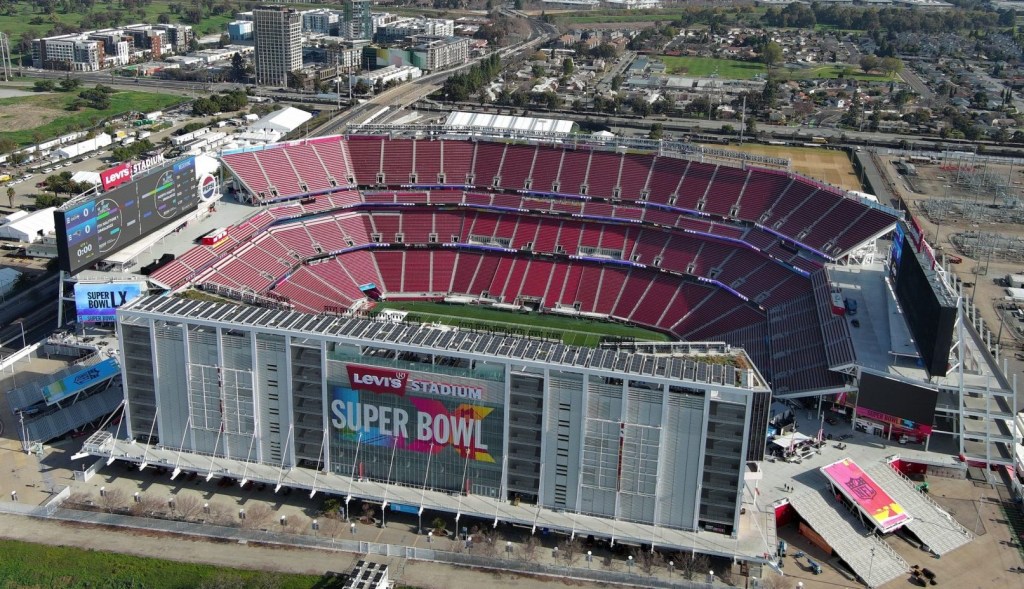
In the lead-up to Super Bowl LX, Patriots and Seahawks fans alike took to social media to criticize Fanatics’ big game products over issues like inconsistent logo placements and cheap-looking materials. Some fans also called out exorbitantly high prices at Super Bowl retail locations—including a sweatshirt that was selling for $275.99—but Fanatics does not oversee retail operations in and around the game; another sports apparel company, Legends, does.
A few days before the Super Bowl, Fanatics put out a statement apologizing not for the lack of quality control, but for the lack of product availability—a move that drew more complaints from fans like Babz.
Babz’s initial viral post set off a fresh wave of activism, including the X account @End_Fanatics, which was stood up independently earlier this month and already has close to 20,000 followers. It calls out the quality of Fanatics merchandise on an almost hourly basis through original content and reposts. (The @End_Fanatics account frequently shares content referencing the quality of New Era hats. While Fanatics sells New Era products, they are not responsible for producing them.)
The #EndFanatics movement is reaching beyond those upset with Fanatics’ wearable products, too.
“A lot of the card-collecting community has tapped in and are sharing their own concerns,” said Babz. (Fanatics acquired Topps in 2022 for $500 million.)
“It’s snowballed into this whole bigger conversation. We have Jets fans, Eagles fans, Bills fans. Guys who I would’ve made fun of even just a few weeks ago, now we’re coming together. I want to try to be the bridge that gaps the average sports fan to Fanatics’ direct line.”
To do so, Babz is collating a list of fan grievances ahead of his facetime with Rubin. “When I sit down in that meeting, I want to be able to pull up my phone and scroll and just say, ‘Hey, here’s some of the feedback. Can you guys listen and try to fix it?’”
He’s also doing “as much homework as [he] can” to better understand the many complex spaces in which Fanatics operates by speaking with local sports apparel companies, jersey threaders, and other manufacturing experts.
Babz said some fans have questioned why he would even accept a meeting with Rubin, viewing it as a hollow gesture by Fanatics. But he remains steadfast: “Fanatics wants to be the next Nike. They want to be on every jersey in the world. If you have the chance to meet with Rubin and be an authentic voice who gives a little pushback, you take it.”
As for concerns about his integrity, Babz said he’s “not interested in any personal incentives or freebies” and will walk away if asked to sign a non-disclosure agreement.
Babz doesn’t have any expectations for immediate or sweeping change, but hopes the meeting will be a catalyst for some top-down reflection on how fans are treated.
“I’m just looking for some accountability. [Fans] want to spend our money on quality merch,” Babz said. “I’m not going to tell Michael [Rubin] what to do. But it would just be nice if he could say, ‘We’ve heard you, we’re listening and we’re going to try to fix this.’ I don’t have a lot of time, but I’m hoping that one meeting can lead to another meeting and another meeting.”