Want more from Front Office Sports
in your search results?
Sometimes, the most exciting deals in the market never reach the finish line. Regulatory bodies often act as the ultimate arbiters of fairness for consumers and get the final say in which mergers see the light of day.
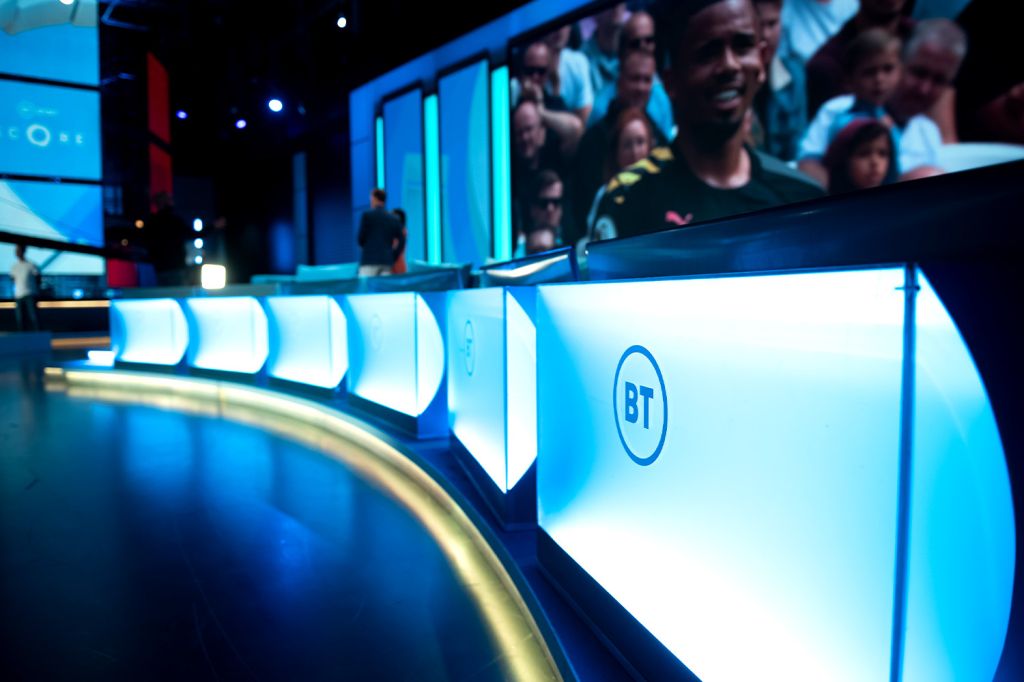
Earlier this month, British telecommunications giant BT Group and Warner Bros. announced their intention to create a 50-50 joint venture for a new sports offering in the United Kingdom and Ireland. The deal is worth a reported $797 million and would create an extensive premium portfolio of sports properties.
- UEFA Champions League and Europa League
- Premier League matches
- Premiership Rugby
- UFC
- The Olympics
- The Australian Open and French Open
- Cycling Grand Tours including the Tour de France and Giro d’Italia
One issue: What some might call the “fun police” have come knocking. The deal will undergo antitrust scrutiny from the UK’s top competition watchdog — the Competition Markets Authority.
Why is the CMA getting involved? The possibility of increased prices for consumers.
If the deal goes through, broadcasters could be charged more to carry BT Sport and Eurosport channels because of what would become a significantly larger content offering, and those higher costs would likely trickle down to consumers.
The deal comes at a time when BT has to take a serious look at its ability to continue to carry one of its most important properties — Premier League football. International and domestic broadcast rights are expected to fall somewhere in the $6 billion range in the coming years, so it’s looking to Warner Bros to share the burden.
It’s unclear whether the CMA probe will end after Phase 1 or warrant a continuation onto the dreaded Phase 2 — determination of lessening of competition.
What is clear, however, is that large regulatory bodies such as the CMA or the Federal Trade Commission in the U.S. can and will regulate away deals that, on the surface, seem to make sense.
Deal or No Deal?
A quick trip down memory lane: Back in 2016, 21st Century Fox owner Rupert Murdoch filed a bid to take full control of Sky Sports for $14.6 billion. At the time, Murdoch and Fox already owned a 39% stake in Sky, but full ownership was just too juicy to pass up.
The CMA had other plans. The deal was blocked due to “media plurality” concerns — or how much power the resulting company would have over public opinion.
Ultimately, the block by the CMA led to Murdoch and Fox’s sale of their 39% stake to Comcast in a landmark deal that saw the telecommunications giant purchase Sky for some $38 billion. Unlike the Fox deal, the Comcast deal was not even brought to the CMA for a Phase 1 investigation.
The determination that a Murdoch-owned media empire (he also owns the Sun and the Times of London) was not in the U.K.’s public interest demonstrates just how quickly the nature of these transactions can change.
Industries other than media are also subject to the ire of the CMA.
- In 2019, JD Sports acquired Footasylum for $113 million, but the deal was short-lived.
- In 2020, the CMA announced that it would prohibit the completed transaction due to expectations of a substantial lessening of competition.
The deal was appealed, but the companies were eventually forced to unwind the merger.
Tightening the Screws
The U.K. government proposed new laws in 2021 that would drastically lower the burden of proof needed to block a potential acquisition, particularly for larger and more strategic companies.
The measure would apply to tech companies with “strategic market status” (SMS), a new designation for those with an entrenched, powerful position in a digital market. In time, companies like Amazon, Apple, and Uber could be included if they are deemed to have SMS.
- The proposed change would allow transactions that had any realistic prospect of reducing competition to be blocked.
- The language from the merger assessment guidelines describes the threshold as “greater than fanciful, but below 50%.”
- Basically, deals would require a less than 50/50 chance of potentially being anticompetitive to garner action.
There are currently only 42,300 public companies listed globally. For most, an acquisition by an SMS company is a lifeline and for many, the ultimate end goal.
If the decision to make it easier to stifle mergers goes through, companies in the technology, media, and telecommunications space are likely to feel the brunt of the regulatory burden. Startups and smaller companies in the sports ecosystem will find it increasingly difficult to be acquired.
Policing on Home Soil
The U.S. equivalent to the CMA is the FTC, and just like the CMA, it’s willing to stamp out any hint of anticompetitive behavior.
In the past year, we have seen interventions from probes to outright blocks across several prominent industries.
- Nvidia’s $40 billion acquisition of U.K. chip design provider Arm Ltd. was blocked by the FTC over competition concerns in late 2021.
- In January, Microsoft’s acquisition of gaming giant Activision Blizzard received scrutiny by the commission to determine whether the deal would lead to a monopoly in “metaverse” properties.
- In May, the FTC announced that it would be launching an investigation into Sony’s acquisition of Bungie in an aggressive probe to police tech consolidation.
- The Washington Commanders could soon be under investigation by the FTC for engaging in “nefarious financial practices” related to ticket sales.
One of the main areas of concern on U.S. soil is data privacy — an issue that FTC chair Lina Kahn has made abundantly clear is a top priority as the global economy becomes more digitized.
Heavier regulation all around will have implications for sports-related companies down the line.
Deals like Google’s acquisition of Fitbit or Flutter’s purchase of FanDuel may well be a construct of the past if regulators continue to move toward heavy regulation. While regulators aim to protect the interest of consumers, they may start becoming over eager in labeling deals as anticompetitive.
We do need to protect consumers when existing large companies plan to merge, but extending that logic further down the value chain might lead to unintended consequences. In their quest to protect consumers, I hope these governing bodies don’t unintentionally crowd out innovation.
Download the FOS App
The business of sports, in your pocket.



Scan the QR code to get the app now.