Tim Brando Agrees to Multi-Year Extension With Fox Sports
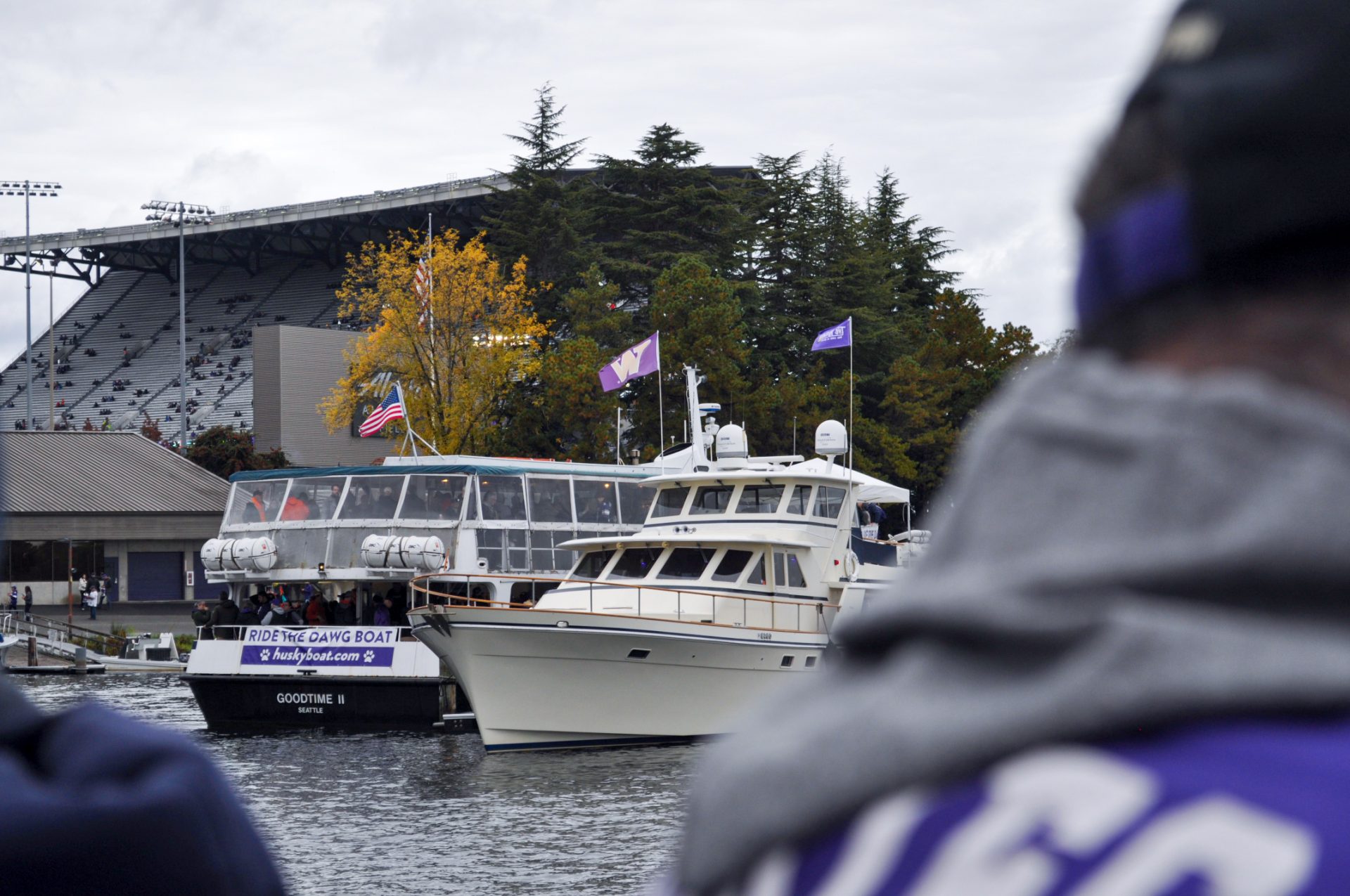
On a hazy Saturday in October, the Lady Mary cuts through the mist over Seattle’s Union Bay toward Husky Harbor. The 98-foot vessel, packed with a few hundred football fans, is bound for the University of Washington’s Husky Stadium—one of three college football venues accessible by water, and the only one with postcard views of Lake Washington framed by mountains on both sides.
Nearly 3,500 fans reach the stadium each week on “sailgating” boats ranging from 15 feet to more than 100. On this day, roughly three dozen vessels are in the harbor—most privately owned, others operated by companies including Argosy Cruises, which offers the largest public charter service on vessels like the Lady Mary.
Some dock for hours in spots that cost thousands of dollars to reserve, while others arrive late and freely drop anchor in the harbor before enjoying a uniquely Pacific Northwest tailgate on the water. These pregame parties have been a local tradition for more than a century, but since the Huskies’ move to the Big Ten last August, the bay has become a destination—one that fans travel thousands of miles to see and, in some cases, spend tens of thousands to experience firsthand.
The sailgating ritual began shortly after Husky Stadium opened in 1920, when locals would park their boats in the reeds just east of the stadium and trudge through muddy shores to reach their seats. By the 1960s, members of the Huskies’ rowing team—which won Olympic gold in 1936—would shuttle sailgaters from their boats to the shore in exchange for tips. (Now, there’s a complimentary water taxi funded by the university.)
By the 2000s, the university invested in a major renovation, adding a rotating “L-dock” that could disconnect from land and sit in the bay. “That’s when we really started to dial in the process of confirming reservations, monetizing it, tying it in with donations, and started the formal business of it,” says Connor Savage, Washington’s director of stadium operations and events, who also oversees sailgating.
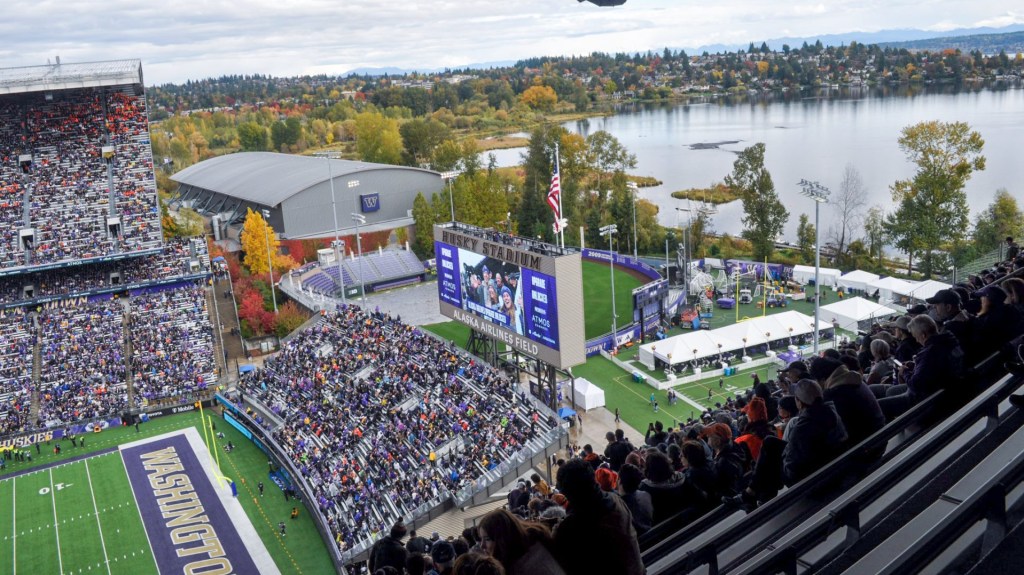
As of this season, there are only available spots for 130 boats along the docks. Smaller boats have an easier time reserving moorage, while vessels between 60 and 94 feet face the biggest premium to secure a spot at Husky Harbor. Paying for the permits, which range from $75 to $250 per game, or $270 to $1,340 per season, is easy. Securing one at all is the hard part.
Reservations began as a grandfathered process and are currently tied to season-ticket renewals, functioning as a parking pass of sorts that carries through generations. One in seven dock permits have been in the same family for more than 20 years, and sometimes just a couple of season passes open up per year—typically only if someone sells their boat.
After the Huskies’ run to the national championship game in the 2023–24 season, Savage says there was a 98% retention rate on moorage spots. There’s a wait list that runs anywhere from 50 to 100 people long depending on boat size, and some fans are left waiting years to secure a spot.
The wait list is ordered by “priority points,” an incentive system designed to boost season-ticket renewals, donations, and other large endowments: one point per $100 spent for seat-related giving or team support, one and a half points per $100 donated to The Go Big! Fund to provide “critical resources” for teams and athletes, and two points per $100 for gifts of at least $100,000.
Even with such strong demand for moorage, prices have barely shifted over the past decade as the sailgating tradition continues to grow. “We realize the asset is in the exposure of it and the experience of it, not in the profitability of it,” Savage says. “I’m sure you could find where the point is on the graph to fully maximize your revenue and profitability, but that’s just not how we want to operate and run it down there.”
The richest sailgating experience in Husky Harbor is owning a yacht. The next best bet is to rent one.
Greg Holloway is familiar with both sides of that coin. A longtime Seattle resident and boater, he purchased Oasis—a 70-foot luxury yacht originally built for Seattle SuperSonics star Gary Payton—and has been renting it out for private charters since 2020. His passengers have included Mariners shortstop J.P. Crawford, Seahawks linebacker DeMarcus Lawrence, and the band My Chemical Romance for a birthday party during a tour stop in Seattle.
Among his most consistent sources of revenue, though, is sailgating during the college football season. Oasis is one of a small handful of yachts available for private charter to Huskies games. Prices range from a base package around $2,000 for a smaller, older boat (before taxes and a customary 20% tip) to $20,000 for an all-inclusive experience on a 100-foot ship. These can run up to $30,000 for high-profile matchups against teams such as Oregon and Ohio State.
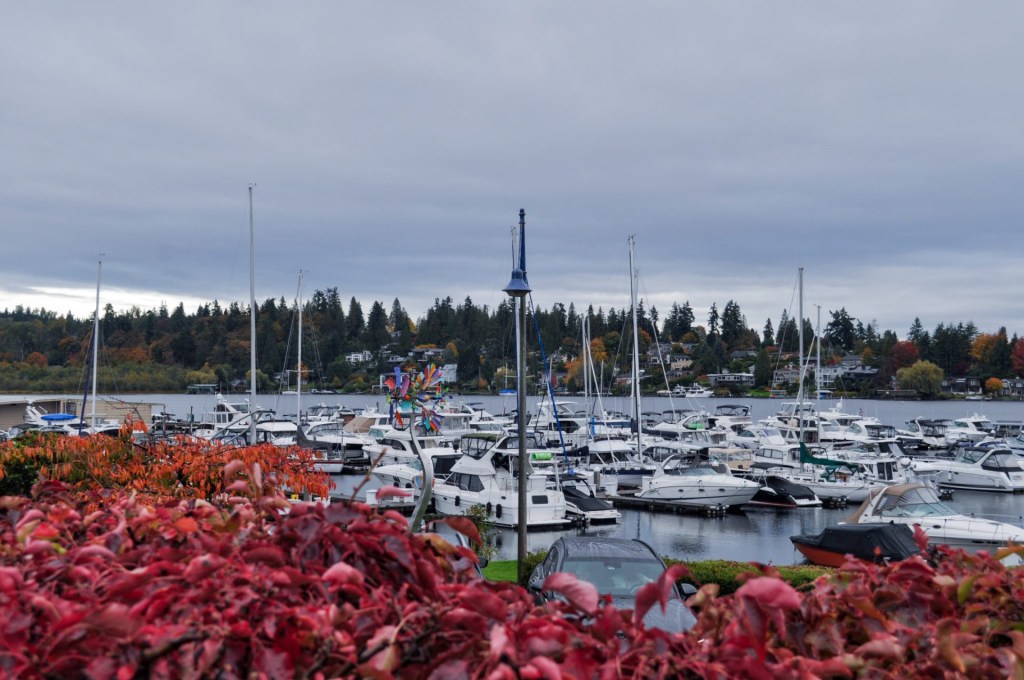
Holloway has seen an uptick in business since the Huskies’ Big Ten move, including from fans of schools including Michigan and Penn State booking a private charter up to a year in advance.
His most expensive sailgating experience yet was a $12,000 all-inclusive package for this season’s Ohio State game—a four-hour charter that included a private chef and an open bar. “When the game starts, most people don’t want to go in,” Holloway says. “They’re having such a good time on the boat.”
Most luxury yachts, including Oasis, can’t legally host more than a dozen passengers for a commercial charter without being certified by the U.S. Coast Guard as an “inspected vessel”—a quirk of maritime law that keeps the market small and prices high. (Some boaters try to skirt the rule, claiming their parties as recreational instead of commercial.)
Other private charter options include cruises from tour operators such as Emerald City Cruises, which hosts large parties on boats including the pirate-themed Queen Anne’s Revenge (48 passengers) or tiki-themed Emerald City Escape (34). Packages range anywhere from $1,800 without food and drink to $12,000 for unlimited food and drink.
“We show people the time of their lives,” says Pete Ide, a fisherman-turned-CEO of Emerald City Pirates. “You’re not going to get that in State College or Columbus or Ann Arbor or any of these other iconic venues. You’re just going to be sitting in the parking lot with everyone else.”
With the steep price tag of private charters, most fans opt for public party boats.
Last year, with many of the previous local public options wiped out by the COVID-19 pandemic, Argosy launched a direct sailgating charter for the first time at $70 per game ($435 per season). The company has booked at least 100 passengers for every game this year, including a sold-out crowd for the Ohio State game, with the average guest spending an additional $20 on refreshments.
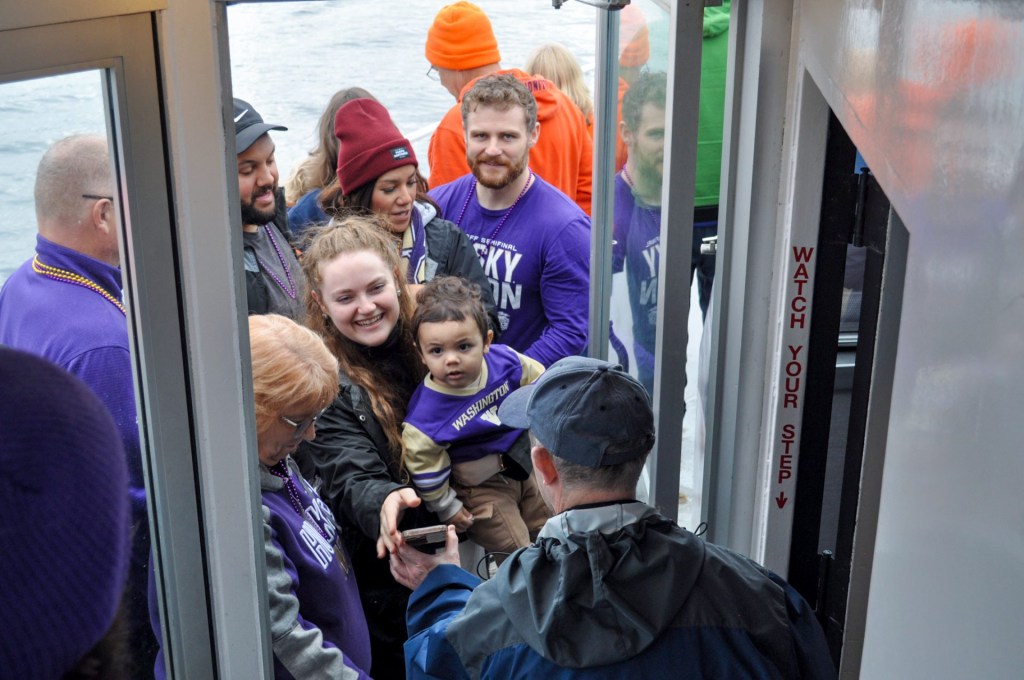
On this October Saturday, Washington faced off against Illinois in the visitors’ first trip to Husky Stadium. It was also a debut voyage for fans including Drew and Amy Zarbuck, who flew from Champaign, Ill., for a spot on the Lady Mary after Drew saw a Big Ten Network special about the Huskies’ tradition.
When football tickets went on sale this summer, he was determined: They would fly to Seattle and arrive at the stadium by boat. “You don’t sailgate in Illinois,” says Danae Shelley, their daughter and a local resident, who joined them for her first trip to Husky Stadium. “It’s a unique experience.”
Argosy’s primary revenue is generated outside the college football tradition, coming instead from first-time tourists riding its narrated harbor tour along the Seattle waterfront. All told, sailgating tours account for just 10% of the company’s “special events” revenue, which is just a slice of the overall business. Yet it continues to invest in these party experiences to connect with local customers and encourage out-of-state fans like the Zarbucks to make the trip northwest.
“There are a lot of people leaning in to what sports mean in our culture and in our community,” says Emma Ratcliffe, a Washington grad who has worked various roles with Argosy dating back to 2017. “And especially with joining the Big Ten, it really brings UW to a more national stage.”
The university itself doesn’t rake in a profit on the tradition, either. Savage says sailgating is “not a moneymaker” for the athletic department, even with the revenue it generates from the cutthroat competition for dock permits and the cash that comes in through the priority points system. Its annual goal is to break even, since it has operational costs including its free water taxi and paying for a specialized staff of part-timers licensed by the Coast Guard.
Yet the tradition itself is valuable for the university—particularly in college football’s NIL (name, image, and likeness) and revenue-sharing era, and especially now that the team plays in a major conference.
“Now that we’ve joined the Big Ten, we’ve become one of those schools that fans will circle and say, ‘Hey, I want to go to Washington,’” Savage says. “‘I want to experience this sailgating phenomenon for myself.’”