Ex-ESPN Reporter Michele Steele Joins Big Ten Network
The record for highest valuation of a pro sports franchise in a change-of-control sale was broken in 2025—twice. First, when the Celtics were sold at an initial valuation of $6.1 billion, and again three months later when the Lakers were sold at a $10 billion valuation. (And if you go by valuations from sales of minority stakes, the New York Giants topped $10 billion with the sale of a stake to the Kochs in September.)
The same market dynamics that have made a U.S. pro sports team a sure bet investment remain true: scarcity of teams, media-rights certainty, and a growing pool of potential investors. That means 2026 will likely see team valuations climb even higher. That trend has produced bigger buying groups, more minority-stake deals, and an increase in multistage transactions. While NBA and NFL teams sit atop the market, almost every pro franchise is now a high-value financial asset that can be monetized through minority sales.
Among the big four North American men’s pro sports—the NBA, NFL, MLB, and NHL—franchises have outperformed most other asset classes over the past two decades, generating 13.2% annualized returns, according to the Ross-Arctos Sports Franchise Index, a collaboration between Arctos Partners and the Michigan Ross School of Business.
Over the past year, the returns were 16.9%, outpacing nearly every other asset class it tracks, except media and entertainment.
Dave Dase, global co-head of sports for Goldman Sachs, says more sophisticated league governance—such as there being clear ownership rules and shared revenues across franchises—is part of the reason for the outsized valuations in North American pro sports.
“That has been a principal driver, quite frankly, in some of these valuations,” Dase said in October during the inaugural Front Office Sports Asset Class summit in New York.
That’s because investors “know what they’re investing in because there’s a very specific business model,” Dase said.
More than half of the NBA and NFL teams have considered a minority-stake sale in recent years, one investment banking source tells FOS.
“You have owners who own 100% saying, ‘Gee, I can sell 10%, give up no control and no rights?’” the source says. “Even Robert Kraft did that. Even the Giants did that. These owners are saying, ‘Why wouldn’t I do that?’”
NBA and NFL Set the Tone
The NBA and NFL lead the pack. In 2025, three NBA team sales were announced—the Celtics, Lakers, and Trail Blazers—all valued above $4 billion, which would have been inconceivable a decade ago.
Steve Ballmer’s $2 billion deal for the Clippers in 2014 reset the market, far surpassing the $550 million sale of the Bucks in 2012. But valuations have kept climbing thanks to the new $77 billion media-rights deal that kicked in this season and a finite number of teams (just 30 in the NBA, though the league will decide in 2026 whether to add two teams).
The $1.5 billion Timberwolves sale, which finally closed in June after a prolonged dispute, illustrated how high the stakes have risen. Departing owner Glen Taylor, who bought the Timberwolves for $88 million in 1994, tried to contest his own agreement after the fact by claiming buyers Alex Rodriguez and Marc Lore missed a payment, but the duo countered that the 84-year-old was having “seller’s remorse” after the Suns sold for $4 billion in December 2022. The deal was completed following mediation and arbitration.
Of those four NBA deals, three are multi-part transactions, signaling a broader trend (only Mark Walter’s Lakers takeover was completed in one fell swoop). There aren’t many individuals wealthy enough to afford to pay for a pro team on their own; deals increasingly require multiple investors and phased closings to spread risk and raise enough capital.
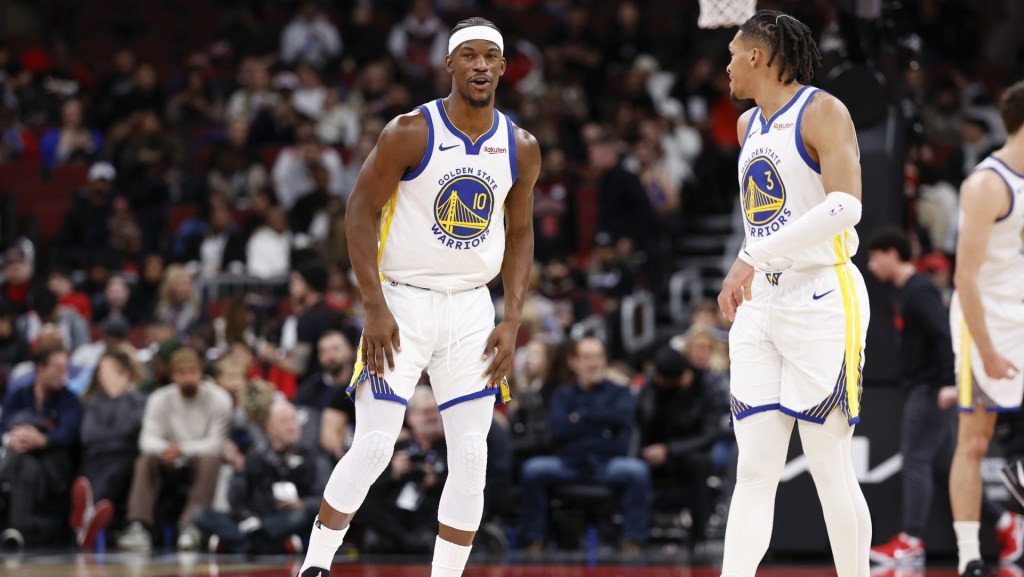
That’s where private equity has found its opening. The NBA’s existing PE ownership rules were formalized in 2019. Today, at least eight teams have direct PE investors, including the Celtics, Warriors, Kings, and Jazz.
Relaxed rules regarding PE investment are a way for leagues to allow owners to gain liquidity without ceding control. In the NFL, the last change-of-control deal was the $6.05 billion sale of the Commanders in 2023, but minority-stake sales have been more frequent, including four private-equity deals since the league adopted its new policy in 2024.
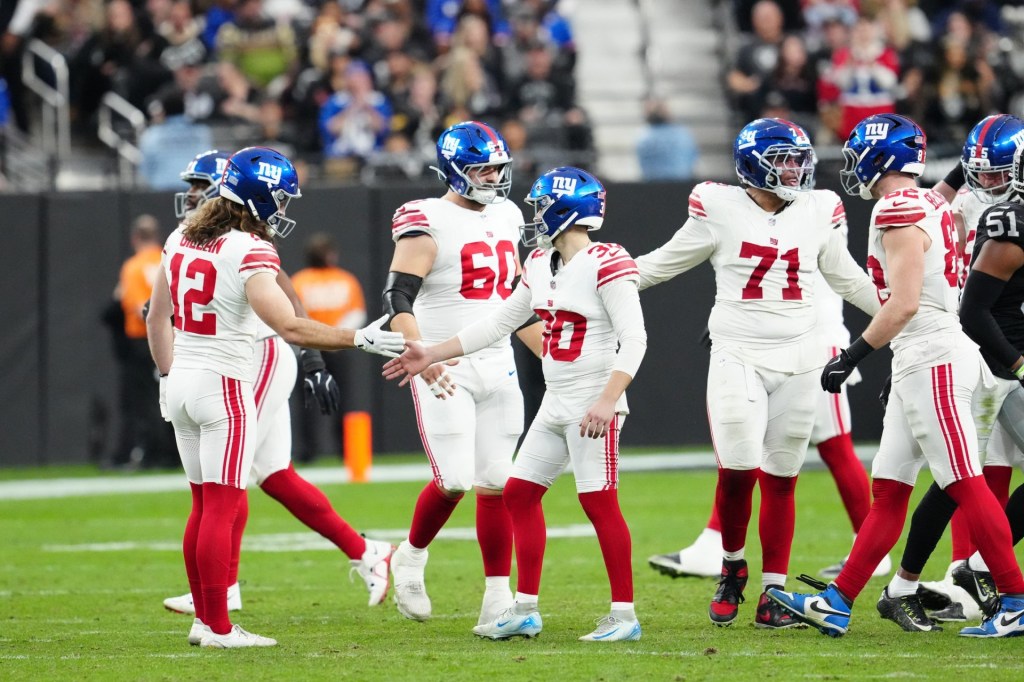
Headline deals included the sale of a 10% stake in the New York Giants to Julia Koch and members of her family at a more than $10 billion valuation, the sale of a total 6% stake in the 49ers to a group of three families at a reported $8.5 billion valuation, and the sale of a total 8% stake in the Patriots—including 3% to private-equity firm Sixth Street—at a more than $9 billion valuation.
Like the NBA, the NFL has scarcity, with 32 teams, and a mega media-rights deal—the league is in the midst of 11-year, $111 billion media-rights deals that it is expected to opt out of early to get even better terms.
MLB and NHL Trending Upward
MLB and NHL teams haven’t reached the same stratosphere, but they’re on the same hockey-stick trajectory. The Rays sold this year in a $1.7 billion transaction—despite uncertainty around Tropicana Field.
The Padres were put up for sale, while the Twins recently took on new minority owners in stake sales that valued the team at $1.75 billion. Other minority-stake sales included a 10% stake in the San Francisco Giants to PE firm Sixth Street and an undisclosed stake in the Orioles to venture capital investor Mark Ein. Longtime White Sox owner Jerry Reinsdorf struck a multistage equity deal with Justin Ishbia that will see majority control of the franchise transfer no earlier than 2029.
Financial terms for the San Francisco Giants, Orioles, and White Sox deals were not disclosed, but Forbes pegs those teams’ valuations at $4 billion, $1.9 billion, and $2 billion, respectively.
MLB valuations are lower partly because media rights lag behind. Last month, the league announced three-year agreements with NBC Sports, Netflix, and ESPN, worth $600 million, $50 million per year, and $550 million per year, respectively.

NHL activity has been lighter. The Lightning sold last year at a record $1.8 billion valuation. In 2025, it came out that Tom Dundon—who is buying the Blazers—is in talks to sell a minority stake in the Hurricanes at a reported $2 billion valuation to fund the NBA deal, while Fenway Sports Group has reached a deal to sell the Penguins at a reported valuation between $1.7 billion and $1.8 billion.
In July, Canadian media giant Rogers Communications closed on its $3.5 billion deal to acquire 37.5% of Maple Leaf Sports & Entertainment, which owns the Maple Leafs, Raptors, and other assets.
Rogers also just signed a 12-year, $8 billion media-rights extension with the NHL stretching to 2038. On the U.S. side, the NHL is in the midst of seven-year, $4.37 billion media-rights deals with Disney and Warner Bros. Discovery.
Will Other Leagues Follow Suit?
As teams in the big four men’s pro leagues continue to see their valuations soar, investors are wondering whether there remain diamonds in the rough elsewhere. Women’s sports is booming, and there are pro leagues for every sport under the sun now, from volleyball and pickleball to cheerleading and flag football.
Valuations across all sports are up—in September, the Los Angeles Beat of the Pro Padel League were purchased in record-setting transaction worth about $10 million, and before that, a Denver-based group won the right to launch a new NWSL team with a record-breaking expansion fee of $110 million.
For these and other leagues, “it’s all about addressable market,” Dase of Goldman Sachs said.
Over the summer, John Hutcheson, who co-leads Citi’s sports advisory and financing group, told FOS there’s a “North Star” for emerging leagues that aspire to entrench themselves in the world of sports.
“There’s huge value if you get the league right and you’re able to create your own, wholly owned league while owning and controlling it top to bottom,” he said.
Of course, that’s no simple task.
“There are very few of scale, and it’s rare to get there,” Hutcheson said. “There are maybe five or six such leagues that are meaningful in size. So if you get there, you’ve really climbed the mountain.”





![[Subscription Customers Only] Jul 13, 2025; East Rutherford, New Jersey, USA; Chelsea FC midfielder Cole Palmer (10) celebrates winning the final of the 2025 FIFA Club World Cup at MetLife Stadium](https://frontofficesports.com/wp-content/uploads/2026/02/USATSI_26636703-scaled-e1770932227605.jpg?quality=100&w=1024)