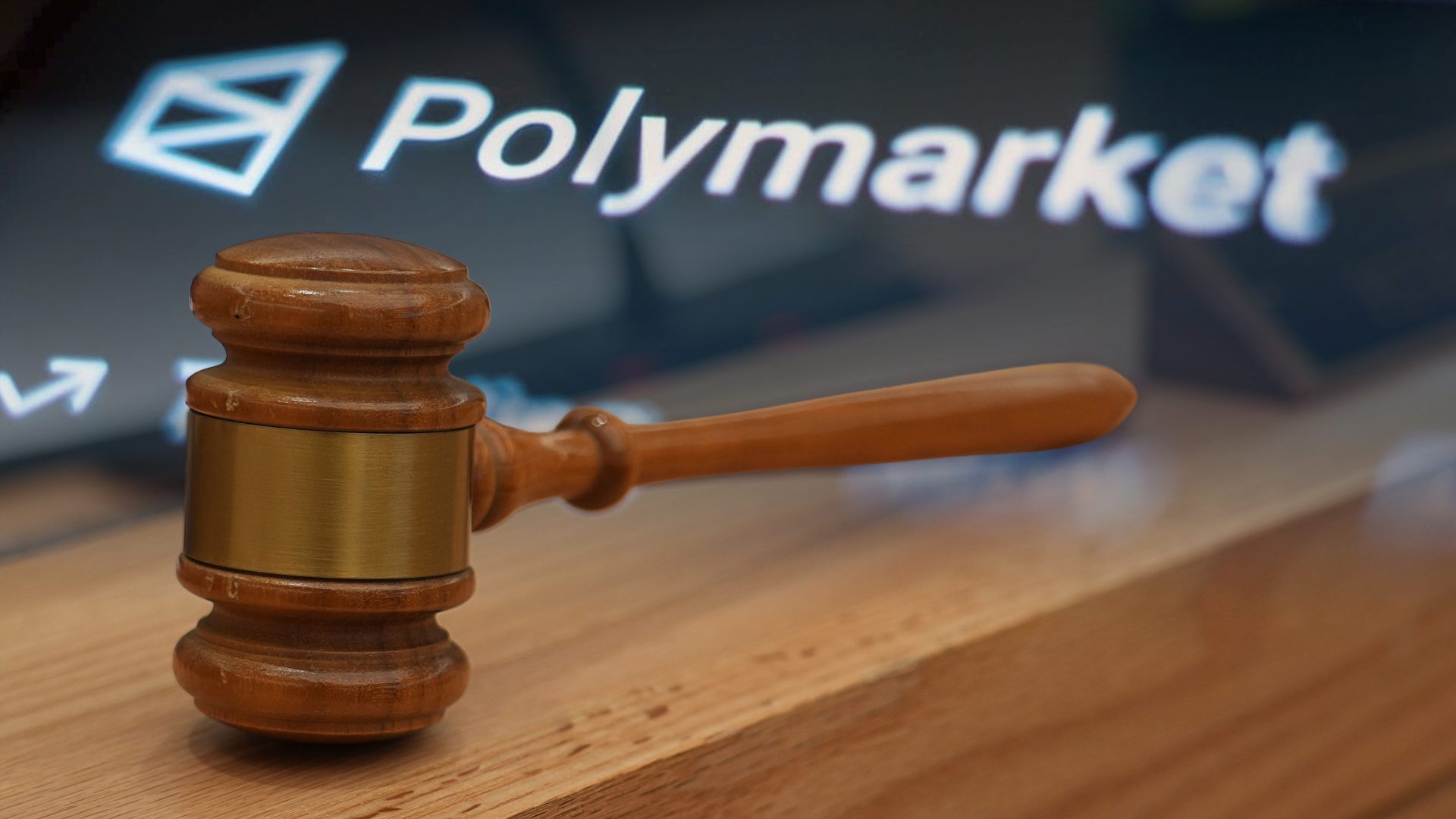
Polymarket’s U.S. relaunch has thus far avoided legal and regulatory scrutiny. Experts say that’s because regulators are monitoring ongoing cases with other platforms, institutional investment has bolstered the industry’s credibility, and the current administration is supportive of prediction markets.
After nearly four years barred from operating in the U.S. under a settlement agreement with the Biden administration, Polymarket formally relaunched on Dec. 2, following months of beta testing and marketing. For now, its U.S. app offers only sports event contracts; users in all 50 states can put money on the outcome of sporting events—-the exact sort of offering that has drawn legal and regulatory scrutiny because of how similar sports event contracts are to sports betting.
Kalshi, Robinhood, Crypto.com, and other companies offering prediction-market platforms have faced resistance from state regulators, Native American tribes, and consumers, including through cease-and-desists and lawsuits. Those same entities have had plenty of time to watch, analyze, and consider their next steps, but to date, Polymarket has faced no pushback.
The Waiting Game
Regulators aren’t rushing in to curtail Polymarket’s operations. Instead, they are closely monitoring how existing legal challenges play out before deciding whether to act against Polymarket.
Courts are already producing conflicting rulings. In Nevada, a federal judge ruled in November that the state’s gaming regulator can seek to stop Kalshi from offering sports event contracts in the state while the case plays out. In New Jersey, however, a federal judge ruled that Kalshi can continue offering sports event contracts while the case proceeds. Kalshi has appealed the Nevada ruling and the state regulator has appealed the New Jersey decision.
“We are likely looking at a circuit split, and I think this does go to the Supreme Court,” says Melinda Roth, a professor of business, sports law, and corporate finance at Washington and Lee University.
In the meantime, regulators are playing the waiting game, according to Stephen Piepgrass, a partner at law firm Troutman Pepper Locke.
“If you’re a regulator, you think, ‘If I win against Kalshi in a case that’s already ongoing, I’ll be able to bring a similar case against Polymarket and apply that precedent,’’’ Piepgrass tells Front Office Sports.
Increasing Legitimacy
Another key difference from earlier enforcement waves is money—and who is supplying it.
When state regulators first targeted Kalshi, the company had not yet raised significant institutional capital. Today, both Polymarket and Kalshi have received financial backing from major institutional investors: in October, Polymarket scored up to $2 billion from Intercontinental Exchange, which operates the New York Stock Exchange, while earlier this month Kalshi confirmed a $1 billion funding round led by venture firm Paradigm. Elsewhere, traditional sports betting giants like DraftKings and FanDuel have entered the fray.
With deep-pocketed institutional players involved, regulators may be more cautious about bringing aggressive enforcement actions.
“This is not just 29-year-old entrepreneurs,” Roth tells FOS. “When you have these mainline financial systems platforms being part of this marketplace, that’s a signal this is serious money and these are serious players. They are involved because they see a future here.”
Piepgrass puts it bluntly: “The horse has left the barn. How much are you really going to try to crack down on this? Do you really want to do that? That’s the bet those in this space are making. We are going to push this so hard and so far that it will be seen as inevitable.”
Presidential Support
At the center of the legal debate is whether sports event contracts fall under the jurisdiction of the Commodity Futures Trading Commission (CFTC), a federal regulator, rather than state gaming regulators.
The CFTC under President Biden barred Polymarket from operating in the U.S. under a settlement agreement and sued to prevent Kalshi from offering political event contracts. By contrast, the Trump-era CFTC allowed Polymarket to relaunch after it acquired a licensed derivatives exchange. Mike Selig, the newly-approved chair of the CFTC, signaled he would defer to the courts on the issue of sports event contracts.
The president’s own social media platform, Truth Social, is planning to launch a prediction-market platform of its own that will include sports, and the president’s son, Donald Trump Jr., is a strategic advisor to Kalshi while also being invested in Polymarket through his investment firm 1798 Capital.
“We know where the administration sits on this,” Roth says.
But the administration will eventually change. Victor Rocha, a Native American based in California who is conference chair of the Indian Gaming Association advocacy organization, tells FOS that his and other groups will keep fighting against the rise of prediction markets. He believes the current regulatory climate is less a sea change than a political moment that could prove fleeting.
“This wouldn’t be happening if Trump wasn’t president,” Rocha says. “Trump won’t be president forever. What goes up must come down, like a piñata. We’ll be waiting.”
Polymarket did not immediately respond to a request for comment.









![[Subscription Customers Only] Jun 18, 2025; Philadelphia, Pennsylvania, USA; Fan with a Morocco flag inside the stadium before a group stage match of the 2025 FIFA Club World Cup at Lincoln Financial Field.](https://frontofficesports.com/wp-content/uploads/2026/03/USATSI_26482439_168420755_lowres-scaled-e1773852693149.jpg?quality=100&w=1024)