The leaders of prediction-markets giants Polymarket and Kalshi insist they aren’t running gambling platforms, but instead are building something bigger with society-altering implications.
Prediction-markets platforms are lighting up social media and causing chaos in the sports betting industry, but their scope goes far beyond who will win a game. Users can wager on elections, Federal Reserve decisions, and even daily temperatures in New York City.
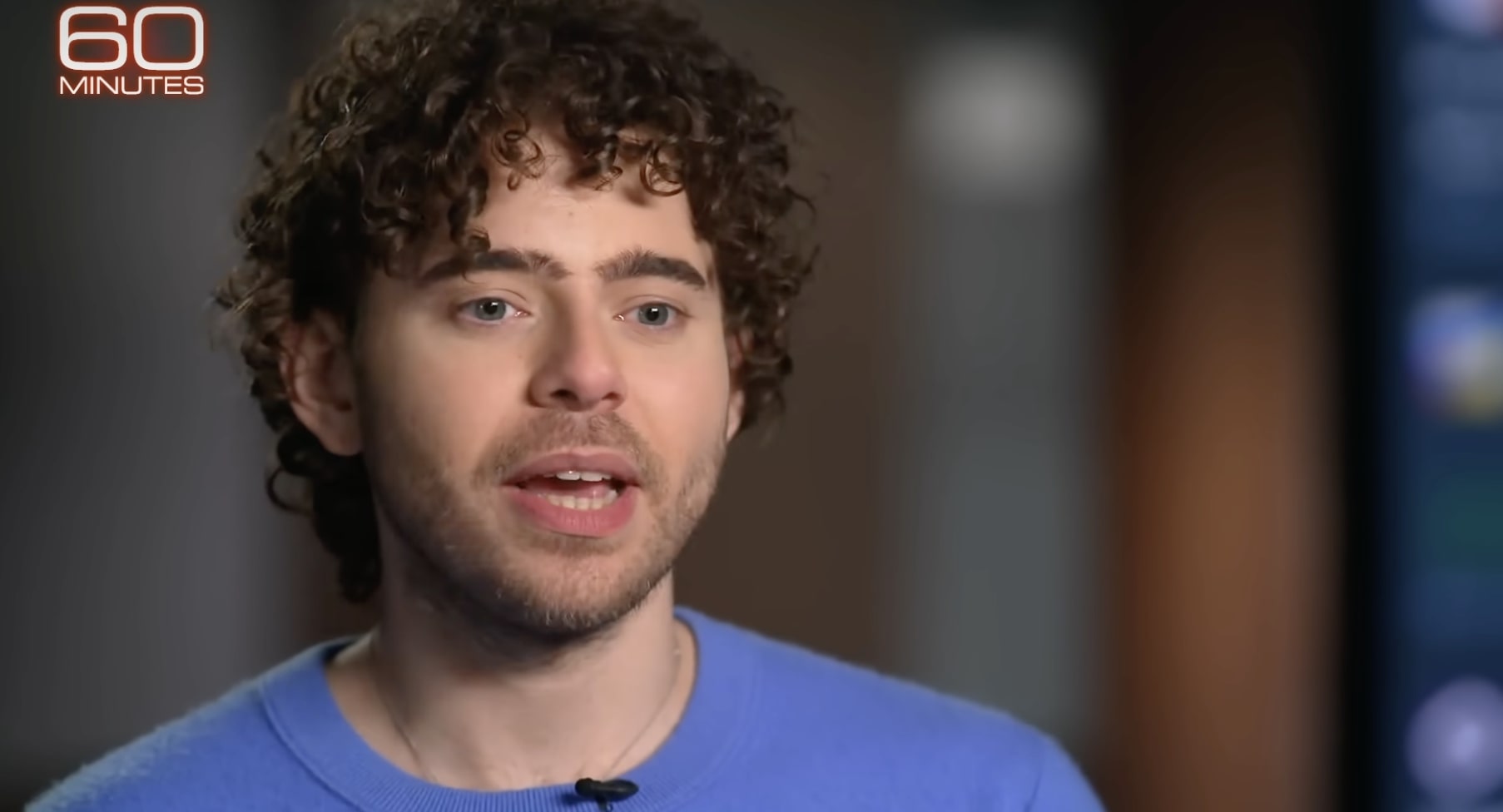
Both Polymarket and Kalshi recently received mainstream media recognition, with Polymarket founder and CEO Shayne Coplan appearing on CBS’s 60 Minutes this weekend and Kalshi cofounders Tarek Mansour and Luana Lopes Lara being interviewed on CBS News last month. Mansour was also on Bloomberg’s Odd Lots podcast in October.
Coplan told Anderson Cooper that prediction markets provide more accurate information than polls and mainstream media.
“It’s the most accurate thing we have as mankind right now, until someone else creates some sort of super crystal ball,” he said.
That’s because they offer the totality of numerous “disparate opinions that people are pontificating about, or that they have really good reason to believe,” he said.
Polymarket—which until recently was barred from operating in the U.S. under a 2022 settlement with the Joe Biden–era CFTC—has been in beta mode in the U.S. for a few weeks, with broader availability expected soon.
The company’s reentry into the U.S. accelerated this summer, when the federal government dropped investigations into Polymarket. It then purchased QCX, a federally licensed exchange, and in October received an investment of up to $2 billion from the parent company of the New York Stock Exchange; Polymarket’s valuation is now $9 billion, Coplan said.
Coplan, whose company paid $1.4 million to the federal government as part of the 2022 settlement, told Cooper it wasn’t “breaking the law.” Instead, it was “incompatible with the regulatory matrix that existed.” He estimates “tens of millions” of people view Polymarket, with “mid-hundreds of thousands” trading and “billions of people who could find value in this.”
Kalshi’s cofounders made their pitch on Nov. 16. Mansour and Lara told CBS News that Kalshi is more like the stock market than a betting platform. “People can make money on what they know,” Lara said on CBS News. “Everyone is an expert on something.”
Kalshi also received investment this year, netting $300 million at a $5 billion valuation. Despite headwinds, including more competition and legal challenges—most recently a proposed class action filed on behalf of users who lost money—Lara and Mansour say Kalshi has systems in place to monitor for suspicious activity, and there have been no market manipulation issues.
On the Odd Lots podcast, Mansour—Kalshi’s CEO—highlighted the importance of prediction markets, saying they could become the “largest” financial market “of them all” and the “most important,” in part because they democratize forecasting.
Support also comes from investors. Nick Tomaino, an early investor in Polymarket through his VC fund 1confirmation, recently told Front Office Sports: “We genuinely believe prediction markets are bringing more truth to the world. That’s why I invested, and that’s what the team believes.”
The information these platforms provide is “more truthful than a media narrative,” he said.
The companies are also buoyed by the current administration. President Donald Trump’s own company, Trump Media, is planning a prediction-markets platform. And the president’s son, Donald Trump Jr., is invested in Polymarket through his VC firm and serves as an advisor to both Polymarket and Kalshi.
Asked on 60 Minutes about Trump Jr.’s involvement, Coplan insisted it is “definitely not to protect myself.” The current administration is “very pro innovation,” including in crypto, which is important to Polymarket because it’s blockchain-based and requires users to trade using cryptocurrencies.
Trump Jr. is there to “help guide me and teach me,” he said. “Nothing wrong about that.”
When CBS News’s Jo Ling Kent pressed him on Trump Jr.’s specific role at the company, Mansour was evasive. “We have a lot of advisors,” he said in response to multiple questions, adding, “this is all about growing the industry.”
On legality, Mansour mirrored Coplan’s confidence. “We are confident in what we’re doing,” he told CBS News.
Like every controversial industry, detractors aren’t hard to find. Author Jonathan D. Cohen, who wrote a book about “America’s preventable sports-gambling debacle,” was interviewed as part of the Kalshi segment on CBS News. He lamented it’s no longer enough to like Taylor Swift; you have to “use your knowledge” of her to try to make money on prediction-markets platforms.
He called that the “canary in the coal mine” of an ongoing “gamblification of American culture.”
“We might not like what that looks like when it fully arrives,” he said.