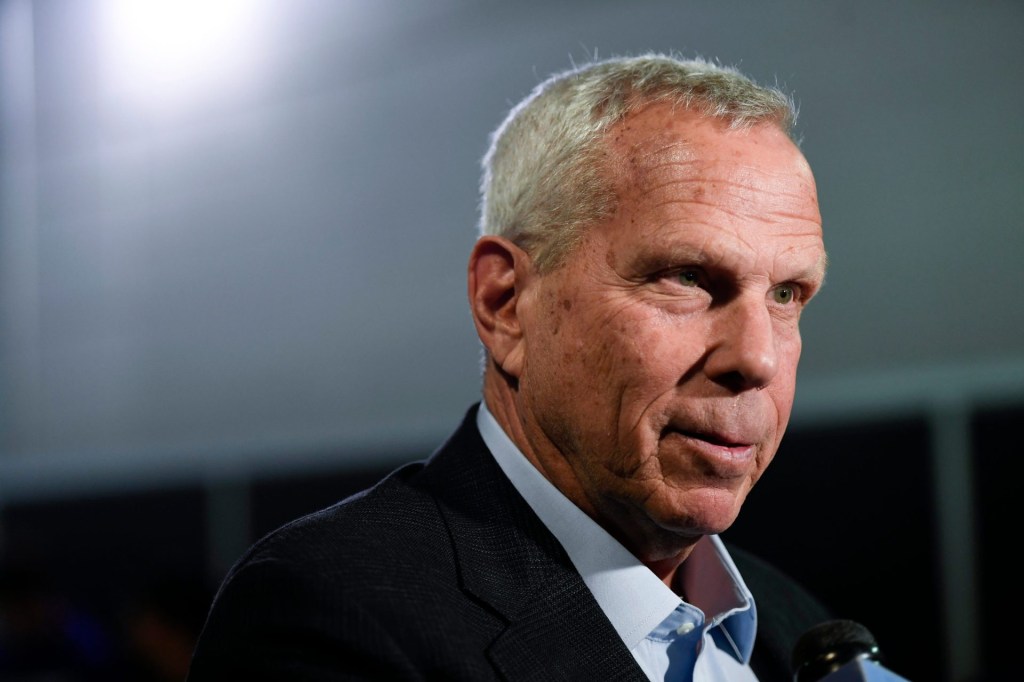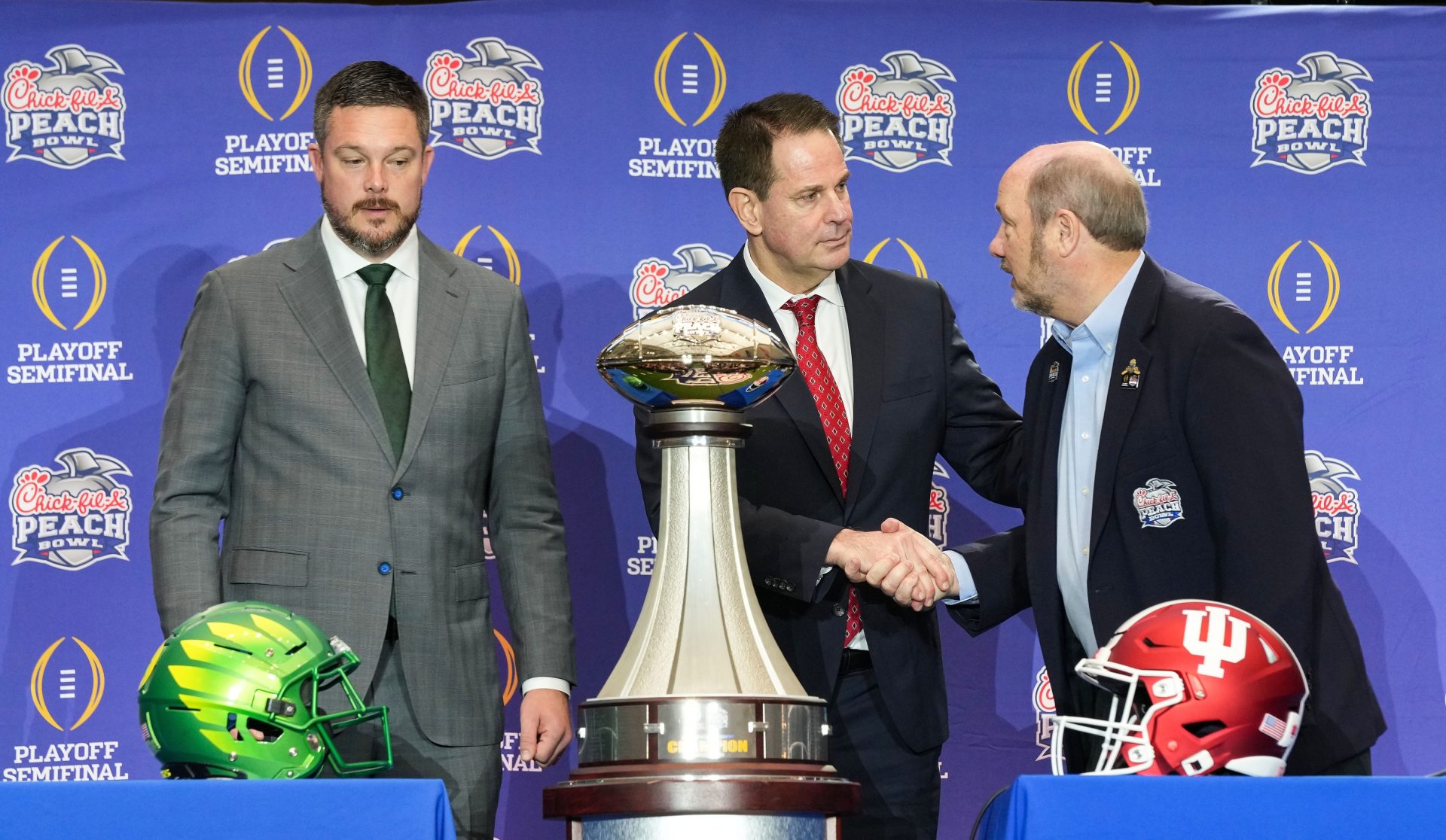
When the Chick-fil-A Peach Bowl kicks off Friday, it will be Gary Stokan’s last as president and CEO after nearly 30 years with the bowl game.
Stokan, 71, joined Peach Bowl Inc. in 1998—he held executive positions at Converse and Adidas before that—and has overseen the event’s transformation into one of college football’s most prominent bowl games. Under his watch, the Peach Bowl became a New Year’s Six fixture in the College Football Playoff. The game has sold out in 22 of the last 25 years, and last season’s game drew an average of about 17.3 million viewers, second only to the Rose Bowl’s 21.3 million.
Now Stokan is retiring at a moment when college football is undergoing its most dramatic transformation in decades.
Ahead of Friday night’s matchup between Indiana and Oregon, Stokan spoke with Front Office Sports about NIL, PE, the existential issues facing college football right now, and the time Wilt Chamberlain served as his rebounder.
Front Office Sports: What do you make of this year’s Hoosiers-Ducks matchup?
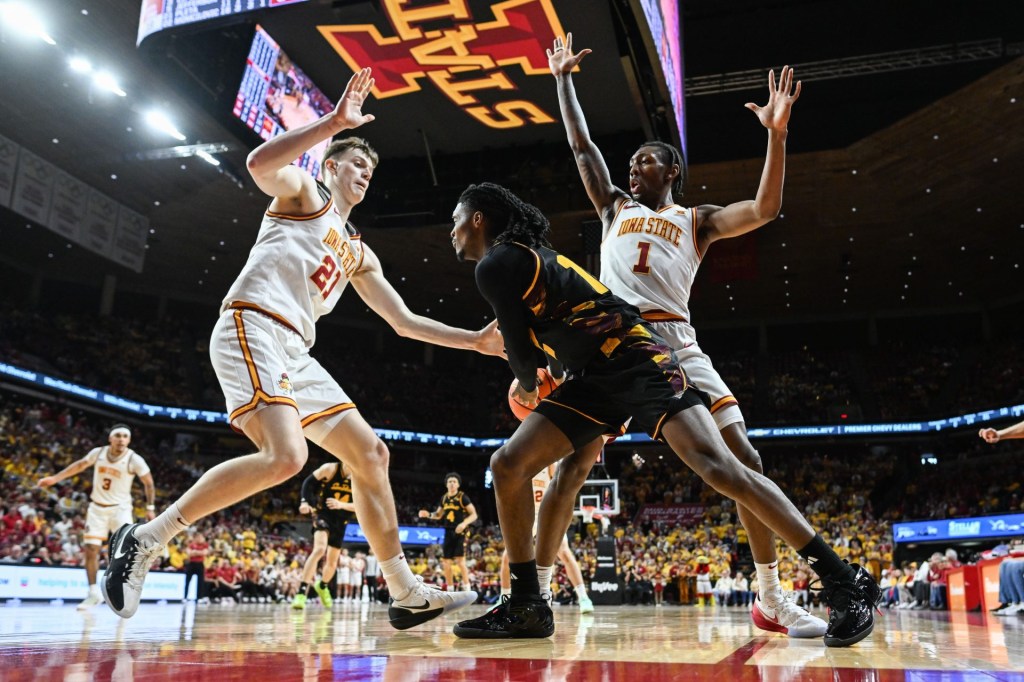
Gary Stokan: It’s been an interesting year. NIL has proven to be a factor in providing opportunities for players to go to teams that, before now, had been kind of afterthoughts. Indiana went from the most losingest team in the country to being number one. A significant number of Indiana’s starters were transfer portal players. The evolution of college football has been warp-speed in just two years since the House [v. NCAA] settlement.
FOS: From a business perspective, between NIL, the House settlement, the transfer portal, and questions surrounding private-equity investment in college athletics, has this season felt more chaotic than usual?
GS: Everything in college athletics is chaos right now. There’s no clear vision for where collegiate athletics needs to go. You’ve mixed the academics—which is supposed to be the ruling, underlying factor in all this—with professionalism, and the two haven’t mixed well. We don’t have it right.
FOS: What specifically doesn’t college sports have right?
GS: We’ve lost the mission. Kids are transferring three or four times, taking a lot of classes online, spending only nine months on campus, and not building real relationships with their schools. If and when 98% of them don’t go pro, they need some relationship with the institution, because the alumni base can help them get a job and be a productive citizen in society.
I’m afraid there’s gonna be mental health issues with this generation of kids. They aren’t facing adversity or learning how to build character. Adversity reveals character.
FOS: What would you change?
GS: I believe we need commissioners for college football, college basketball, women’s basketball, and baseball—with boards made up of presidents, athletic directors, coaches, players, and commissioners who know the sport.
We also need a national standard on NIL. We can’t have state-by-state laws that are different. We need Congress to step in. I submit that the SCORE Act should be voted on and come into law so we can bundle TV rights across all the conferences, because I believe we are leaving two or three billion dollars on the table.
FOS: Do you think NCAA president Charlie Baker is up to the task?
GS: I don’t know him personally, I’ve never met him. I know he had a political background, and I think that’s why the presidents hired him. They knew they needed to strike a chord with Congress in D.C. to get legislation passed. But he doesn’t have the relationships within college football, and you have to have leaders who know the inside of sports.
FOS: The University of Utah announced a deal with Otro Capital, and the Big 12 is in talks about a conference-level private-equity deal. What do you think about the entry of private-equity money into college sports?
GS: There’s a real dichotomy there. The school is doing its own deal, and you’ve got the conference commissioner negotiating a deal. My business acumen is built on an acronym, ROCKS: relationships, opportunities, competitiveness, knowledge, and strategy. Yeah, you’re looking for opportunities here, but I don’t think you’re being very strategic.
FOS: Earlier this year, for the Aflac kickoff games, you brought your two daughters, their husbands, and your four grandsons out to do the coin toss on the field. Why was it important for you to do something like that?
GS: I remember when I was eleven years old, my dad ran tickets at the Civic Arena in Pittsburgh. The 76ers came to play one game a year in Pittsburgh, and Wilt Chamberlain was on the team. He came out—I still remember never seeing anybody so tall in my life.
We’d rebound the ball and throw it back to the guys while they got up shots. Well, the ball rolls out to the corner. I pick it up and shoot; it goes in. Wilt rebounded the ball and threw it back to me. I shot it again; it went in. The horn sounded for the teams to go to the bench, but Wilt didn’t listen. He just kept feeding me the ball as I fired up shots.
To be exposed to something like that, it changes your whole perspective. That’s what I’ve tried to do with my grandkids. They got to see and be part of the game from a different perspective, meet the coaches and players. Now it’s up to them to take hold and make something of it.