Max Kellerman, LeSean McCoy Off DAZN Boxing Show As Mario Lopez Joins
Want more from Front Office Sports
in your search results?
In March 2014, Kiki VanDeWeghe reached out to a friend of his, an Iranian-American healthcare and pharmaceutical executive named Paul Edalat.
VanDeWeghe, an accomplished NBA player and executive, was the league’s senior vice president of basketball operations at the time.
The reason he reached out, according to Edalat, was simple: The NBA’s partnership with Delta Air Lines was set to expire, and the league thought the Emirates airline—owned by the government of Dubai—would be an ideal replacement. VanDeWeghe, knowing Edalat had connections in the region, hoped he could make some introductions.
“The timing could not be better,” VanDeWeghe wrote Edalat in an email, court documents show. “We would like you to relay our interest to Timothy Clark, President of Emirates.”
According to Edalat, the NBA then formally engaged him to help secure a sponsorship deal. He now claims the sides agreed to a “simple commission-based compensation” that would pay Edalat and his company 10% of the deal “and any future partnership” between the NBA and Emirates.
The NBA eventually opted to renew its existing partnership with Delta in 2015, putting its talks with Emirates on hold.
More than a decade later, VanDeWeghe’s outreach has become the basis of a lawsuit that offers a rare window into how one of the world’s most powerful sports leagues pursues global business deals.
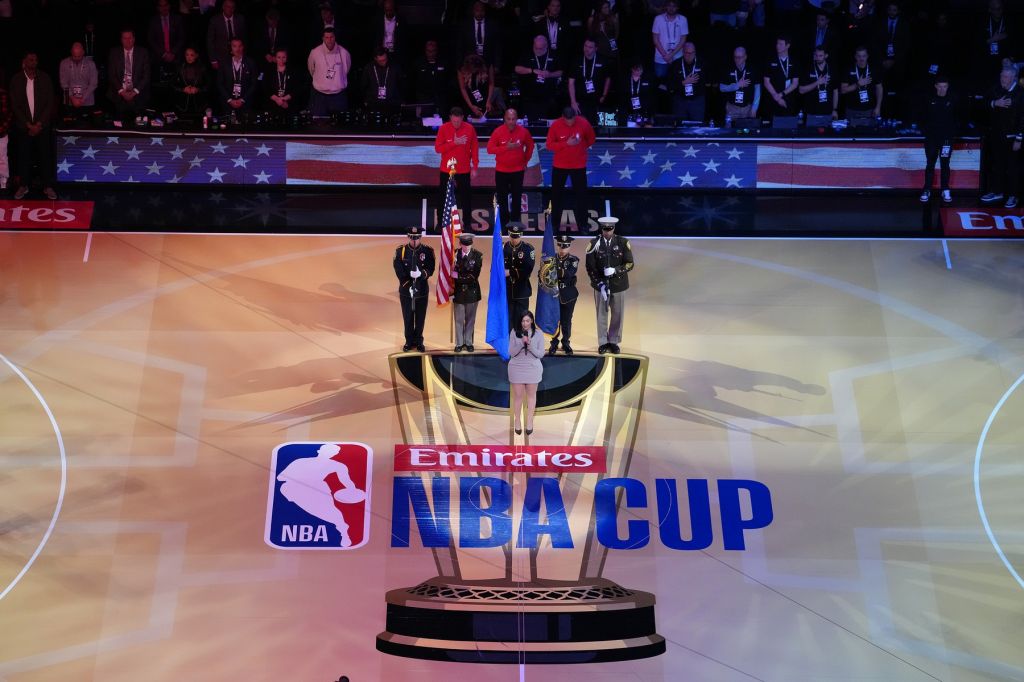
In February 2024, the NBA announced it had reached a multiyear global marketing partnership with Emirates, naming the company its “Official Global Airline Partner” and the title sponsor of the NBA Cup.
Soon after the announcement, Edalat alleges, VanDeWeghe—who had stepped down from his executive vice president role with the NBA in 2021 to become a special advisor—reached out.
“You need to look into this,” VanDeWeghe told Edalat, according to Edalat’s attorney.
According to the complaint, Edalat’s attorney reached out to the NBA in April 2024 seeking confirmation of Edalat’s compensation. A league lawyer responded that the NBA had “no record” of any agreement with Edalat.
In 2025, Edalat filed a breach-of-contract lawsuit in Florida state court, alleging the NBA cut him out of the Emirates agreement despite relying on him years earlier to initiate the relationship. The suit seeks damages exceeding $500,000, though the filing suggests the potential value at stake could be significantly higher depending on how the Emirates sponsorship is valued. (The size of the deal has not been publicly reported, but a letter from Edalat’s lawyer to the league speculates the deal is worth $60 million plus other unknown economic benefits.)
A spokesperson for the NBA said the league does not comment on ongoing litigation. But in response to an April 2024 letter from Edalat’s attorney—which was attached as an exhibit to the lawsuit—an NBA lawyer wrote no compensation agreement with Edalat ever existed.
“Any interactions Edalat may have had with Emirates and a member of the NBA’s Basketball Operations group in 2014 have no relevance to the Emirates partnership that the NBA directly negotiated and announced a decade later,” the lawyer wrote. In a later motion, the NBA added Edalat’s complaint “contain virtually no details about the terms of this supposed agreement” and “confirms he provided no services whatsoever between 2015 and 2024 with respect to any deal between the NBA and Emirates.”
Edalat’s attorney, Tucker Byrd, didn’t respond to requests for comment. A spokesperson for Emirates declined to comment.
‘A Visionary Industry Disruptor’
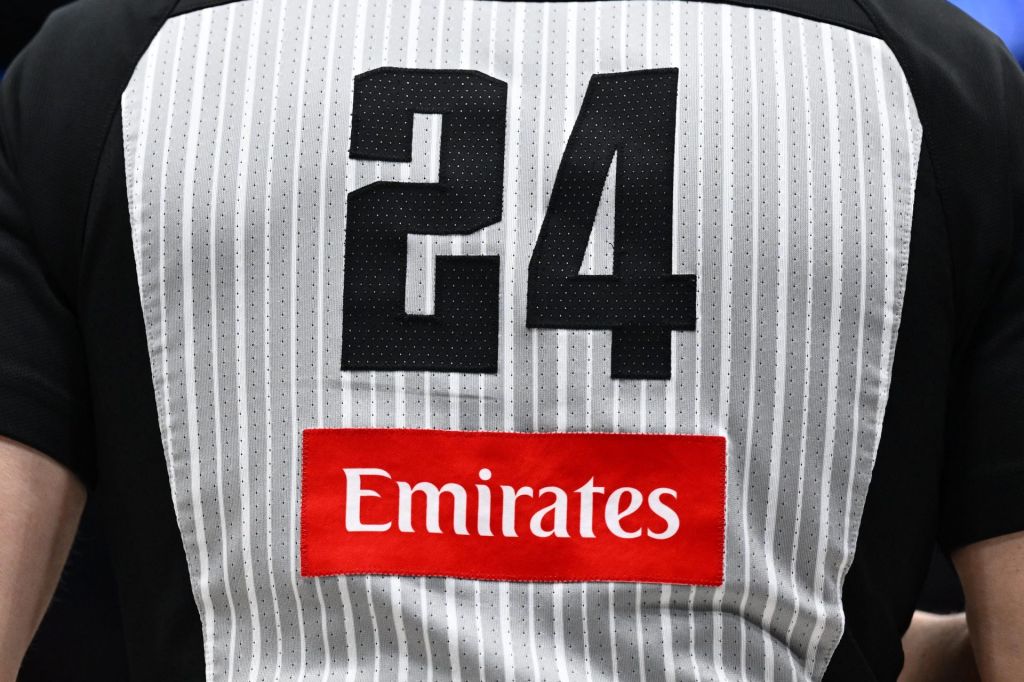
The NBA in recent years has made a point of expanding its footprint in the Middle East. It began playing preseason games in Abu Dhabi in 2022 and, later that year, changed its rules to allow sovereign wealth funds to invest in teams. Emirates’s logo is increasingly ubiquitous in the NBA, appearing on referee jerseys and the custom courts used for NBA Cup games. But back in 2014, Edalat’s lawsuit alleges, the league lacked the relationships it needed to reach Emirates’s top decision-makers.
That, Edalat says, is why VanDeWeghe came to him. The complaint describes Edalat as having “deep ties” to the region, including relationships with business and government leaders, though it offers little detail about how those relationships were built. On LinkedIn, he describes himself as “a visionary industry disruptor driven by his desire to transform the pharmaceuticals industry to better serve patients and consumers.”
The nature of Edalat’s relationship with VanDeWeghe is also unclear. In one email attached as an exhibit, Edalat refers to VanDeWeghe as “one of my dearest friends,” but the filing provides little other detail about the origins of their relationship.
VanDeWeghe did not respond to multiple requests for comment.
The NBA has disputed the idea it needed Edalat to make key connections with Emirates. In its response to Edalat’s attorney, the league wrote the airline had sponsored NBA games in China in 2012 and 2013. The NBA also pointed to a 2013 report about discussions between the league and Emirates about a possible partnership.
Still, according to the complaint, after receiving VanDeWeghe’s email, Edalat began working on the NBA’s behalf, he says. He engaged Zaki Kada, a longtime friend and business contact in Dubai, who then reached out to Salem Ghanem Al-Marri, a former colleague who worked as Emirates’s head of planning, aeropolitical, and industry affairs. Kada, according to the complaint, used that connection to inquire about approaching Boutros Boutros, an SVP at the airline.
Emirates, according to the complaint, requested something official from the NBA confirming its interest. On May 1, 2014, VanDeWeghe sent a letter on league letterhead to Clark, Emirates’s president, saying the NBA was “excited about the possibility of a potential partnership” and that its “focus is for Emirates to become the exclusive airline sponsor and partner of the NBA.”
The letter also referenced Edalat’s role.
“Liwa North America and CEO Paul Edalat has provided this introduction and will continue to assist in seeing the process through,” VanDeWeghe wrote, according to the complaint.
Armed with that letter, Edalat traveled to Dubai and met with Boutros during the week of May 11, 2014, according to the complaint. The suit alleges Boutros responded favorably and said he would discuss the opportunity with other senior Emirates executives.
The effort did not immediately result in a deal. According to the complaint, the NBA’s discussions with Emirates cooled later that year as the league focused on renegotiating with Delta. But in early 2015, Edalat’s suit alleges, VanDeWeghe asked him to reengage with Emirates.
That July, Edalat emailed VanDeWeghe saying Emirates had “come back to the table.” VanDeWeghe responded by introducing Edalat over email to Mark Tatum, the NBA’s deputy commissioner. Tatum then responded directly to Edalat, according to the complaint.
“We are still very interested in having a discussion with Emirates about a partnership,” Tatum wrote. “Let’s set up a call or meeting to discuss.”
Tatum was ultimately unable to meet with Edalat in Las Vegas that month, but he dispatched two senior NBA business executives—Emilio Collins, then the head of the league’s global marketing partnerships department, and Rachel Jacobson, who ran global business development—to meet with him instead. (Neither works for the league now.) In an email included in the complaint, Tatum wrote Collins and Jacobson had “actually been in discussions with Emirates” and were “equipped” to talk with Edalat about a potential partnership going forward.
Edalat met with Collins and Jacobson at the Wynn Las Vegas on July 16, 2015, according to the complaint. But the talks between the NBA and Emirates soon stalled again. By the end of that summer, the lawsuit alleges, Jacobson told Edalat over the phone that the NBA would continue with Delta because the league could not find common ground with Emirates.
Nearly a decade later, the Emirates deal resurfaced.
In February 2024, the NBA announced its multiyear partnership with Emirates. Edalat contends that despite his role, he was neither included in the final negotiations nor compensated.
The NBA has denied liability, and the case remains ongoing. It has since been transferred to federal court in the Southern District of New York. No trial date has been set, but the sides show no signs of settling. Byrd said last year he hopes the case goes to trial. The NBA, meanwhile, argued in a recent motion that the case should be dismissed, writing that Edalat has since provided “only vague allegations of an oral agreement.”
Download the FOS App
The business of sports, in your pocket.



Scan the QR code to get the app now.