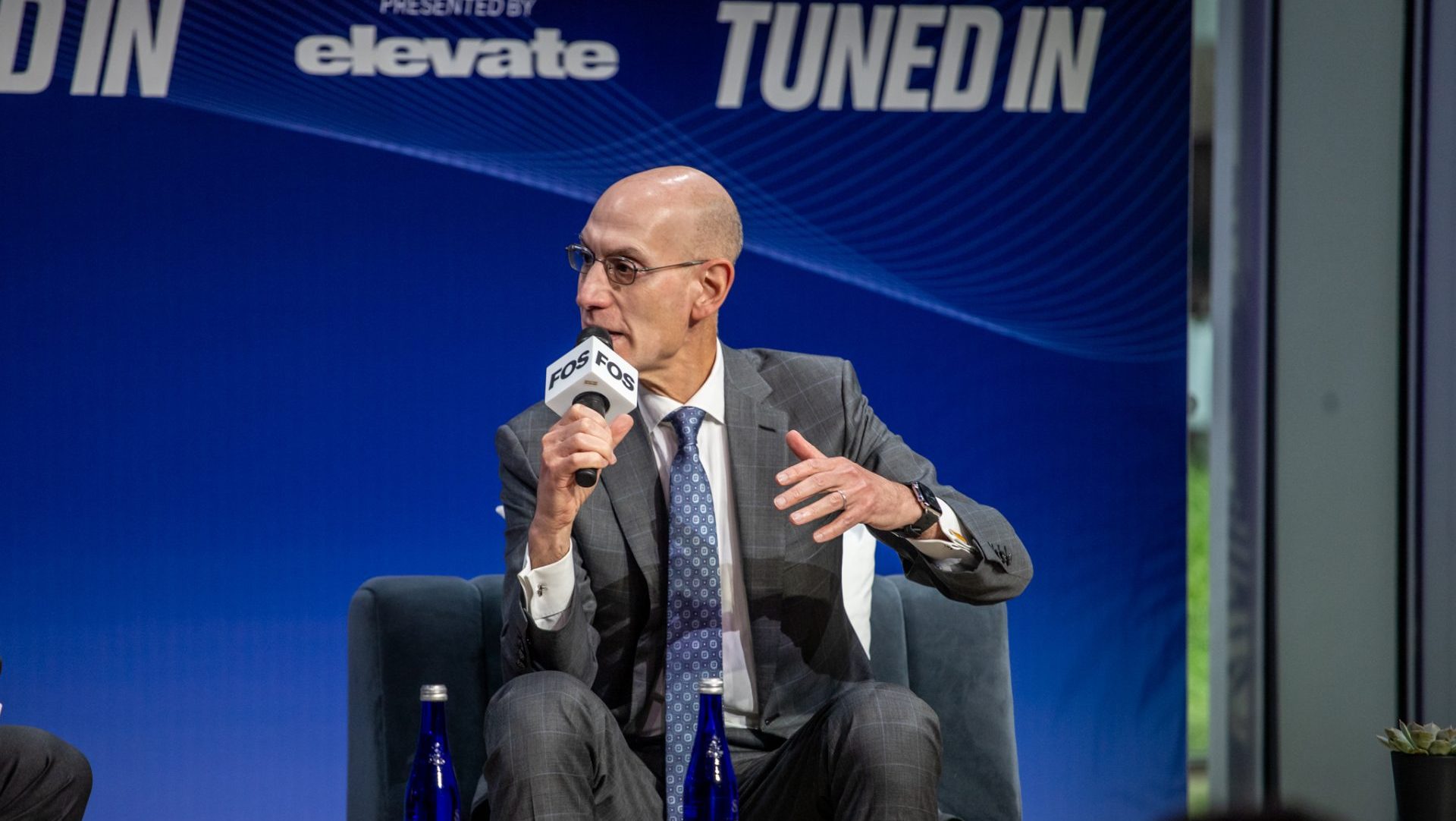
Adam Silver’s long-awaited promise to expand the league is finally coming into focus. For years, the NBA commissioner has talked about adding two teams, but the arbitrary deadline of a new media-rights deal came and went without expansion. Then a flurry of team sales this year caused further delay. Now, it looks like 2026 will finally be the year the league makes it happen.
“We’re in the process of working with our teams and gauging the level of interest and having a better understanding of what the economics would be on the ground for those particular teams,” Silver said Tuesday night. “Sometime in 2026 we’ll make a determination.”
It’s the most explicit Silver has been about an expansion decision in a year when the league has seemed to flip-flop on adding teams.
Three team sales this year kept expansion talks on ice because the rising team valuations would have increased the cost of an expansion bid. When the Celtics sold in March to Bill Chisholm for $6.1 billion it was the largest sale of a North American sports franchise. Then the Lakers sold in June to Dodgers owner Mark Walter for $10 billion; and the Trail Blazers sold in August to Hurricanes owner Tom Dundon for more than $4 billion.
“As I’ve said before, domestic expansion … is selling equity in this current league,” Silver said. “If you own 1/30 of this league, now you own 1/32 if you add two teams. So it’s a much more difficult economic analysis. In many ways, it requires predicting the future.”
Earlier this summer, Silver acknowledged both the desire for expansion and the challenges that come with trying to serve fans everywhere. “We recognize there are underserved markets in the United States and elsewhere,” he said. “And I think markets that deserve to have NBA teams, probably even, if we were to expand, more than we can serve.”
In July at Summer League, Silver cited the “broken model” with the league’s regional sports networks as another hurdle for expansion saying it “would be malpracticing” to give two new markets teams without figuring out how fans can watch games.
And in September, Silver said rising team valuations are another hurdle for expansion despite the same factor previously being used as a reason to support it. “It’s a high-class problem, but some of the recent jumps in franchise valuations sort of created some confusion in the marketplace about how you might even price an expansion franchise,” Silver said.
The question remains of where two new NBA teams could land. Both Seattle and Las Vegas have been floated, but Silver made clear that the league is considering other markets as well.
“I want to be sensitive there about this notion that we’re somehow teasing these markets, because I know we’ve been talking about it for a while,” Silver said.
With Stateside expansion finally coming into view, the league is also eyeing opportunities abroad.
Many of the league’s current stars hail from Europe, and the NBA has partnered with FIBA for an international league. Silver went to Europe this summer with deputy commissioner Mark Tatum exploring cities and meeting with teams and politicians to discuss a new league on the continent with cities such as London, Paris, and Madrid being considered as potential markets.
At the Front Office Sports Tuned In event in September, Silver said the goal is to launch the league within the next “two to three years,” but pointed to European arena infrastructure and regulatory issues as hurdles the league is currently working through.
“I would say we’re casting a very, very wide net right now and essentially saying to anyone who’s interested, come see our bankers, explain to us why you’re interested, how you view the opportunity, what resources you would put behind opening a team,” Silver explained on Tuesday. “And then we’re taking all that information back, and then I think sometime in late January … we’ll be in a position to have more serious conversations with those interested parties.”
After years of mixed messaging, 2026 could be the year Silver expands the NBA—both domestically and abroad.