Most people in and around MLB expected the automated ball-strike (ABS) challenge system to have a big impact on the game, but it’s becoming immediately clear just how much so.
Just four days into the league’s 2026 regular season, ABS has become a widespread hit. In 35 games played, there have been 124 total challenges, 67 of them (54%) resulting in overturned calls. Pitchers and catchers so far have combined to have both a greater number of challenges and a better success rate than hitters, but those figures are expected to vary considerably on a day-to-day basis.
Perhaps not surprisingly, the vast majority of ABS challenges so far have been on pitchers below the strike zone, which can be more difficult for home plate umpires to track as they’re stationed behind the catcher.
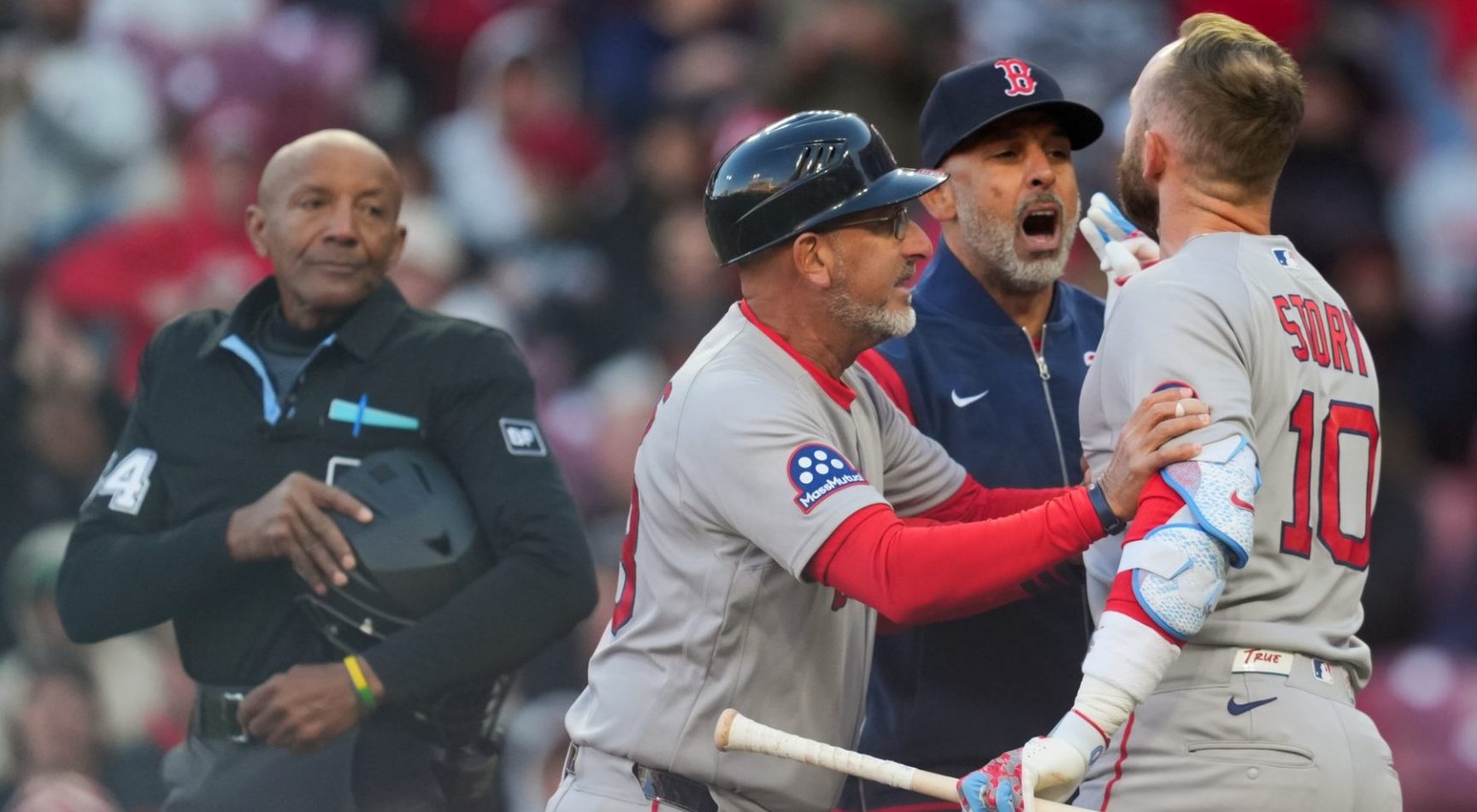
More qualitatively, though, fans and players alike have also quickly embraced the heightened pitch accuracy that ABS fosters. In particular, fans at Cincinnati’s Great American Ball Park roared with delight Saturday when home plate umpire C.B. Bucknor had two straight strike-three calls on the Reds’ Eugenio Suárez overturned in a game against the Red Sox. During that Boston-Cincinnati game, six other Bucknor calls were challenged, with four more reversed.
“He has one job to do, it’s call balls and strikes,” Red Sox manager Alex Cora said of Bucknor. Cora was ejected from the game, as he, too, had issues with the strike zone. “It wasn’t his best day. That’s what the [ABS] system does. It’s out there. Everybody sees it, and he’ll be the first one to accept it. I saw him putting his head down after one of the challenges.”
Baseball’s joint competition committee last fall approved the introduction of ABS in the 2026 MLB regular season. The technology has been colloquially known as “robot umpires,” and it’s been a key storyline as the new schedule starts. To be clear, though, human umpires remain behind home plate in every game, and the system is based on challenges initiated by batters, pitchers, or catchers.
The widespread support of ABS, however, isn’t completely universal. Even as individual reviews take about 15 seconds, some players and coaches have lamented disruptions to normal game flow, particularly inning-ending pitch calls that, when reversed, can result in teams going back out on the field.
“I’m not a fan, but it is what it is,” said Red Sox pitcher Sonny Gray. “It’s just a weird game we’re playing now.”
Moving the Overton Window
The adoption and rapid embrace of ABS rests heavily on the foundation that MLB’s successful 2023 rollout of the pitch clock built. That effort arrived after extensive testing in the affiliated minors and in spring training, and then quickly produced meaningful results in reduced average game times and more action on the field—in turn driving multiyear increases in attendance and national television viewership,
The same template was used for ABS, and it continues to push the envelope of what’s possible for the league.
“The process that we went through with that set of [2023] rule changes was really instructive for the owners,” MLB commissioner Rob Manfred said last fall at the Front Office Sports Tuned In summit. “We relied on fan research, we did a ton of testing to make sure we had a very good feel for what was going to happen … and our predictions turned out to be very accurate. That gives you the ability to go back to owners and say, ‘Hey, we can change. We can change again, and we can do it in a way that’s going to make your business better.’”