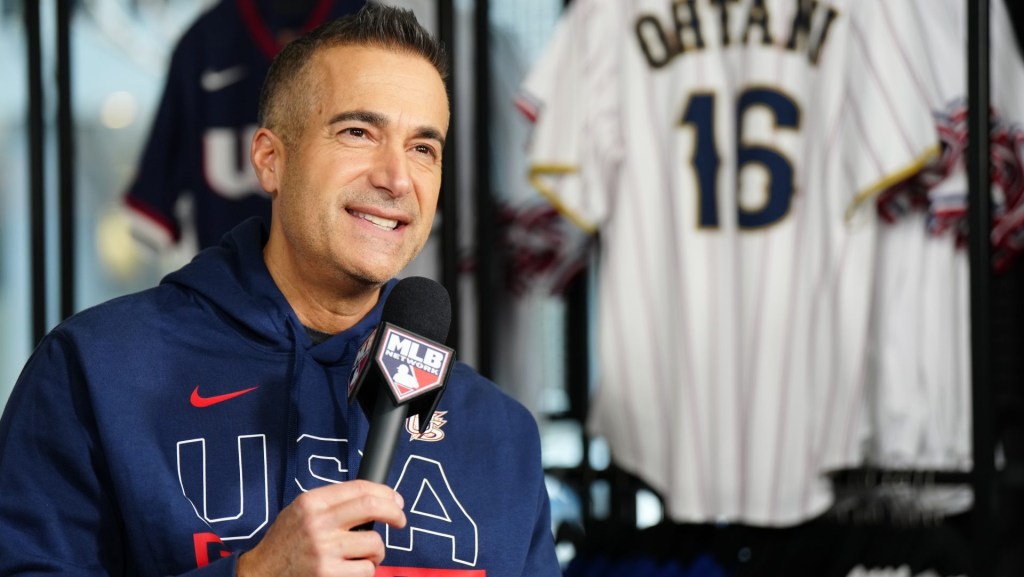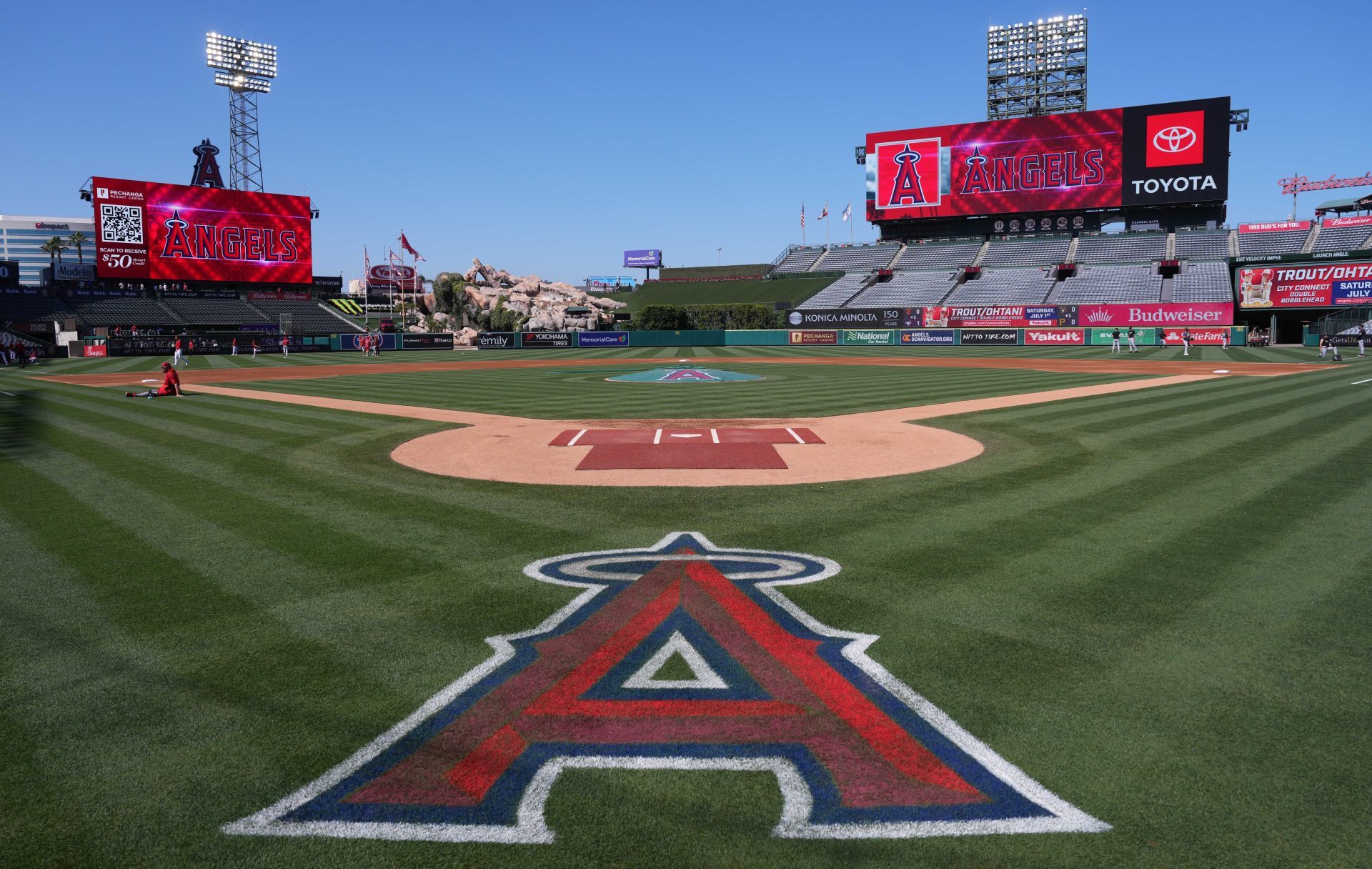
MLB’s in-house local media department, which began in emergency circumstances in early 2023, will handle half the league in 2026 after the Angels on Tuesday became the 15th team to fold into the program in some fashion, completing a whirlwind offseason.
The club became the eighth club in the last eight days to become part of MLB Media, and the 15th overall, marking the latest effect of the ongoing decline of regional sports network operator Main Street Sports Group. The parent of the FanDuel Sports Network sought to keep its nine MLB clubs, but with the company’s financial future shaky at best and multiple rights fee payments already missed, it proposed to reduce the future fees it paid those teams.
Rather than accept that scenario, the nine clubs all left last week. All but the Braves ultimately elected to join MLB Media, which will lead the distribution of their local games, the production of them, or in most instances, both. The Angels’ agreement with the league, at least for now, is only a distribution-based one for local streaming.
Atlanta, meanwhile, is instead expected to form its own local media network, similar to what the Rangers have done. That team, the only publicly traded one in MLB, will report its next set of quarterly earnings on Feb. 25, and more discussion around their effort is expected then.
The latest group of clubs to join MLB Media includes the Angels, Brewers, Cardinals, Marlins, Reds, Rays, Royals, and Tigers. That set adds to seven already in the program: the Diamondbacks, Guardians, Mariners, Nationals, Padres, Rockies, and Twins.
Notably, the agreement between the league and the Tigers is a broader one with club owner Ilitch Sports + Entertainment, where MLB will also aid in the production and distribution of games for the NHL’s Red Wings, beginning with the 2026–27 season. Ilitch also owns the Red Wings.
Additionally, there are six other clubs for which MLB will aid with in-market streaming, even while they still have traditional RSN deals of some form. That group includes the A’s, Dodgers, Giants, Mets, Orioles, and Phillies.
Then to Now
MLB’s creation and subsequent development of the in-house local media department became necessary three years ago when Main Street Group, formerly Diamond Sports Group, abruptly dropped its coverage of Padres games as it entered Chapter 11 bankruptcy protection. That dismissal by DSG was followed by several similar ones, and a subsequent reorganization and name change have not materially changed the company’s overall trajectory.
The RSN business has been particularly battered as cord-cutting accelerates and consumers who don’t watch live sports have increasingly rejected paying for those networks.
Through all of that, a key goal of MLB Media has been to keep the games available to fans, often through a mix of streaming, over-the-air, and local cable agreements.
“No matter what happens … fans are going to have the games,” said MLB commissioner Rob Manfred recently.
Uncertain Economics
The key question is what the large-scale move to MLB Media will mean for those clubs. In the short term, there will be a meaningful reduction in local media revenue for those teams. Those drops, in some cases, will reach eight-figure annual sums. The MLB Media economic model is essentially an “eat-what-you-kill” one in which teams glean whatever can be generated through streaming subscriptions, advertising sales, and carriage fees from local providers.
That structure is materially different from most multiyear RSN deals that contain guaranteed rights fees.
Overall, local media provides more than one-fifth of total revenue across baseball, and the current situation could further exacerbate a growing fiscal divide between these teams and large-revenue ones such as the Dodgers, Mets, and Yankees that still enjoy hefty income from RSNs.
The move of the clubs to MLB Media, however, provides much more control, security, and flexibility compared to being tied to the failing Main Street Sports and ensures games will still be produced. In many instances, the in-house structure also provides greater overall reach.
MLB reached an agreement in 2024 with the MLB Players Association to provide up to $15 million for impacted clubs as a “media-disruption distribution.” As the league enters what is expected to be a tough round of bargaining with the players, that program is not currently set to be repeated.
“We are not providing financial assistance right now,” Manfred said.
Still, the ongoing schism in local broadcasting will be a fundamental component of the labor talks.