Michigan has found its replacement for Sherrone Moore.
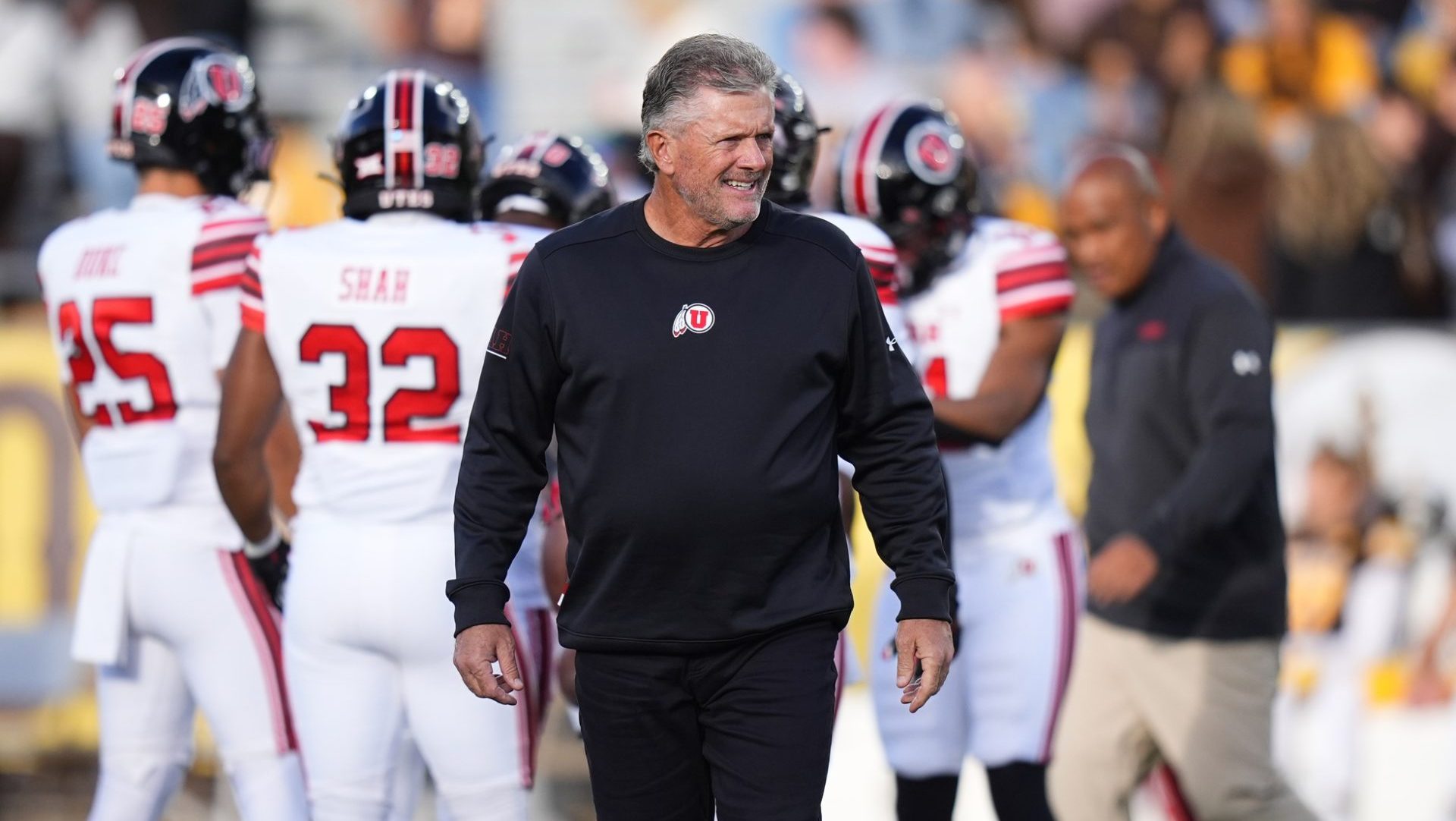
Kyle Whittingham, who has spent the past 21 seasons as Utah’s head coach, is the focus of the Wolverines’ coaching search, ESPN first reported Friday morning and the school announced Friday night.
Michigan will play Texas in the Citrus Bowl on Dec. 31. Interim coach Biff Poggi, will coach the team against the Longhorns. Poggi previously said he had multiple interviews with Michigan for the head coaching job after he took over for Moore, and said Warde Manuel, the Wolverines’ athletic director, told him the school planned to hire a replacement coach before the bowl game.
Former head coach Moore was fired on Dec. 10 after a university investigation found he had an inappropriate relationship with a staff member. He was arrested shortly after he was fired and charged with a third-degree felony for home invasion and two misdemeanors after breaking into the staff member’s apartment.
Whittingham, 66, comes to Michigan after more than 30 years at Utah. He started with the program as a defensive line coach in 1994 and took over as head coach in 2005, following the departure of Urban Meyer to Florida. Whittingham has coached the Utes in three conferences: the Mountain West, Pac-12, and Big 12. As head coach, Whittingham went 177–88 in Salt Lake City, with a winning percentage of about 67%.
Before stepping down on Dec. 12, Whittingham was the second-longest tenured coach in college football, trailing only Iowa’s Kirk Ferentz. When Whittingham announced his resignation, he clarified that he wasn’t retiring and would coach again. He still plans to coach the Utes in the Las Vegas Bowl against Nebraska on Dec. 31.
“When you’ve got coaching in your blood, it just doesn’t go away,” Whittingham said shortly after. “We’ll see. I’ve got to [step] down and step away, and reevaluate things and see where we’re at. I’m a free agent; I’m in the transfer portal.”
Whittingham’s decision to step down came three days after Utah athletic department announced a private-equity deal with Otro Capital, the first of its kind in college sports.
The deal was announced at a time when schools are struggling to balance their books in light of the $20.5 million revenue sharing they’ve started with athletes because of the House settlement. The Utah–Otro venture is expected to generate nine figures’ worth of revenue, a source familiar with the matter previously told Front Office Sports.
At Michigan, Whittingham steps into a much different PE situation. Michigan plays in the Big Ten, which has sought its own private-capital investments to help give schools a cash infusion because of revenue-sharing.
Michigan, along with USC, opposed a Big Ten deal with UC Investments, the University of California’s pension system fund, partially because of the lack of details they said they got from the conference. UC Investments announced in November it would not purchase an equity stake in the conference without Michigan and USC being on board.
Had the deal been approved, UC Investments would have invested $2.4 billion into a spinoff entity called Big Ten Enterprises for a 10% stake in the group. The deal would have required Big Ten schools to sign a grant of rights contract that would have bound them together until 2046.
“I think it’s the right decision,” University of Michigan regent Jordan Acker, who has been publicly outspoken against the deal, told FOS in response to the UC Investments statement. “I think there’s no rush in this deal. There should be no rush on any deal that affects the long-term success and integrity of the University of Michigan and of the Big Ten conference.”
That won’t be Whittingham’s problem—for now—as he takes over a program looking to return to the success it had under Jim Harbaugh, who led the program to the 2023 national championship before returning to the NFL to coach the Chargers.