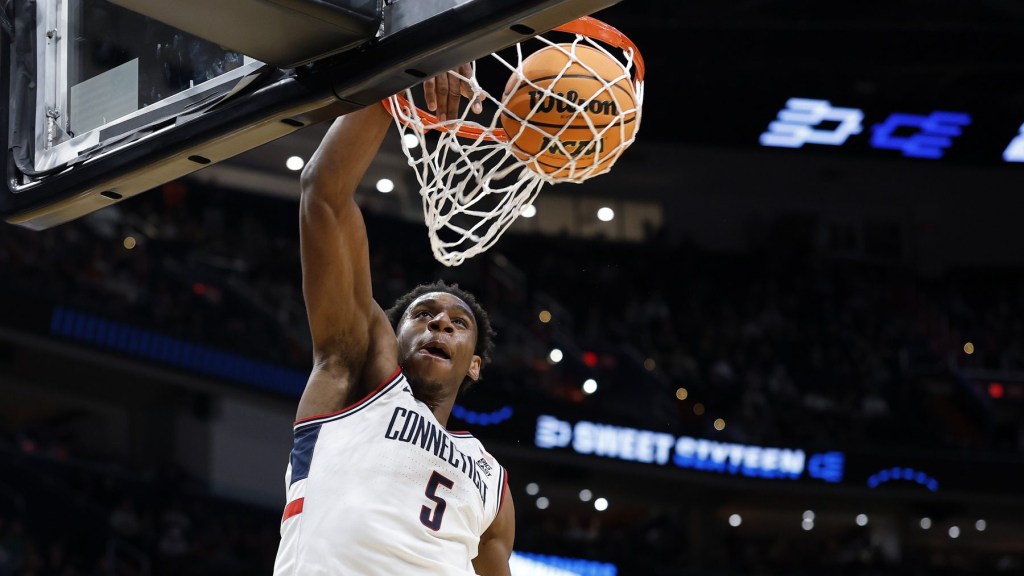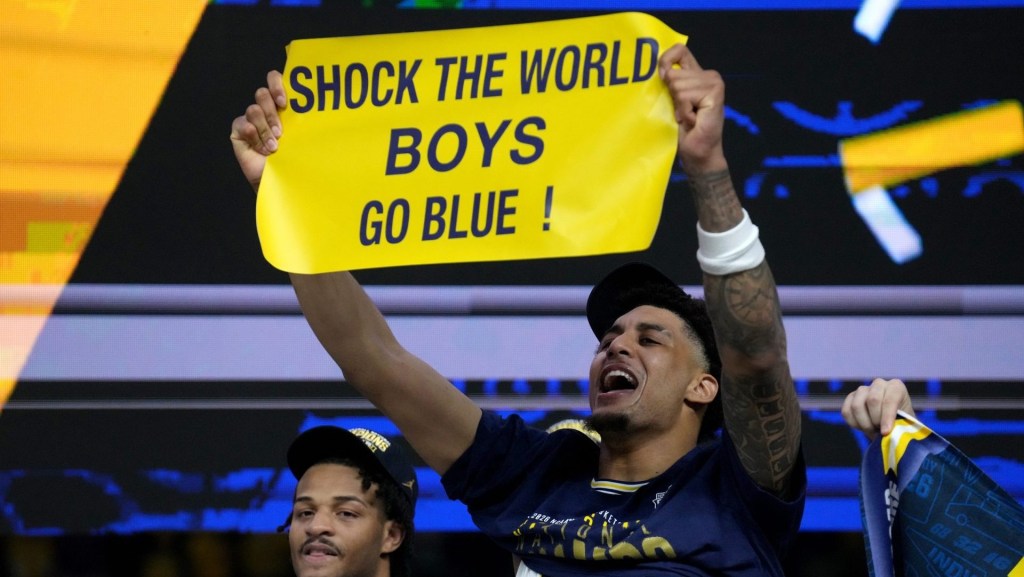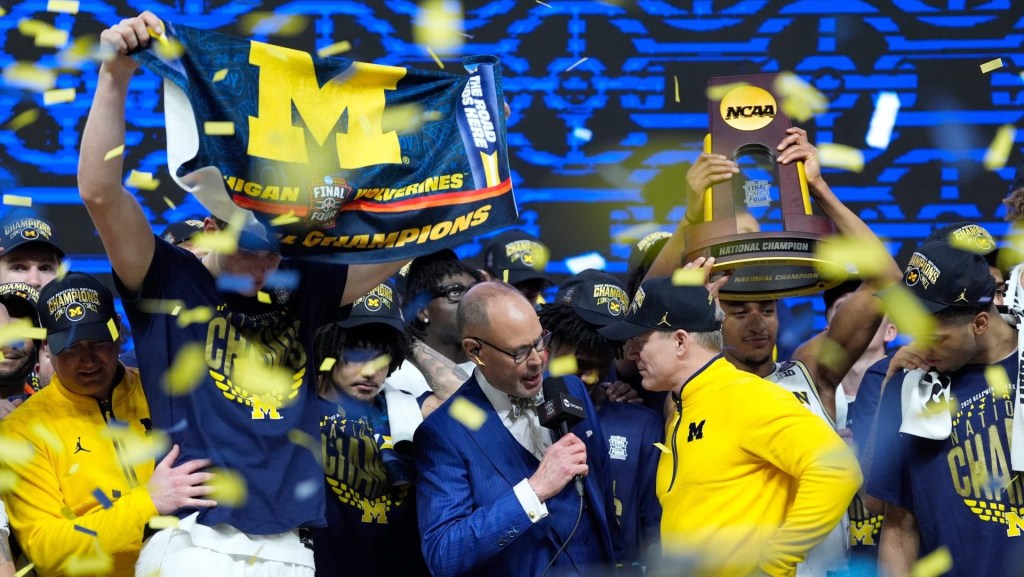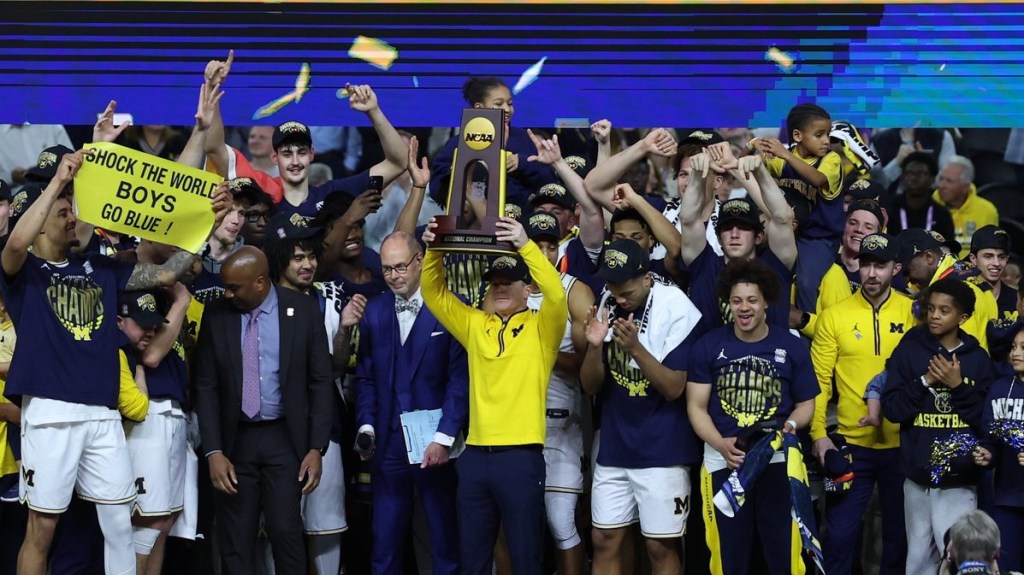
For the first time since the NCAA men’s basketball tournament expanded to 64 teams 40 years ago, the Sweet 16 will feature only power conference programs. No Group of 5, FCS, or basketball-only conferences will be represented in the regionals this weekend.
It’s an indication the current landscape of college sports has made it more difficult than ever for non-power conference schools to find success during the men’s tournament.
The combination of the new transfer portal and unregulated NIL (name, image, and likeness) deals has created a system of “unrestricted free agency,” allowing players to move schools as many times as they want. And the increasing athletic department revenue gap allows power conferences to lure coaches from more humble posts outside the Power 4—who then use that free-agency system to immediately build successful rosters.
More than half the players in the men’s tournament this year are transfers, according to data compiled by The Washington Post. And because NIL dollars are now part of the negotiating equation, the richest schools can often ensure they can land the players they need. For an SEC program to be competitive in men’s basketball recruiting, for example, a team must have $3 million to $4 million in NIL dollars, a source previously told Front Office Sports.
The power of the purse is no secret. During the postgame press conference after Maryland beat Colorado State to secure its Sweet 16 berth, a reporter asked players why they “trust” coach Kevin Willard. “First, he did pay us the money,” Derik Queen replied. “So we gotta listen to him.” The entire room erupted in laughter, and Willard dropped his head into his hands. But everyone knew Queen wasn’t joking.
Even if a non-power conference school makes a Cinderella run, however, it will likely have trouble keeping the players and coaches who powered its success. Russell White, the head of The Collective Association, tells FOS he believes there is “some truth” to the theory that NIL money has allowed power conference schools to strip the rest of Division I of the best players. “But I also think a lot of it has to do with coaching,” he says. “You’re able to get higher quality coaches at the Power 4 level when you have the money to bring them in.”
This isn’t a new dynamic, but the gap is widening. In the latest round of media-rights negotiations, the “Power 4” conferences were able to sign deals guaranteeing schools would receive anywhere from $30 million to $100 million in conference payouts over the next several years. That means they have more money than ever to pick off the best coaches from less rich schools.
This year provided more than one example. Will Wade led McNeese State, a Southland member from Lake Charles, La., to the second round. NC State had poached him before its first game even tipped off. Coaches are lured not just by the salary and higher-profile job but also the promise of NIL dollars to help lure top recruits. And hours after Colorado State lost a heartbreaker to Maryland, a report surfaced that coach Niko Medved had been hired by the Minnesota Gophers.
The transfer portal works the same way to decimate non-power conference rosters. Players will often follow their coach to said higher-resourced program, or go elsewhere after they’ve gotten on a bigger school’s radar from their tournament performance. Even student manager and viral sensation Amir Khan will be following Wade to Raleigh.
In some rare cases, non-power conference teams can cough up enough cash to build and maintain top coaches and quality rosters. St John’s, a non-football Big East program that made it to the round of 32 before falling to No. 7 seed (and NIL power) Arkansas, paid players a reported $4 million in NIL. Its not-so-secret weapon: billionaire alum Mike Repole. “In this environment, you’ve got to have a few of those guys,” Big East commissioner Val Ackerman told FOS.
The Realignment Effect
There’s another factor that made the Sweet 16 makeup even more top-heavy: conference realignment.
The past three years saw the breakup of the Pac-12, as well as a significant number of programs jumping from Group of 5 leagues to the power conferences. BYU and Houston, for example, are both in the Sweet 16 representing the Big 12. But if they had gotten in three years ago, they would’ve been part of the West Coast Conference and AAC, respectively.
Perennial contenders UConn and Gonzaga also narrowly missed this year’s Sweet 16. But in the future, programs without deep-pocketed alums might just be out of luck.
Only time will tell whether schools outside the Power 4 will be able to claw their way back to the late rounds of the Big Dance in future years. The proposed House v. NCAA settlement, however, could help them, as the cap on revenue-sharing would allow them to direct more dollars to basketball recruiting without the cost of supporting a football team.