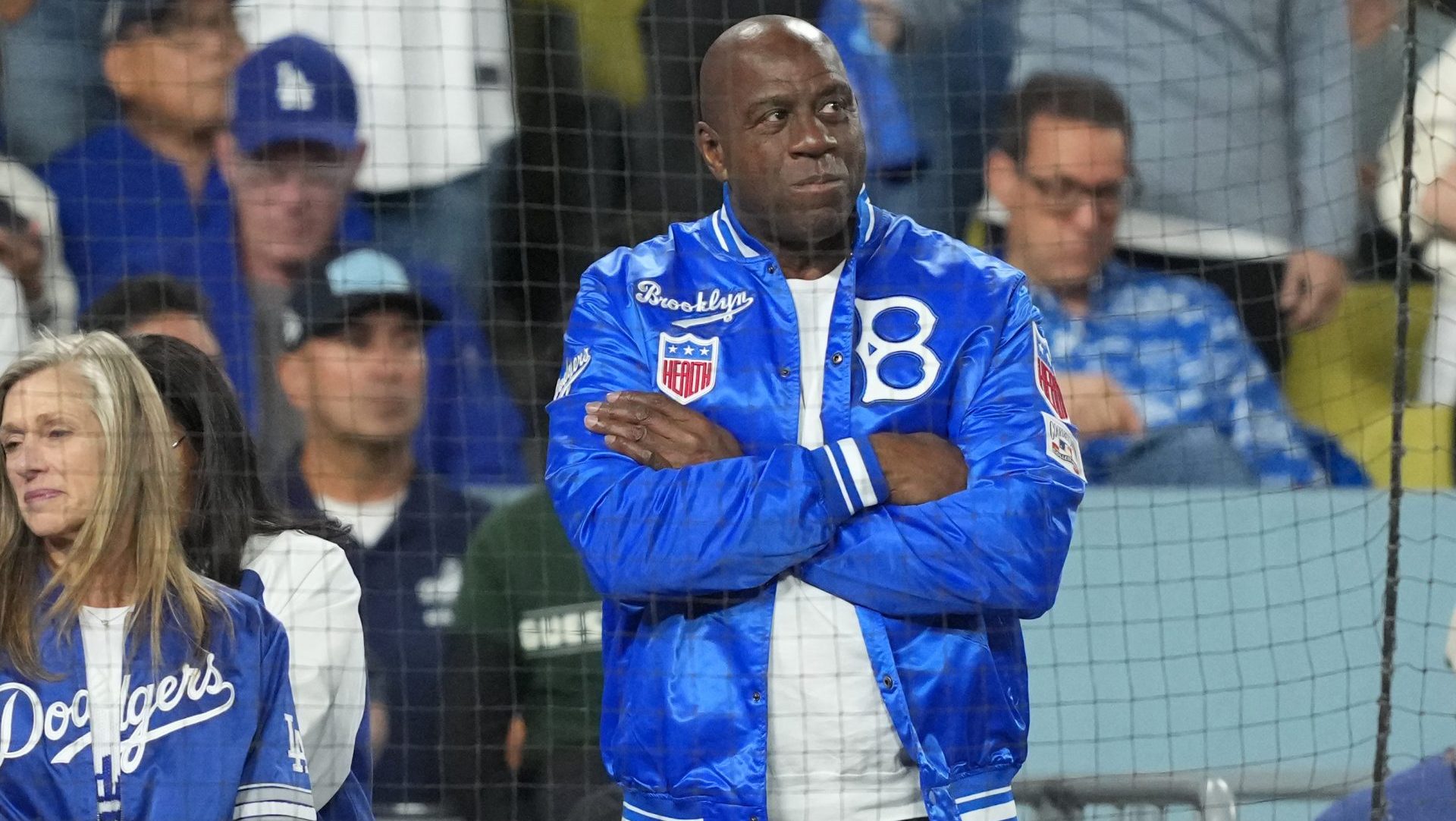
A Texas jewelry company has dropped a lawsuit that claimed Magic Johnson was part of a scheme that included a $250,000 investment in “MagicVerse,” an NFT project that never materialized.
The lawsuit, filed in California federal court in February, alleged that an associate of Johnson named Carrie Lyn Henman persuaded the company to invest in “MagicVerse,” pitching it as a celebrity-backed NFT and metaverse venture with significant upside.
On March 31, the parties filed a joint stipulation dismissing the case with prejudice, which means the plaintiff cannot refile the same claims.
“Once the facts became clear to both parties, we worked cooperatively to bring the issue to a close,” attorneys for both sides said in a joint statement to Front Office Sports. “We are pleased that this matter has been resolved amicably and remain committed to excellence in all of our business practices.”
Johnson had been named as a defendant, with the suit saying that Henman gave the appearance he was “not merely a passive celebrity endorser lending his name to marketing materials, but rather an active participant in the financial infrastructure of the investment scheme who directly coordinated how investor funds would be handled and processed.”
As part of the pitch, the jewelry company—DoneRight & Company LLC—was told that rapper and producer Dr. Dre had already committed $500,000, lending the project credibility, according to the complaint.
In addition, the company was promised certain exclusive rights, royalty payments, and marketing opportunities. The investment took place in August 2022.
“The project never launched, no NFTs were minted, no royalties were paid, and Defendants ultimately ceased all communication with Plaintiff while retaining the full $250,000 investment,” the complaint said.
NFTs, or non-fungible tokens, gained popularity around 2021 as a way for athletes, celebrities, and creators to sell digital collectibles, artwork, and virtual assets directly to fans, often promising ownership, exclusivity, and potential investment returns. Even leagues got into the game—the NBA backed Dapper Labs’ NBA Top Shot, a marketplace for digital trading cards and MLB partnered with Candy Digital to offer digital collectibles, as examples.
The market for NFTs lost steam almost as quickly as it had gained momentum, which led to lawsuits like the one against Johnson that has now been dropped. Dapper Labs has also faced litigation over NBA Top Shot.
Others in the sports world have also dealt with lawsuits over NFT projects that didn’t pan out. A proposed class action filed in January accuses DraftKings cofounder Matt Kalish and DJ Steve Aoki of misleading consumers by failing to disclose they were paid to promote NFTs from a now-bankrupt company.
In July, DraftKings finalized a $10 million deal to end claims that NFTs it offered were illegal under securities laws. Before that, in late 2024, Shaquille O’Neal agreed to pay $11 million to settle a suit over allegations he promoted but then fled an NFT project, Astrals, which caused its value to drop dramatically.