CFTC Preparing Crackdown on Prediction-Market Promos
Want more from Front Office Sports
in your search results?
If approved in April, the House v. NCAA settlement will allow a system of revenue-sharing between Division I schools and athletes for the first time in college sports history. But one group of athletes might have difficulty getting paid.
International athletes on student visas may be in violation of U.S. immigration laws if they accept revenue-sharing payments this July, multiple immigration attorneys tell Front Office Sports. It’s a concern that could impact tens of thousands of international NCAA athletes, most of whom generally use student visas.
If they violate their visa status and their visas are revoked, the consequences could go much further than lost NIL (name, image, and likeness) earnings. Athletes are at risk of losing the opportunity to study in the U.S., as they’re required to either change status or leave the country within 30 days. After that, they could be deported—or even be hit with a reentry ban if they stay longer than six months.
“There’s one thing that nobody’s talking about enough when it comes to international kids’ NIL: [the] House [settlement],” says Green and Spiegel immigration attorney Ksenia Maiorova.
Experts have not reached a consensus on the best way to approach the issue just months before the House settlement could be implemented—and during a presidential administration that Maiorova calls “very enforcement-minded.”
International students usually come to the U.S. to study on “F class,” or student visas, which have strict rules barring almost all kinds of work while they’re in the U.S. with just a few exceptions. Athletes are allowed to receive “passive” income, or do a limited amount of work that is directly related to the degrees they’re pursuing. But the prevailing sentiment from legal experts who spoke to FOS is that international athletes could violate their visa if they participate in NIL deals—a conundrum about 25,000 international NCAA players across all three divisions have faced since 2021.
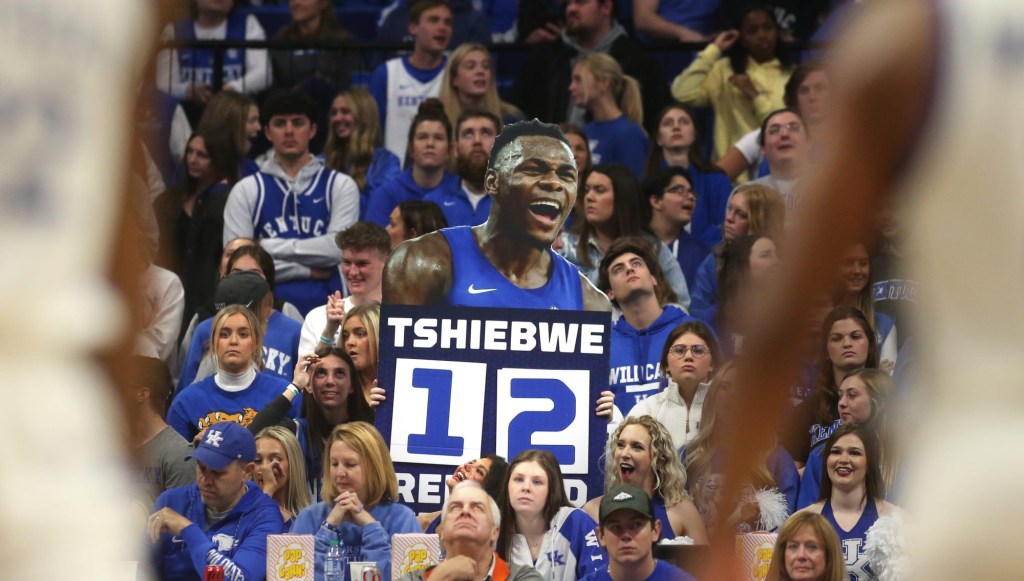
In the past, international athletes have dealt with the NIL immigration issue a few different ways. They could simply refuse if they didn’t want to risk losing their visas, or experiment with workarounds if they were willing to take a risk: Former Kentucky basketball player Oscar Tshiebwe, for example, participated in several NIL deals while at a men’s basketball tournament off U.S. soil, in the Bahamas, and Northwestern State basketball player Hansel Emmanuel, who went viral for playing with only one arm, was able to qualify for an “O class” visa, which is awarded to immigrants with “exceptional abilities” and allows for NIL deals.
But the House v. NCAA settlement would have schools dole out payments to their entire athletic department—so it’s virtually unavoidable for any athlete. The payments could violate the worker regulations of student visa laws whether they’re considered NIL agreements or the manifestation of an employee-employer relationship, the attorneys agreed.
Schools face a new challenge, too: Schools paying international athletes could face their own run-ins with the U.S. Immigration and Customs Enforcement, given that it’s illegal to pay workers who are unauthorized to work in the United States.
Players aware of the issue are enlisting lawyers to help them apply for different types of visas, or at the very least receive advice about whether they’re in danger of losing their visas if they take the House payments. Aaron Blumberg, a partner at Fragomen law firm, says they seem somewhat more knowledgeable about the visa landscape—and how it relates to NIL—than they did just a few years ago.
Blumberg says high-profile D-I clients he works with appear aware of the issue. But some school administrators are wholly unaware that the problem exists at all, let alone what their plans are to protect their athletes—or themselves, Maiorova says.
While the NCAA has taken the public position that athletes should be able to benefit, it has neither control over the situation nor guidance on how schools should approach the House settlement.
The Department of Homeland Security could release guidance allowing them to do so—or saying they wouldn’t enforce revenue-sharing as a visa violation. Congress could also pass a law saying as much.
But to date, DHS has not issued any guidance. And Congress never succeeded in passing existing legislation on the subject—despite outside advocacy efforts. None of the experts FOS spoke with believe that guidance is imminent—or that athletes should bank on it. A Student and Exchange Visitor Program spokesperson said, “Currently, international student athletes cannot profit from their NIL deals. Any changes to visa restrictions will be communicated through legislative and department channels and SEVP will provide updates through Study in the States, social media, and field representatives.”
Immigration attorney Sherrod Seward, as well as Maiorova, don’t see a workaround for House v. NCAA payments beyond athletes getting on different types of visas. “We can call it whatever we want to,” Maiorova says. “We can play games of semantics. But at the end of the day … direct payments are the manifestation of our collective recognition that this is pay-for-play. And if it’s pay-for-play, then it’s services—it’s labor.”
They aren’t enthusiastic about alternate interpretations or workarounds, especially since the Trump Administration has directed immigration authorities to crack down on potential compliance violations. “I advise the players,” Seward says, “not to cash the [House] check.”
Blumberg, on the other hand, is prepared to argue on behalf of clients that House payment deals could be classified as “passive” income, like participating in group licensing agreements for schools to sell apparel or other products, rather than payment for labor. Blumberg says he is advising many clients to bank on this interpretation, as long as they ensure that players don’t do any additional NIL “activities” (like autograph sessions or posing for photo shoots).
But he says that players and schools have to do their own personal risk analysis. Some, who could be in line for major paydays, may find it worth it to risk the wrath of ICE—especially if they don’t intend to stay in the U.S. permanently. Others, who may not earn much in NIL or who may be up for a green card, could act more conservatively.
“As long as [schools and athletes] understand the risks and the fact that the risks are a little greater now than they were maybe six months ago, I think it’s a very valid decision,” Blumberg says.