Alabama Leads College Football in Private Jet Spending
MIAMI — Florida would like you to stop calling it an “untraditional” hockey market.
The state doesn’t have snow—or real snow, at least—but it does have a compelling case as a hockey stronghold, with consecutive Stanley Cup Finals appearances between the two Florida teams for the past six seasons, plus the 2024 and 2025 championships captured by the Panthers. There’s also the revenue the sport has generated for the Sunshine State: billions of dollars in sports tourism, media deals, ticket sales, corporate partnerships, and youth hockey.
On Jan. 2, the NHL hosted the outdoor Winter Classic at Miami’s loanDepot Park, home of the Marlins. The scene wasn’t one of past snow-globe conditions and cheek-biting wind, but rather sun and sand: Real palm trees, beach loungers, and flamingo figures lined the surface surrounding the rink. Thousands of fans showed up in shorts.
Yet other parts of the event also played out like a very typical Winter Classic. Merch shops were swarmed with fans snapping up $70 posters, $130 hoodies, and $200 jerseys ($260 for goalies Sergei Bobrovski and Igor Shesterkin). Crowds teemed at the pregame fan festival, and the game was sold out for the 17th time in a row.
The fact that one of the league’s major events came to Florida—and that less than a month later, Tampa Bay will host the NHL Stadium Series at the Buccaneers’ Raymond James Stadium—is “validation” of the strength of the market, NHL business president Keith Wachtel told Front Office Sports. These events only put an exclamation point on the fact that throughout the past decade—and especially inside five years—Florida has proven itself to be as much of a traditional market for hockey as any city in North America.
‘Grind Our Asses Off’
The NHL opened in Florida with the Tampa Bay Lightning in 1992, and added the Florida Panthers in 1993.
There were fits and starts of success, including an early Stanley Cup Finals appearance from the Panthers in 1996 and a Cup for the Lightning in 2004. But between the two teams, there were stretches of significant ownership instability, inconsistent results, player and management churn, financial strain, and stalled growth.
There was also very little cultural footprint for the Florida teams, and speculation of relocation simmered, particularly for Tampa Bay.
Both franchises point to ownership changes as their inflection points. In 2010, Jeff Vinik purchased the Lightning; three years later, Vincent Viola took control of the Panthers. These moves brought stability, investment, and ultimately success on the ice. Fast-forward to today: Vinik and Viola were named first and second, respectively, in The Athletic’s first-ever NHL ownership rankings in 2025.
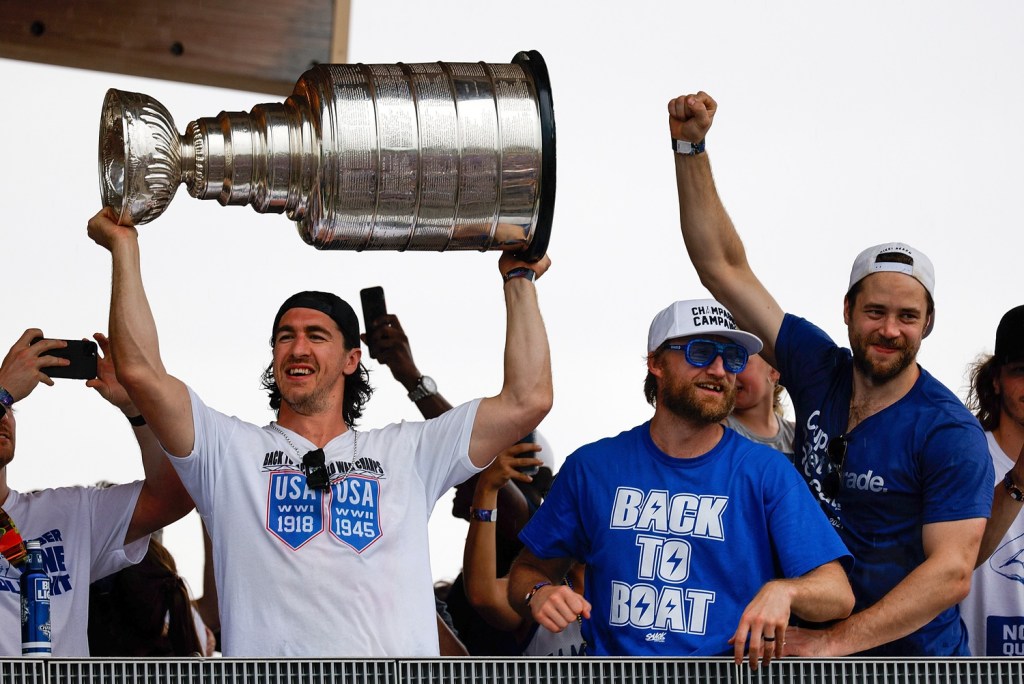
Hockey fans in Florida are happy. The past five years have opened more doors for growth, especially with front-office personnel changes inside the organizations.
Arguably the most notable hire has been Panthers GM Bill Zito, who joined the team’s leadership group in 2020. “We just so dramatically changed the way and the prism through which we viewed our duties, our mission, the way we did things,” Zito told FOS. COO Rob Stevenson said Zito brings an urgency to the Panthers: “It’s on us to grind our asses off and run like a startup in order to capitalize on the value of what Bill has built,” he said.
Both franchises also told FOS the COVID-19 pandemic was rocket fuel.
More than 600,000 people migrated to Florida in 2021. The influx of new residents, many of whom came from New York and other northeastern hockey meccas, completely reshaped the state’s population—and its appetite for the game in the South. “They’re already hockey people,” Stevenson said, “and now they have a team in their backyard they can be proud of.”
Throughout the past roughly three years, the Panthers organization has seen 85% attendance growth, 100% merchandise-revenue growth, and 150% growth in revenue from corporate partnerships, according to Stevenson. Each Panthers home game produces about $2 million of spending across hotels, restaurants, transportation, and entertainment for Broward County, the Florida Sports Foundation told FOS. Even Panthers and Lightning team-branded license plates generate revenue while also funding charitable initiatives including youth hockey.
The simultaneous on-ice success for both teams has been a meaningful multiplier. “Any market gets fueled by winning,” the NHL’s Wachtel said. “You’re growing your fanbase, which leads to growth on a national basis.”
Florida’s teams have secured consistent national broadcast billing as they keep winning. Since the 2021–22 season, the Lightning have had at least four nationally televised games on ESPN, peaking at 7 in 2022–23; the Panthers went from zero ESPN games to four in 2023–24 and have grown their national slots by a game each year since then, according to data provided to FOS.
Together, the spike in interest, winning, and investment has opened the door for both the Lightning and Panthers to operate with the same aggressiveness, seriousness, and attention to fandom as any other traditional-market franchise.
‘Hockey Is Absolutely at the Forefront’
The two franchises’ steady investment in upgrading facilities and building out brand-new ones have also proven to be big revenue drivers both for the teams and local economies.
In 2024, the Panthers opened a new practice facility in downtown Fort Lauderdale, Baptist Health IcePlex, which houses two NHL–regulation size ice rinks (and five curling lanes), plus the “Pantherland” flagship retail store. The neighboring entertainment district also now includes a live-entertainment venue, restaurant, and more. Among the constant events it hosts, this summer, the 850-seat venue also played host to the five-week 3-on-3 hockey league 3ICE.
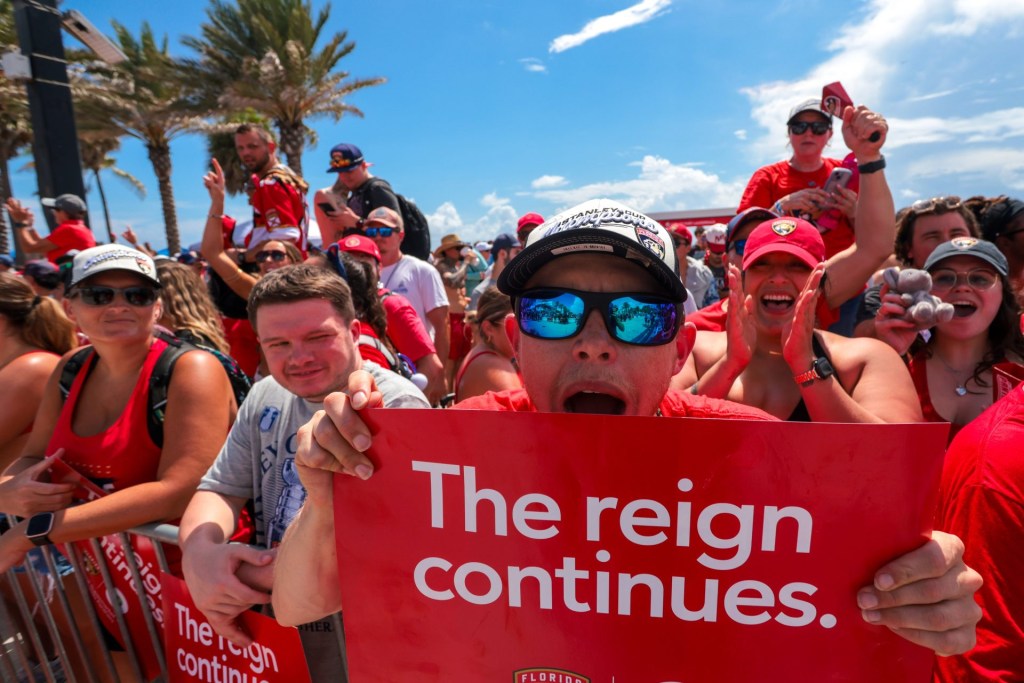
Hockey has become a major force for Florida residents, but people are also flocking south to see the sport. “We have so many different levers here in the form of different sports that do very well, and hockey is absolutely at the forefront,” Jason Aughey, SVP of sports tourism at the Tampa Bay Sports Commission, told FOS.
For the Stadium Series in February, Aughey expects two-thirds of the 60,000-plus crowd to be tourists. “You start doing the math on that, as far as the number of people coming in from out of town, and it’s pretty significant,” he said.
It’s also become a key location for junior events, which are big economic engines. Tampa Bay has hosted the NCAA Frozen Four three times, which consistently spikes hotel bookings and drives up hospitality prices; its current slate of youth and adult tournaments, about 80 to 90 events annually, see 3,000 to 5,000 room bookings attributed to hockey specifically.
‘This Is Their Hometown Jersey’
Youth hockey has played an immense role in the sport’s expansion in Florida. This past season, the state led the country with 8% growth in youth enrollment; in Tampa Bay specifically, USA Hockey–registered players have grown nearly 60% in the past eight years. Florida girls’ youth hockey is the largest program in the country.
Both the Lightning and Panthers organizations have rushed to put sticks in the hands of as many people as possible: Tampa Bay works with about 10,000 kids and adults a year on ball hockey and another 3,000 on ice hockey, including Spanish-speaking markets, according to Elizabeth Frazier, the Lightning’s EVP of community development. The Panthers work with more than 560 schools in South Florida. Introduction of adaptive hockey programs, too, is becoming an increasing priority for both organizations.
The proof is on the ice with players like 21-year-old Jacob Fowler, who in December became the first-ever Florida-born goalie to play in the NHL. Fowler came up through junior club Alliance Florida, a true product of the state’s strengthening youth system.
“That [participation] funnels into fandom,” Frazier said. “You walk around and see parents that may still have a Detroit or Bruins jersey on, but their kids will have Lightning … this is their hometown jersey.”
Florida has a huge opportunity to continue growing youth hockey and the fandom it breeds. Having started later than other youth hotbeds including Minnesota, Michigan, and Massachusetts, Florida currently has a limited number of rinks and hockey facilities. But the state has unique growth potential with the space to lay more and more ice sheets—which it’s actively doing.
‘It’s Pretty Spectacular’
Few players have seen the progression of hockey in Florida throughout the past decade like Vincent Trocheck. The Rangers forward was drafted by the Panthers in 2011 and played in the organization until 2020. “From where it was to where it is now … it’s pretty spectacular,” Trocheck told FOS the day before the Winter Classic. “It was at a place where it was an afterthought in the community to back-to-back Stanley Cup championships.”
The sport is continuing to prove itself in every way.
In October, the Lightning set a new record-price for an NHL franchise sale after the team unveiled a multistep, multiyear process for to transfer his majority investment. Vinik Sports Group announced a deal with a group of investors, led by the co-CEOs of private-equity firm Blue Owl Capital, for a price tag of $1.8 billion—nearly double the $950 million the Senators sold for in 2024.
“The initiative that Gary Bettman had with expanding the NHL within the Sun Belt was probably initially met with a lot of scrutiny,” the Panthers’ Stevenson told FOS. “When you look at the performance of those teams since they came into the league, not only on the ice, but in terms of their business performance and the growth of their fan bases and the growth of the local game, I think it’s put all of that scrutiny to bed.”
Back at the Winter Classic in Miami, the Panthers dropped the game to the Rangers 5–1 in front of the nearly 37,000-strong crowd. Still, with all the team—and the state itself—has accomplished, head coach Paul Maurice’s message in the interview room was hardly diluted: “Hockey in Florida is powerful now.”