Want more from Front Office Sports
in your search results?
By: Chase McCaskill, @itsmechase

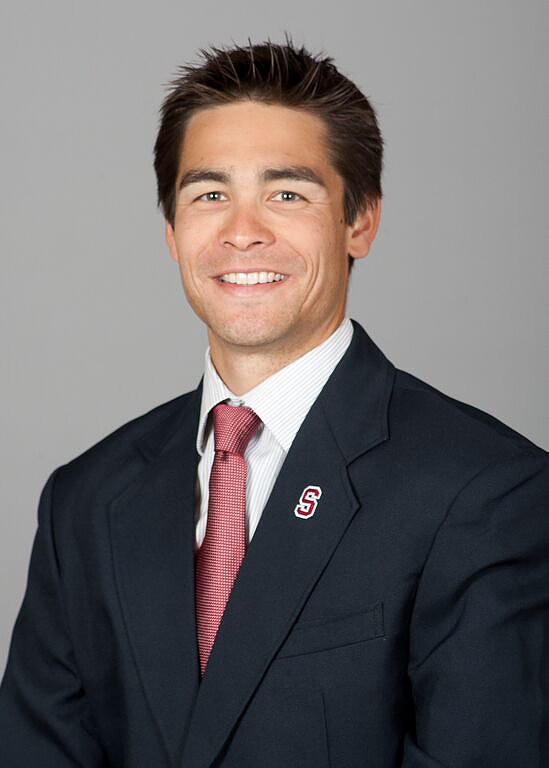
Front Office Sports is pleased to have sat down with Kevin Blue, Senior Associate Athletics Director at Stanford University. Kevin has seen his career move from studying sports psychology to having a managerial role in collegiate athletics. A young, but established professional, Kevin, is also a former Stanford student athlete (golf). Kevin has worked at Stanford for six years and has seen his career progress from working as Special Assistant to the Director of Athletics to his current position of Senior Associate Athletics Director. Also, an adjunct professor, Kevin has covered many bases in the collegiate athletics industry. He was kind of enough to volunteer his time and give us a few pointers on what it is like as a former student athlete working in collegiate athletics, the skills successful people have in the sports industry, and managing one’s time with many issues vying for attention.
Can you talk a little about your journey from student athlete to working in athletics?
I was a student athlete at Stanford on the golf team. I took a bit of an unconventional path. When I graduated from Stanford, I went on to Michigan State to study Sports Psychology. While I was doing that I was also doing some sports-psych coaching work. My original aspiration was to be a sports psychologist on the PGA Tour. As I went through my graduate school experience, my thinking evolved and I got more interested in the business side of the industry. I ended up coming back to Stanford to work in a relatively low-level role doing business analysis projects for our Athletic Director. I took that role in 2009 and have since worked up to my current job as Senior Associate Athletic Director. I handle the external business units in our organization, which is similar to the sports business functions of a pro organization.
How did being a student athlete prepare you for a career in collegiate athletics?
I think what you learn from being a student athlete is [being] able to help you perform at a high level in any job, whether it is in collegiate athletics or not. Assuming that you’re making a commitment to improving and working hard as a student athlete. I think those are the key characteristics that are necessary to making progress in any profession. You need to want to learn, you need to want to get better, and you need to work really hard to do those things. So I guess my experience as a student athlete helped teach me the importance of that. And as a result, I’ve been able to be off to a good start in my career in sports business. Work ethic, the desire to learn, and the quality of work are more important than just the background of being a student athlete.
What was the motivation to receive your PhD and do you encourage students to pursue graduate-level education?
At the time I wanted to be a sports psychologist on the PGA Tour so I needed to gain the expertise in that field. The professor that I studied under [at Michigan State] is one of the foremost academic sports psychologists in the country, which is the reason I went up there. I think [graduate-level education] is very important. It’s not necessary in a lot of sports business, but in college it is very helpful. I think its important because, at the end of the day, collegiate sports organizations occur at universities and their mission is primarily educational in nature. So, it is important to have demonstrated a commitment to education.
As a Senior Associate Athletics Director, you and your team oversee a large array of projects. What is your key to managing your time effectively? How can students and young professionals prepare now to help them manage their time more effectively down the road?
Time management is very important and being able to manage your workload and focus on the right priorities is very important. The way that I do that is I get up very early and come to work early. I am able to get focused on what I need to do and what our staff needs to be focused on. I am able to organize my thoughts before the day gets crazy. I would recommend that one of the best habits a young professional can learn is waking up early and getting things started early. It provides you for a very good foundation to be productive throughout the day and to make sure your staff is focused on the right things without getting swept away by the distractions.
What is the most common misperception people have about the collegiate athletics industry?
There are several misperceptions out there right now. There is increasingly this public debate as to whether the industry exists to benefit students or just to make money. I can tell you that the vast, overwhelming, majority of the people within this industry are most interested in making sure that young people are developing. It is an educational industry first and foremost. Because of the way the media covers it, and frankly because of the way some of the people in college athletics have behaved over the years, there is a misperception that the majority of what happens in the industry is not with the best interests of the student athlete in mind. The industry needs to do a better job of making clear its value proposition to student athletes, students, and the industry of higher education at large.
Successful people tend to have a certain skill set. What three skills have you noticed that successful people in collegiate athletics portray?
What young people need to be thinking about is what are the skills that are going to be of most value in the future. The skills that are of most value now may, or may not, be of most value in the future. Three skills or abilities that are most important to focus: one, quantitative and analytical skills. People that get into sports business should be able to work with numbers and data in a fluent way. I would say that second is communication, internal and external, the ability to express in a convincing and influential way a point of view. Lastly is familiarity with technology, specifically digital media. Technology-centered business models are a lot of what’s happening in the sports industry. Having a good understanding of that is pretty important.
What kind of things are you doing, personally, to stay on top of new and growing trends?
I read a great deal every week. Also, something I do, which young people should do, is take a lot of the open-online courses available. There is a lot of really good, educational material out there that…I would recommend for sure. It is something that I do from time to time and it is very helpful.
Parting Wisdom: What is one piece of advice you’d like to share with students interested in getting into collegiate athletics?
Work harder, be smarter, and be better than the other people who are competing against you. The question that everyone needs to be asking is what are you doing to differentiate yourself from the other three hundred people that are sitting in the room. It’s not necessarily a competitive question, it’s more of a question related to self-improvement. Everybody has the opportunity to be really good, but not everybody will actually take the opportunity to be really good. No one is entitled to anything, you have to earn everything. Part of earning something is getting really, really good at what you’re doing so that your skills exceed other people’s skills in the market.
We would like to thank Kevin for his time and insight and we wish him the best in his future endeavors!
You can connect with him on LinkedIn here or follow him on Twitter here!
Download the FOS App
The business of sports, in your pocket.



Scan the QR code to get the app now.