Want more from Front Office Sports
in your search results?
By: Chase McCaskill, @itsmechase
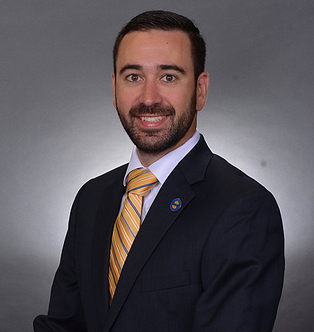
Front Office Sports had the unique opportunity to sit down and chat with Randy Lieberman, Director of Communications and Brand Strategy at the Sun Belt Conference. Randy’s story is one of grit and devotion. Randy’s career has seen him go from an intern at a division three school, to a GA at Georgia State, to finally his current position at the Sun Belt Conference. Randy was able to give us some great insight on the importance of skillset diversification, establishing your network, and the imperative to pick up and move for certain opportunities. After speaking with Randy, it is easy to see why he has already generated so much success in his own career!
Tell me a little bit about yourself, how did you end up where you are today?
“When I was younger, my dad told me a lot about Roberto Clemente. I kind of fell in love with Roberto’s story. I really appreciate his philosophy on giving back and appreciating all the people who work to help him be successful. Long story short, I was brought into sports at a young age and always loved it. When I got to college at the University of Pittsburgh, they did not have a Sports Management program. I received my degree in English Writing/Communication and fell in love with it.”
“I originally wanted to be a national correspondent for football and basketball with a little TV on the side. I did an internship at the Pittsburgh Post Gazette and I saw first hand how much of dire straights the newspaper industry was in, which discouraged me from pursing that goal. This is when I started looking at PR opportunities. When I graduated, I didn’t have a job. I sent an email to every D2/D3 SID in the state of Pennsylvania and I got replies from four of them, out of 84… I started as an intern at Washington Jefferson College and received my masters at Georgia State University. Fortunately, I was [in Atlanta as a GA] during the Final Four and SEC Championships. It was working those events that provided valuable learning experiences, which helped me get the job at the Sun Belt Conference.”
How did those years as a Student/Graduate Assistant shape your career? What did you learn?
“Well, I definitely learned how to live off a small budget and how to have fun on a small budget. Among many things I learned, was the work ethic. When you’re an intern, you’re there to be a sponge, soaking up information and learning as much as possible. You need to digest as much as possible as quickly as possible while also making a huge impact on your superiors so they can give you references down the road. I developed the ability to take in information, process it as quickly as possible, and use it to my advantage to produce my own work, not trying to copy someone else. I am very much into social media and graphic design so I like to take ideas from other people. However, to have the ability to look at something and give it your own spin is a lesson you learn as a GA.”
What kind of things are you doing, personally, to stay on top of new and growing trends?
“I always try to print out one article that I see throughout the day and read over it at night. I like to get information in a different setting, when I’m not at work where I can be distracted. Another thing I do is email or tweet people to share ideas. Also, I like to talk to students on our conference campuses. It really is the simplest thing you can do from our perspective. We don’t have the access like SIDs always on campus. But, when I am on a Sun Belt Conference member’s campus, I like to ask students if they use Snapchat, do they follow us, what are some cool things they’ve seen on Twitter? I like to ask them what they enjoy to see and what they would like to see us do.”
For a student looking to go into sports communication, what experience is most attractive to hiring managers? What jobs/internships prepare you most for an entry-level communications position?
“My journey was very unique, I decided very late that I wanted to get into sports. I knew I was starting from the bottom, starting as an intern at a division three school. My journey was one of hard work, grinding through, and learning as much as possible. The thing that really stands out to me when looking at certain resumes are those people who can diversify the best.”
“I was at Georgia State and one thing I really wanted to get into was graphic design and social media. Previously, at Washington Jefferson College, I was a writing guy, writing features and doing stats. However, I knew the industry wasn’t going to be that in the future. When I look at resumes now, I want to make sure that candidates for our internships or full-time positions are branching out and getting experience in a wide variety of areas (i.e. page design, graphic design, social media, video, or any other digital production). It really stands out to me when a candidate is diversified in their experience.”
What is one of the most common misconceptions about a job in sports communication?
“One thing that really ticks me off when I talk to people trying to get into the industry is when they think it is going to be a 9–5 job. It really frustrates me when people who are applying have this misconception, because it is so much more than that. I am sometimes on my phone, laying in bed, and I get an alert at 10:30 at night. For example, we’ll get hit up at some points throughout the morning if our Commissioner is in an interview with morning shows running at 6:00 or 7:00am. We have always got to be on, making sure that there is no bad press [affecting our conference].”
“I know from talking to people whom, prospectively, want to get into the industry, there are a lot that have this misconception. I think people that are serious about working in sport communication have done their research and know exactly what it takes. The great interns that separate from the good interns are those that have the desire to take on any task and try it to the best of their abilities. It doesn’t matter if they are writing a Cross Country preview, or sitting down for an interview with the head football coach, they take on anything and do it to the best of their ability. These people learn as they go and are willing to be taught the best practices and habits to put them in a place to succeed. This really separates the great interns in terms of going full-time in the industry. For someone who desires to be at the Division One level, [being a hard worker] really separates them in moving up those ranks.”
Parting Wisdom: What is one piece of advice you would give to students and young professionals?
“The number one thing, coming from someone who is from Pennsylvania, went to school in Pittsburgh, moved to Atlanta, and now lives in New Orleans, is that it is a requirement that you will have to move. I don’t care if it’s from San Francisco to New York or just moving an hour away from home, you have to be willing to move. You have to have a good support system that encourages you to pursue your dreams.”
“The number two thing is to always have your eye on where you need to be and where you want to be. If you envision yourself as an industry leader, you have to always put your eye on that goal and do something every day that puts you in that direction. It is really tough to stay ahead in this industry, you have to always be evolving. Third, you must have a lot of patience and persistence. You are going to get a lot of no’s from employers, but there is always someone who will be willing to talk to you. People in this industry will generally be very forthcoming of information. Persistence to follow-up with contacts is very important. The college athletics communication realm is a very tight-knit group so the persistence to follow-up with somebody goes a long way.”
We would like to thank Randy for taking time out of his day to offer up some great advice for our readers!
You can follow Randy on Twitter here or connect with him on LinkedIn here.