The Federal Trade Commission is launching a formal inquiry into agents who represent college athletes, the agency announced Monday.
The FTC has sent letters to 20 NCAA Division I schools asking whether their athletes’ agents have complied with the disclosure requirements in a 2004 law, the Sports Agent Responsibility and Trust Act (SPARTA). A spokesperson for the FTC told FOS that the FTC is not naming the schools chosen, as schools themselves aren’t the focus of the investigation. The 20 schools were chosen through a random selection process that emphasized schools with successful sports departments. The letter asks schools to reply by March 23.
“This inquiry is aimed at better understanding whether sports agents are complying with the law and the degree to which student athletes are being protected,” Christopher Mufarrige, director of the FTC’s Bureau of Consumer Protection, said in a statement.
Specifically, the organization is asking whether and when schools have received notification that their athletes have entered into agreements with agents, the name of the agent, and whether schools have “received complaints or reports about an athlete agent’s relationship with a student athlete.” The FTC added that college athletes and their families who have concerns about sports agents can submit complaints directly to the FTC.
With the inquiry, the FTC is potentially wading into what many consider a massive issue in college sports: a lack of regulation for agents who, many believe, have taken advantage of players by charging above-market rates or misrepresenting their ability to properly represent players.
In the pros, agents are certified through guidelines set by players’ associations and leagues. For example, the NFL Players Association sets requirements for agents to receive certification to represent NFL players, including background checks, minimum educational requirements, and a certification exam. But in college sports, there are no such guidelines. Because of antitrust concerns, the NCAA does not regulate agents or enforce rules. And while there are some state laws regulating agents in college sports, the uneven patchwork does not appear to have much teeth.
SPARTA “makes it unlawful for an agent to directly or indirectly recruit a student athlete by giving any false or misleading information, making a false promise or representation, or providing anything of value to a student athlete, or anyone associated with the athlete, before he or she has entered into an agency contract,” the FTC’s website currently reads.
Though the act was passed almost 20 years before the onset of the NIL era, it still specifically applies to “student athletes”—presumably because, at the time, college athletes could sign with agents before they entered the pros.
‘Questionable Behavior’
In a statement to Front Office Sports, NCAA SVP of external affairs Tim Buckley said the governing body “appreciates” the FTC’s actions.
“One of the first priorities Charlie Baker identified when he became NCAA president was the challenging landscape for college athletes seeking to benefit from their name, image, and likeness, including and especially the challenges presented by nefarious actors seeking to serve as agents without the necessary legal expertise or commitment to serving their clients’ best interests,” he said.
“With all of the reporting and commentary on unlicensed agents operating in the space and of athletes being taken advantage of, I think the FTC is using its authority under this law to try and clean up some of the questionable behavior taking place and to potentially weed out some of the bad actors,” sports attorney Mit Winter, who has represented dozens of athletes in NIL contract reviews, told FOS.
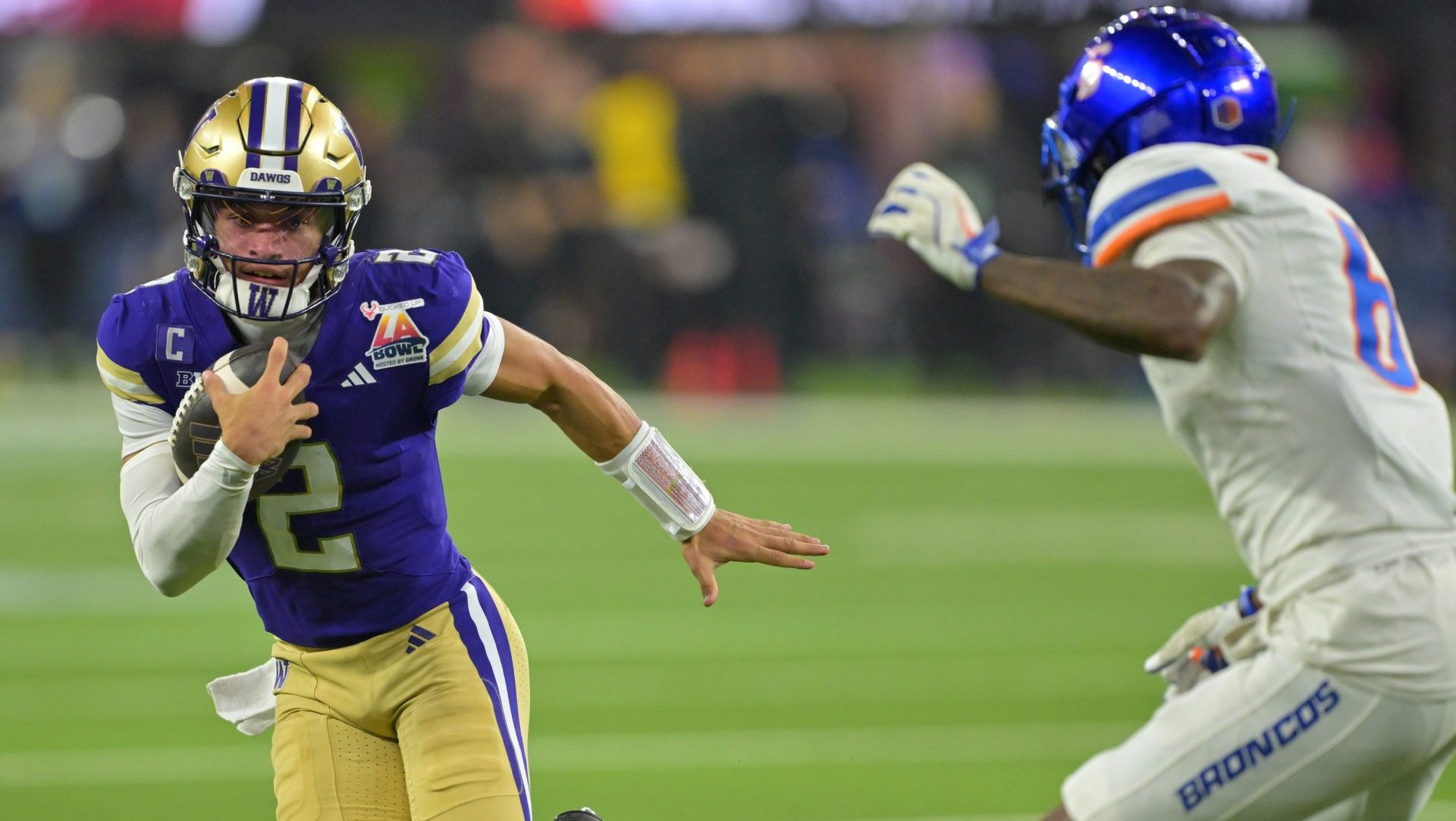
Winter added he believed the timing of the letters could have something to do with last week’s saga regarding Washington quarterback Demond Williams, who reneged on a multimillion-dollar NIL contract, lost his relationship with agency Wasserman, and then decided to stay at Washington. All the while, rumors flew that a California high school/college football coach, Cordell Landers, had involved himself in the decision. Landers was also heavily involved in advising Nico Iamaleava to abruptly leave Tennessee for UCLA last year.
One group that has been adamant about passing agent regulations is the trade association for college football coaches. Last year, the American Football Coaches Association launched a federal lobbying campaign to convince Congress to pass federal agent regulations.
AFCA executive director Craig Bohl told Front Office Sports that agent regulation was one of the main topics of the organization’s annual convention this week, even though it was not a formal agenda item. “We have agents that are posing as agents and they’re not representing, they’re lying to kids, they’re charging—they’re extorting them. It was like a cascade of coaches just screaming for help,” he said.
Bohl suggested that the FTC’s inquiries and attempts to enforce SPARTA were a good start. But he added that the AFCA believes there needs to be additional action, including an agent registration database, uniform contracts, and a clear national enforcement entity.
Though legislators on both sides of the aisle have expressed interest in the issue, no new laws have been passed to date.