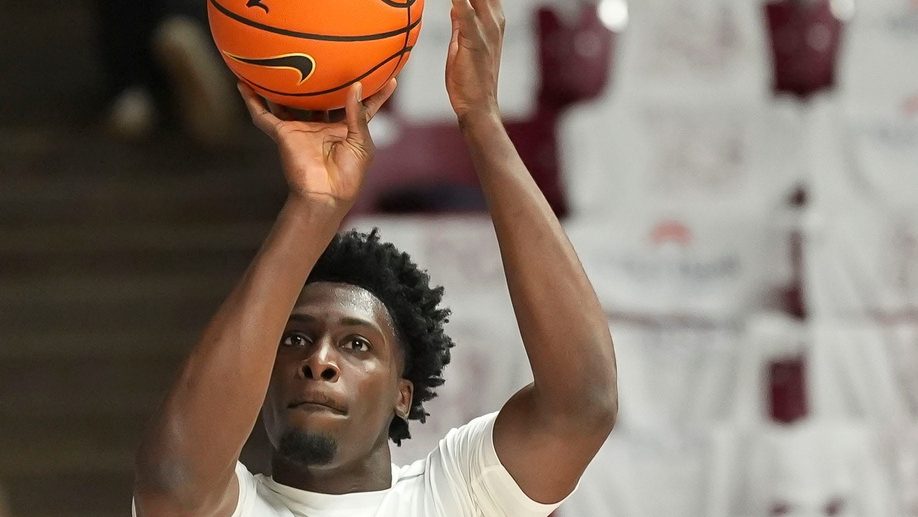
On Friday, Alabama state judge Daniel Pruet heard arguments about whether to grant Alabama men’s basketball player Charles Bediako more eligibility to play for the Crimson Tide—despite having signed three NBA contracts.
While Pruet’s ruling will likely make history, it won’t necessarily answer the eligibility question over professional athletes once and for all, legal experts say. If players continue to sue, judges in other states aren’t strictly bound to Pruet’s ruling.
The first thing to understand is the specific eligibility rules at issue in Bediako’s case, which the NCAA spelled out in a brief filed Thursday. “Plaintiff asks the Court to use its equitable powers to grant him eligibility to return to collegiate sports following his participation in the NBA draft, entry into multiple professional contracts, and participation in professional competition that exhausted his eligibility clock,” the NCAA wrote.
Some of these issues aren’t novel to court cases or eligibility questions. The NCAA has already allowed other former G Leaguers to return to their university programs, and it has an exception for international professional basketball players. However, the NCAA has taken into account whether a player went through the NBA draft process, as Bediako did, or whether the player exhausted their five seasons to complete four years of eligibility during their G League play.
The new issue in this case is whether Bediako should be allowed to play despite the fact that he has signed three professional NBA contracts, including one two-way deal. NCAA president Charlie Baker previously said players wouldn’t be granted NCAA eligibility if they signed an NBA deal, including a two-way deal, whether they played in the NBA (Bediako never did).
The NCAA argued in its Thursday brief that the ruling could have consequences far beyond Bediako’s career, setting the stage for a flood of professional basketball players who have signed NBA contracts to return to college hoops. “This Court should decline to forever change the landscape of high school, collegiate, and professional sports through grant of a preliminary injunction,” the NCAA wrote.
In the long run, that may be the case. But lawyers say several things would have to happen first, given that the ruling wouldn’t actually set a binding precedent.
Bediako’s lawsuit is being heard in Alabama state court. If he prevails, his case will likely be cited by others in state court cases, which could help judges make similar decisions. In the long run, it could potentially pave the way for a federal class-action lawsuit involving players who have signed NBA contracts who want to return to college, lawyers said—though it’s unclear how likely this scenario would be.
But it doesn’t set a binding precedent; it doesn’t guarantee that other judges in other states will rule similarly. “If he wins, it’s not a decision that other state courts would be bound to follow,” Kennyhertz Perry sports attorney Mit Winter tells Front Office Sports.
The same goes if the judge rules in the opposite direction, upholding the NCAA’s eligibility rules. Players with NBA contracts could sue in other state courts—though they’d be less likely to win given that at least one judge has already evaluated a similar case.
There are plenty of reasons for the split. A judge could have their own interpretation of the laws; a player could submit more or less convincing evidence; a quirk or discrepancy in a state contract law could lead to a different decision.
One thing is for sure: The NCAA’s eligibility decisions—regarding professional participation, years in college, junior college, medical exemptions, and others—continue to be challenged. Players may have found a winning formula by filing lawsuits in state court, arguing breach of contract or tortious interference, rather than filing lawsuits in federal court arguing antitrust laws. Says Seton Hall law professor Bob Boland of the trend: “It may not be impervious, but it’s certainly a lot stronger.”
As for what’s next, Bediako is set to play against Auburn on Saturday if there’s no ruling, or a ruling in his favor. Meanwhile, several more high-profile eligibility hearings are set for next week.