Want more from Front Office Sports
in your search results?
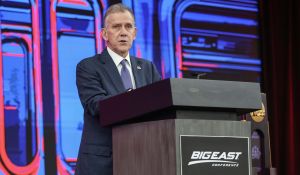
The NCAA “has not and will not” grant eligibility to basketball players who have signed an NBA contract, including a two-way deal, NCAA President Charlie Baker said in a statement Tuesday.
The news comes amid several reports that major college programs have expressed interest in players who have NBA experience. On Saturday, On3 reported that Bulls two-way player Trentyn Flowers was interested in joining a college team (he had played in eight NBA games over the past two years). Last week, Baylor announced it had recruited James Nnaji, a former second-round NBA pick. In September, multiple G League players were granted eligibility as well.
An NCAA statement released to The Field of 68 on Monday drew fierce backlash because it did not say whether or not players with NBA experience would be granted NCAA eligibility. Now, Baker is clarifying the NCAA’s stance.
Flowers would not be eligible to play NCAA basketball, according to Baker’s Tuesday statement. Nnaji would be, however, as he has never appeared in an NBA game and reportedly has never signed an NBA contract despite being drafted. Though Baker didn’t specifically address G League contracts in his statement, the NCAA has already approved players who have participated in the G League.
In his statement, Baker also addressed the growing number of players who have competed in professional leagues internationally, and how the NCAA might see them differently than players with domestic professional experience. (Coaches have also asked why international professional experience was considered different from NBA experience.)
“As schools are increasingly recruiting individuals with international league experience, the NCAA is exercising discretion in applying the actual and necessary expenses bylaw to ensure that prospective student-athletes with experience in American basketball leagues are not at a disadvantage compared to their international counterparts,” he said. “Rules have long permitted schools to enroll and play individuals with no prior collegiate experience midyear,” Baker added, addressing questions about players being recruited during the regular season.
Baker did, however, echo an issue that the NCAA has been trumpeting for well over a year: a flood of lawsuits that have successfully challenged NCAA eligibility restrictions, making rules virtually impossible to enforce.
“While the NCAA has prevailed on the vast majority of eligibility-related lawsuits, recent outlier decisions enjoining the NCAA on a nationwide basis from enforcing rules that have been on the books for decades—without even having a trial—are wildly destabilizing,” he said. “I will be working with D-I leaders in the weeks ahead to protect college basketball from these misguided attempts to destroy this American institution.”
The governing body has used this as fodder to lobby for federal legislation that would give it antitrust protections to set and enforce eligibility rules as well as rules about transfers and athlete compensation. (That was the crux of the NCAA statement Monday, which implied the governing body has no control over eligibility rules.)
Now, however, it appears the NCAA has taken a clear stance: Players with NBA experience can’t play in college. But given the legal landscape, as the NCAA noted, that position could be challenged—and ultimately overturned—in court.