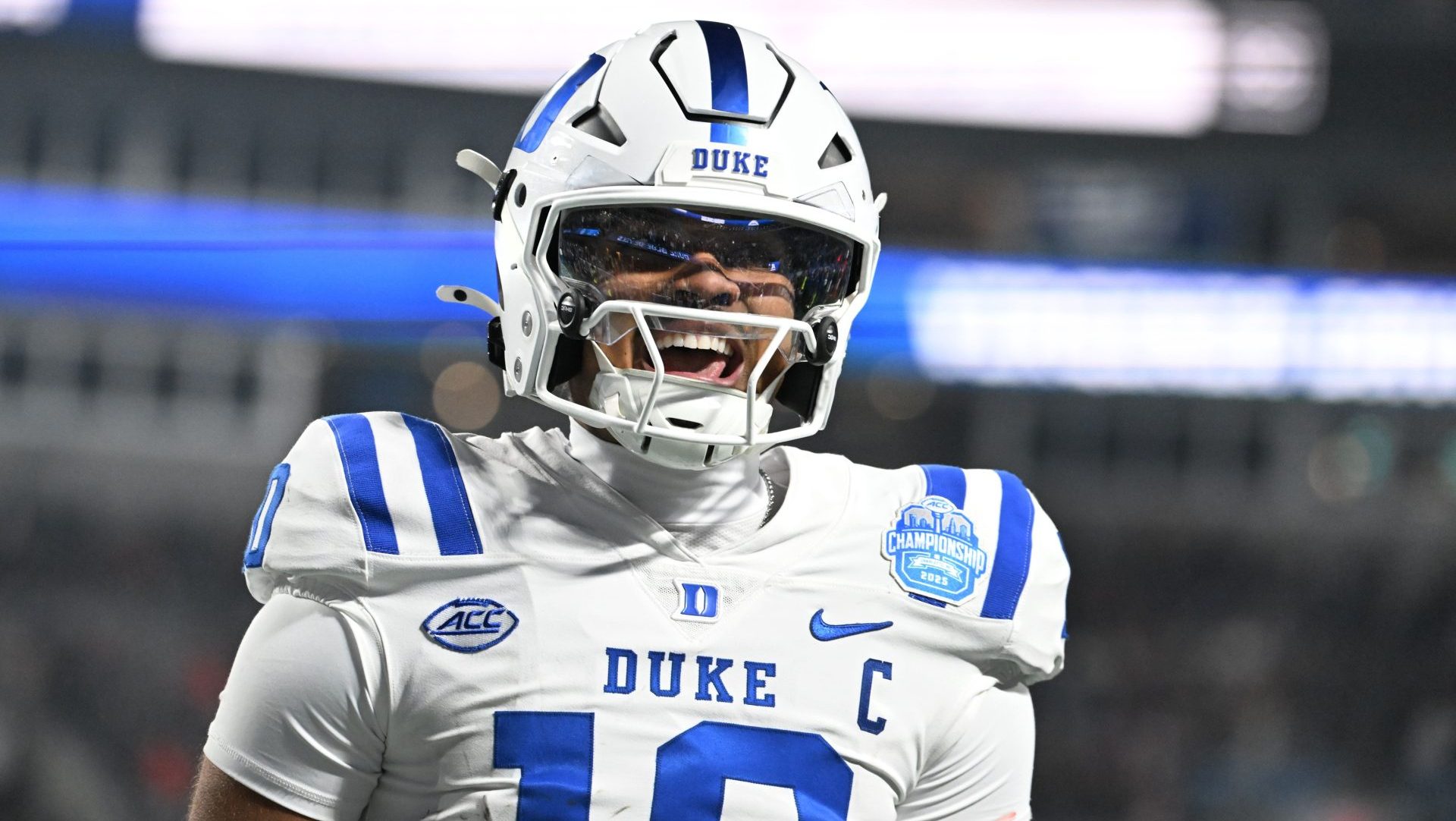
Duke sued quarterback Darian Mensah on Monday to try to enforce its contract against the outgoing star.
On Jan. 16, the last day for athletes to enter the transfer portal, Mensah announced his intention to leave Duke. The lawsuit states that Mensah would sign away rights he has already guaranteed to Duke—including his NIL “with respect to higher education and football”—if he enters into a contract with another school.
In its 44-page suit filed in Durham County Superior Court, Duke argues that Mensah’s transfer decision violates the contract he signed with the school through Dec. 31, 2026. The suit says that Mensah’s contract dictates all disputes must go through arbitration, a process the school has already initiated, and that if the quarterback leaves, Duke’s ability to seek relief through arbitration will be significantly limited. The filing also says Mensah, his family, or his representatives breached the contract by discussing his Duke deal or transferring with another school.
“Mensah’s actions violate numerous provisions of his contract with Duke University and disregard his promises and obligations to the University,” the suit says. “And, as Mensah agreed when he signed his contract, such breaches cause Duke irreparable harm for which there is no adequate remedy at law and, in the event of any such breach, Duke is entitled to injunctive or other equitable relief.”
Mensah had previously announced in December he would stay at Duke. The quarterback who started his career at Tulane led the Blue Devils to a 9–5 record and the ACC title this season.
Then, on Wednesday, North Carolina judge Michael O’Foghludha granted the majority of the temporary restraining order requested by Duke, which puts Mensah in limbo.
For the duration of the temporary restraining order, which will run at least until the preliminary injunction hearing on Feb. 2, Mensah cannot enroll or play football at another institution or license his NIL rights at another school. However, Mensah is allowed to enter the transfer portal.
“Mr. Mensah has an existing contract with Duke which the university intends to honor, and we expect he will do the same,” a Duke spokesperson said in a statement shared with FOS. “The court-ordered temporary restraining order (TRO) issued yesterday ensures he does not violate his contract. The university is committed to supporting all our student-athletes, while expecting each of them to abide by their contractual obligations.”
Another wrinkle: The court has assigned a new judge to the case, as O’Foghludha recused himself due to ties with the university.
Mensah has been linked to Miami, which fell Monday night at home to Indiana in the national championship game. Darren Heitner, who teaches at Miami School of Law and serves as outside counsel for the Miami NIL collective Canes Connection, tells FOS he can’t comment on those rumors.
Duke and Mensah are not the only messy case study of schools trying to enforce their contracts with athletes who wish to transfer in the new era of college football. Washington considered suing Demond Williams during a dramatic 48 hours earlier this month before the quarterback announced he would stay in Seattle.
Last summer, Wisconsin sued Miami for “tampering” when Xavier Lucas (who is also represented by Heitner) transferred after signing “binding” contracts with the school and its name, image, likeness collective. That case is still ongoing.