Matt Jones, Myron Medcalf Leaders to Replace Clinton Yates on ESPN Radio
For about three weeks every four years, thousands of people become armchair experts in a sport they forget about thereafter.
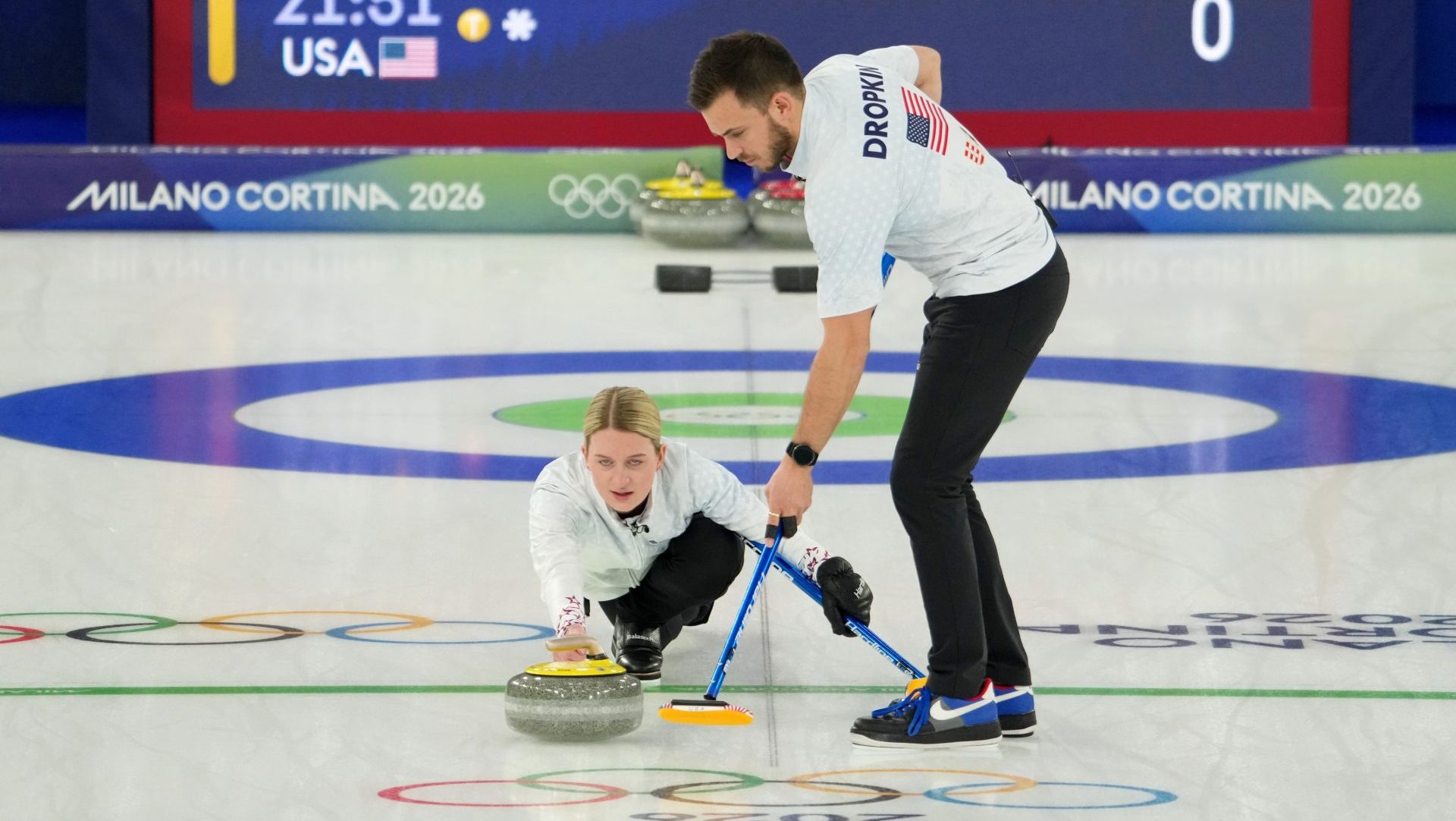
Curling is the only event played all 19 days of the Winter Olympics. Viewers notice. In Milan, unprecedented Team USA success and a viral cheating scandal helped boost the U.S. profile of the sport that’s somehow both bewildering and bewitching.
“When the Olympics comes around, the awareness of the sport just explodes again,” says Rich Collier, president of Broomstones Curling Club in Wayland, Mass. Broomstones is the home club of curler Korey Dropkin, who won silver in the mixed-doubles event with Cory Thiesse. “If you asked 100 people on the street what they are watching in the Olympics, 90 of them would say they’re watching curling.”
The Olympic boost is also very real for the roughly 200 curling clubs across the country.
At Granite Curling Club of Seattle, last December’s wait list had six people on it. As of mid-February this year, 500 people are hoping to get into Learn2Curl at Washington’s only dedicated curling facility.
“We have a lot of faces at the club that are four to five years into curling, and they started because they saw it on the Olympics,” says Shannon Brown, a trustee on Granite’s board. Team USA curlers Ben Richardson and Luc Violette grew up practicing at the facility.
Since the games in Milan began, demand at Granite has also spiked 40% for its 90-minute corporate events ($550 per eight people plus an instructor). The club is clawing to get additional dates on the calendar to open more time on its five ice sheets for both its introductory and group events.
Each Winter Olympics propels a measurable four-year cycle, both Broomstones and Granite tell Front Office Sports. The lift can be significant, but following each closing ceremony, the sport sees interest and participation drop off—sometimes quickly.
“It’s a relatively short-duration bump,” Collier says. “It does seem to trickle off within about a month or two after that as spring rolls around.” Some curlers stay longer, though. Brown says some members who join during Olympic spikes continue with the club for a season or two, while “others catch the bug and become lifelong curlers.”
For however long they last, these bumps are meaningful revenue lifts for the clubs. But like many public curling organizations across the country, both Granite and Broomstones are nonprofits. Still, the cash infusion is essential to their sustainability.
No Stone Unturned
While many clubs are enjoying a temporary boost, The Curling Group (TCG) is trying to catch Olympic lightning in a bottle. The Toronto-based group’s portfolio includes the Grand Slam of Curling event series and its global media rights, which it purchased from Rogers Communications in 2024, as well as streaming curling platform Rock Channel. In April, TCG will launch the mixed-gender Rock League, the first global professional league for the sport.
TCG is now gunning for $25 million from emerging league- and sport-focused investment groups in a Series A raise—an announcement timed during the Olympic fever, CEO Nic Sulsky tells FOS. The funding push follows an $11.3 million seed round completed in 2025, which counted NFL players George Kittle, T.J. Hockenson, and Hall of Famer Jared Allen as investors, as well as former NFL COO Maryann Turcke, who is also the executive chair of the TCG board.
Sulsky says its “unbelievably massive priority” is the U.S. market, where it has seen the most online engagement in curling from the 2026 Winter Games. He believes the U.S. offers the biggest sponsor and brand investment opportunities.
He thinks the Milan moment will be stickier not only because of Team USA’s success, but also because athletes are seizing the Olympic window to gain traction on social media. He believes the visibility and overall platform of the sport is different this time with the 2026 Winter Games, and the response is “validating.”
“It’s been an incredible moment for curling, and I think the world is starting to realize the potential that the roaring game has on the ice and off the ice,” Sulsky says. (He adds he is “not a curler” himself, but an entrepreneur whose background is in sports gambling and fantasy sports.)
Yet Collier says even as the sport climbs in popularity, its growth is stuck between a rock and a hard place.
The number of facilities is limited and relatively small; Broomstones, with four ice sheets and about 450 members, is one of the five largest clubs on the East Coast. Entirely volunteer-run, it has been at capacity for several years and has a 400-person waiting list.
“We’re a little bit of a double-edged sword in that the sport has become so popular, but now it’s supply and demand,” he says. “One of the things that we struggle with is sort of this chicken-or-egg problem. You need the demand to try to maybe fund a new club or build a new facility that would cost upwards of $2 million per sheet.”
However they get into it—and for however long—Collier and Brown just want people to try the sport they love. “Curling,” Brown says, “is really a hidden gem.”