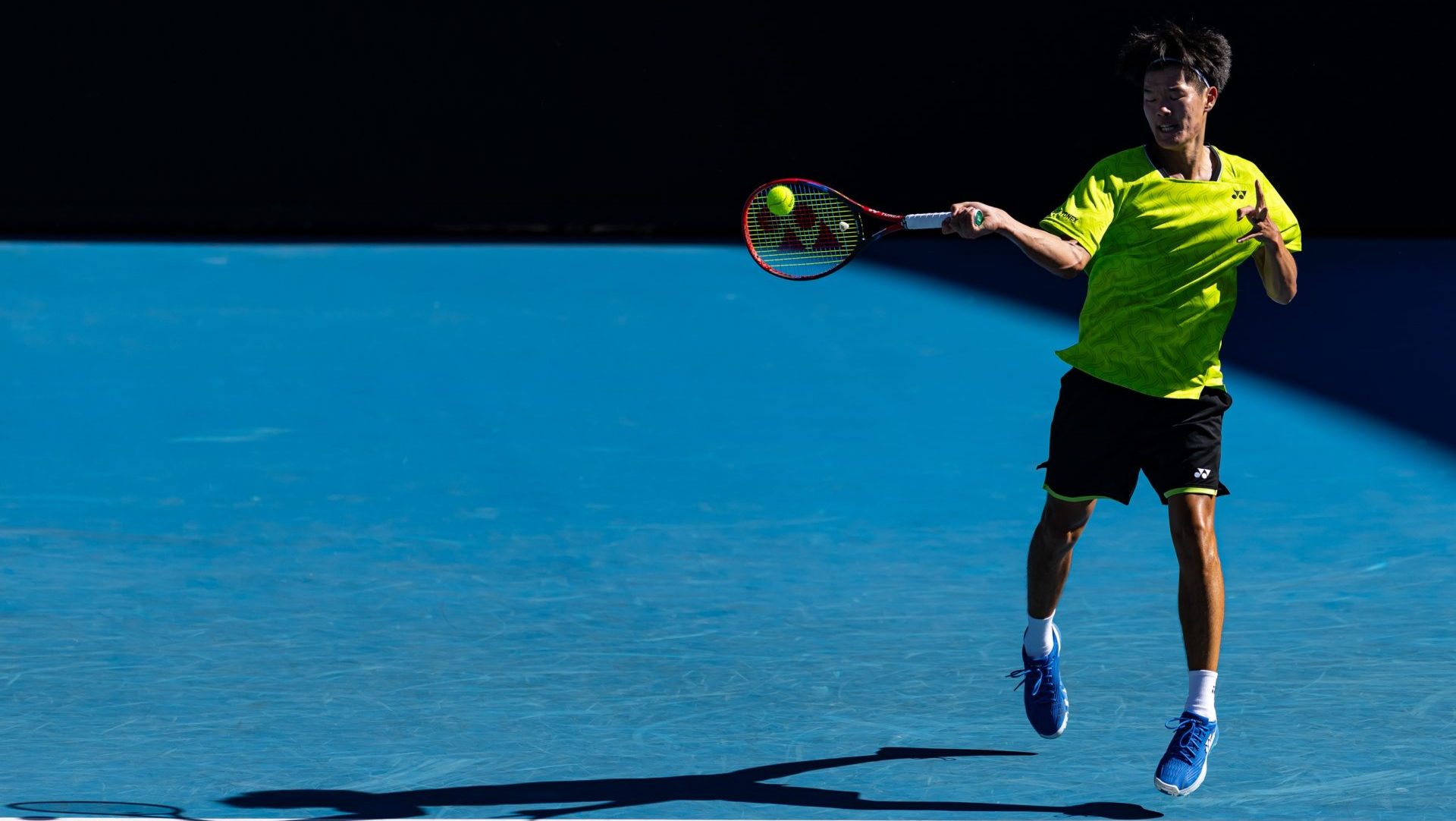
Michael Zheng has turned into an early Cinderella story at the Australian Open. But the Columbia University senior might not be able to collect the six-figure winnings that come with it.
The 21-year-old upset fellow American Sebastian Korda, a former top-15 men’s player, at Melbourne Park on Saturday to advance to the Round of 64, which comes with about $150,000 in prize money. Zheng advanced through the qualifiers to secure a spot in the main draw.
But Zheng may not be allowed to keep the money because NCAA rules prohibit tennis players from receiving more than $10,000 per year in prize money.
The NCAA rules state: “Once the individual has reached the $10,000 limit in a particular year, he or she may receive additional prize money on a per-event basis, provided such prize money does not exceed the individual’s actual and necessary expenses for participation in the event.”
The rule remains in place despite many athletes across multiple sports already profiting significantly more than significantly more than $10,000 from NIL deals and revenue sharing.
Zheng reportedly delayed turning pro to finish his psychology degree at Columbia, where he is set to graduate in the spring. He said after the match that he’s “heard rumors” that he may find a way to receive the money because he is a senior.
“I want to make sure to double-check and make sure there’s nothing wrong with eligibility if I take it. I don’t want to get in trouble or anything,” Zheng said.
A spokesperson for Columbia University told Front Office Sports that the school is “working with the NCAA to see exactly what is permissible.”
Zheng, ranked world No. 174, is considered one of the best collegiate tennis players ever. He’s won the last two NCAA national championships, the first to win consecutive men’s national titles since USC’s Steve Johnson in 2011 and 2012.
Columbia’s tennis season started Friday; Zheng missed it after advancing to his first Grand Slam main draw.
The NCAA did not immediately respond to a request for comment.
In March 2024, University of North Carolina tennis player Reese Brantmeier sued the NCAA, alleging that prize money caps are a form of illegal price fixing after she won $50,000 from the United States Tennis Association. Texas player Maya Joint was added as a plaintiff in the suit late last year after she won nearly $150,000 at the US Open.
The case is expected to go to trial in November 2026.
Lawyers for Joint and Brantmeier did not immediately respond to requests for comment.
Zheng faces France’s Corentin Moutet on Tuesday in the second round of the Grand Slam. A trip to the third round guarantees players about $220,000.
“If I beat Carlos Alcaraz in the third round, maybe then I’ll consider turning pro,” Zheng joked Saturday.
The men’s and women’s Australian Open singles champions will walk away with close to $2.8 million, up 19% from last year and a record for the Grand Slam.