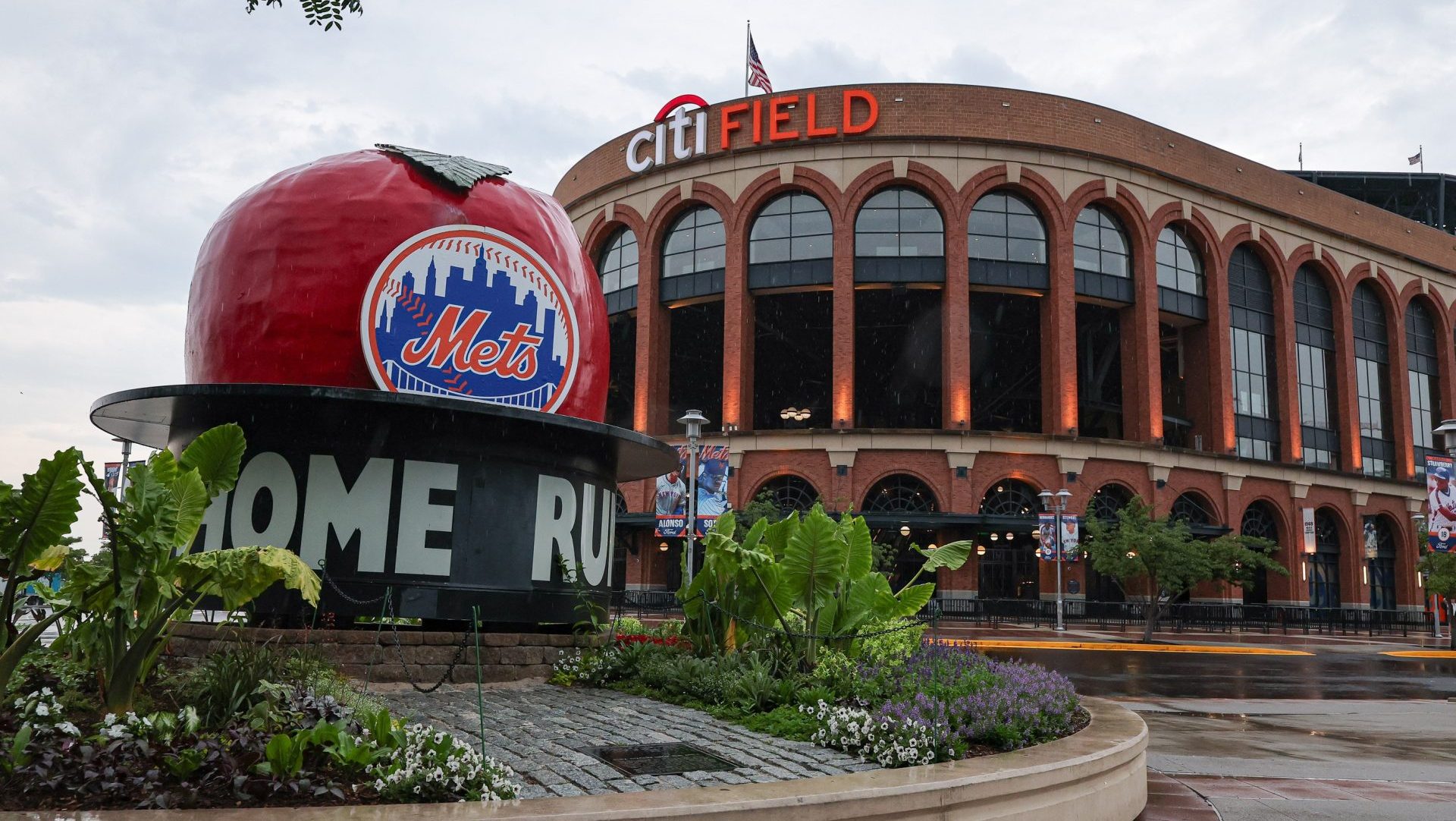
The Mets went into the 2025 season with expectations that rivaled their neighbors in the Bronx: World Series or bust.
But despite sky-high aspirations and MLB’s second-highest payroll at $339 million, the team failed to make the playoffs in an expanded Wild Card era.
Fewer teams saw their fortunes change over the calendar year more than the Amazins.
After signing Juan Soto to a 15-year deal worth $765 million in December 2024—still the largest contract in the history of American sports—the Mets had one of baseball’s most formidable lineups with Soto joining Francisco Lindor and Pete Alonso in Queens.
Soto hit 43 home runs and drove in 105 runs. But the Mets offense wound up being mediocre and its pitching staff proved unreliable, with starters struggling to go deep into games.
The Mets finished the regular season just 83–79, which coincidentally was enough to get the final Wild Card spot, but it went to the Reds, who had the same record and the tiebreaker over the Mets.
End of an Era
This offseason has marked the end of an era for the franchise with Alonso and star closer Edwin Diaz both departing in free agency for the Orioles and Dodgers, respectively, just weeks after the Mets traded away Brandon Nimmo to Texas.
On Dec. 22 the team traded Jeff McNeil to the A’s, which means the Mets lost their four longest-tenured players in the same offseason.
“I think it’s a recognition that what we did last year wasn’t good enough … and running back the exact same group wasn’t the right thing to do,” president of baseball operations David Stearns said after the Nimmo trade.
Stearns’s decision to part ways with some of the franchise’s star players has led to a backlash from fans, despite the lack of results that group had together over several years, with just one NLCS appearance to show for it.
The departed players showed hints of Mets organizational dysfunction in introductory press conferences with their new teams. The Mets never made a final offer to Alonso despite owner Steve Cohen being among the game’s richest. Diaz never allowed the team a chance to counter the Dodgers.
“[The Orioles] pretty much giving me the entire blueprint of the organization is extremely refreshing,” Alonso said at his press conference.
“I chose the Dodgers because they are a winning organization,” said Diaz. “I’m looking to win and I think they have everything to win, so picking the Dodgers was pretty easy.”
Nimmo’s exit lacked its own sentimentality. He learned he was part of trade talks during his daughter’s first birthday party. When the team asked him to waive his no-trade clause to complete the deal, the organization didn’t mince words with his departure.
“The Mets made it clear that the best way to move forward [for them] was this trade,” Nimmo said during his Rangers introductory press conference.
The Mets signed closer Devin Williams just days before Diaz signed with the Dodgers, but have failed to sign a starting pitcher or add a bat to replace Alonso in the days following. The team signed infielder Jorge Polanco from the Mariners, who is a solid addition, but doesn’t fully replace Alonso’s production.
Runway for Prospects
Stearns is also trying to give runway to some of the team’s top prospects who he kept out of deals in previous trade deadlines, such as outfielder Carson Benge and infielder Jett Williams, who have had strong careers in the minors, but have yet to receive a big-league call-up.
The organization entered the season with a lineup full of established players and now goes into 2026 with questions that still need to be addressed.
There is a world—and a realistic one at that—in which Stearns and co. are vindicated for their staffing decisions. Nimmo has five years and roughly $95 million left on his contract and is coming out of his prime at 33 years old. Alonso and Diaz are both 31 and had mixed careers in Queens despite being fan favorites and come with their own aging concerns.
Does the team trade for Tigers star Tarik Skubal or sign one of Kyle Tucker or Cody Bellinger? Or does it stand pat with a young and unproven roster around Soto and Lindor?
Cohen and Stearns have long wanted to emulate the Dodgers as a team that spends in free agency but also has a strong farm system to fill out a roster. When he bought the team in 2020 for $2.4 billion, Cohen hoped to win a World Series in his first five years of ownership.
The Mets are going into year six of Cohen’s ownership with no hardware to show for it, while the Dodgers have won the past two World Series titles.



![[US, Mexico & Canada customers only] Feb 5, 2026; Riyadh, SAUDI ARABIA; Sergio Garcia in action during the second round of play at LIV Golf Riyadh at the Riyadh Golf Club.](https://frontofficesports.com/wp-content/uploads/2026/03/USATSI_28164468_168416386_lowres.jpg?quality=100&w=1024)