NEW YORK — It was supposed to be a “down year” for Big East men’s basketball—from concerns about sending fewer teams than normal to the NCAA tournament to a lack of advantage in the revenue-sharing era.
You wouldn’t know it at Madison Square Garden on Saturday night.
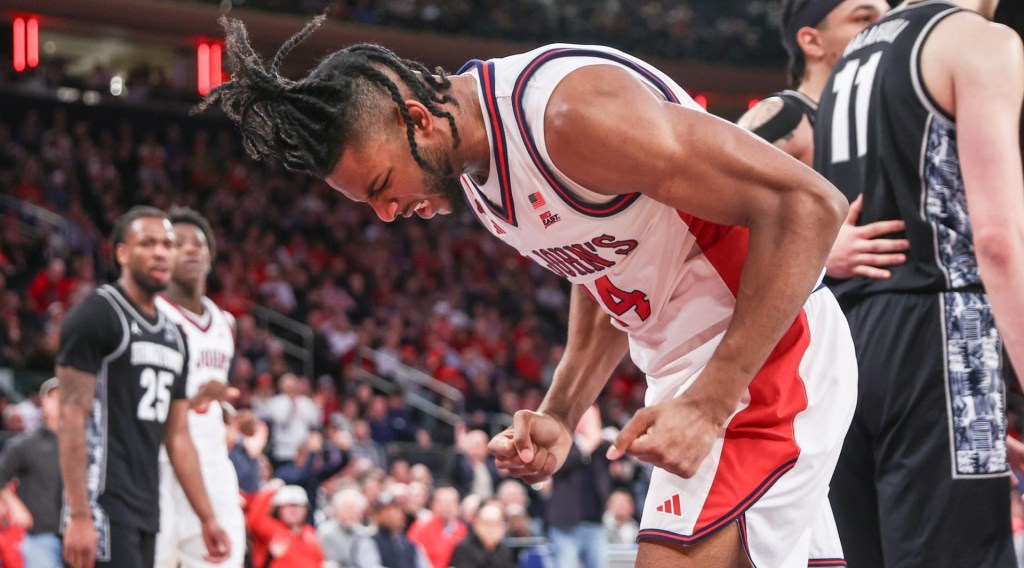
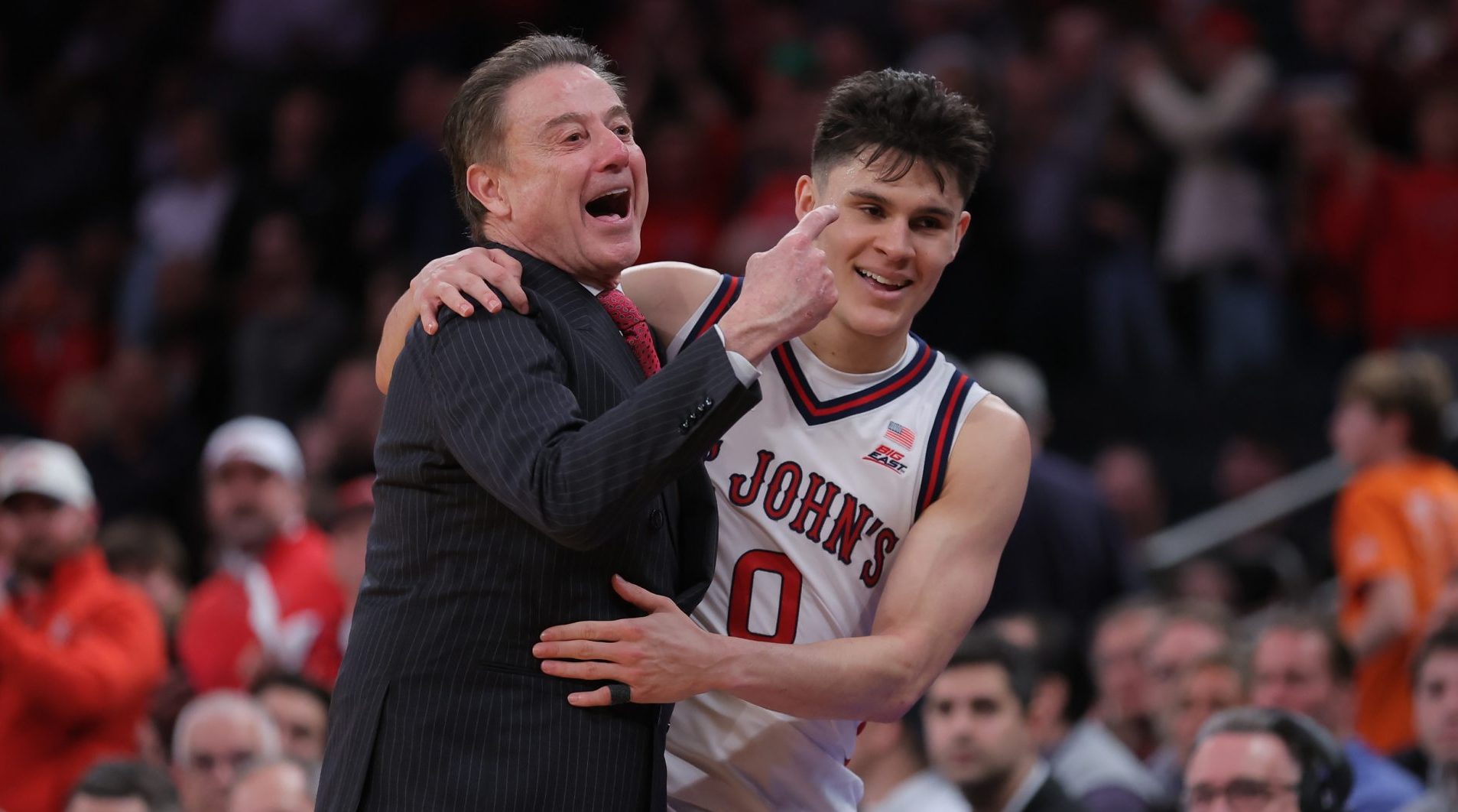
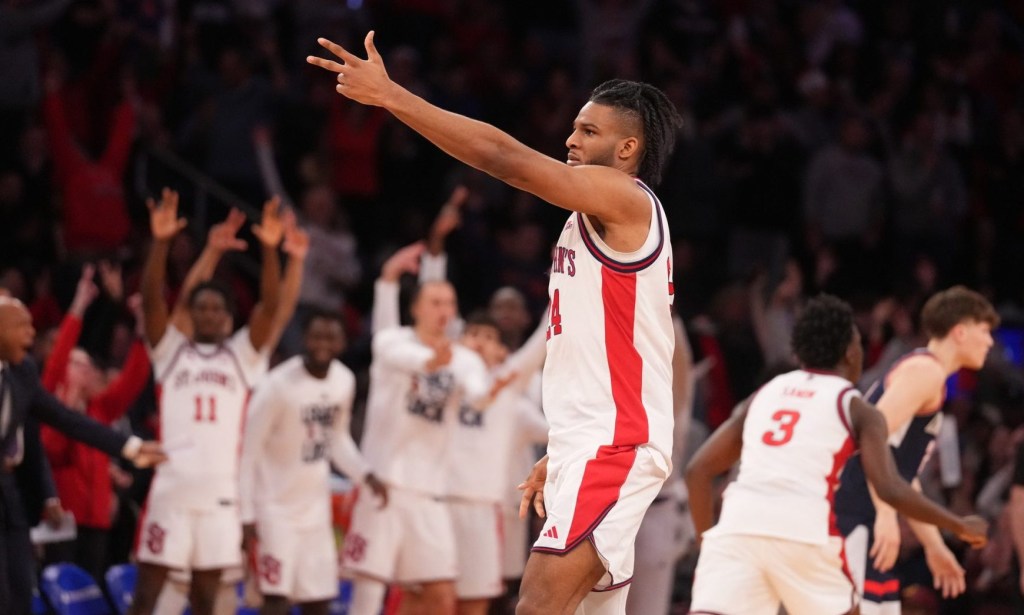
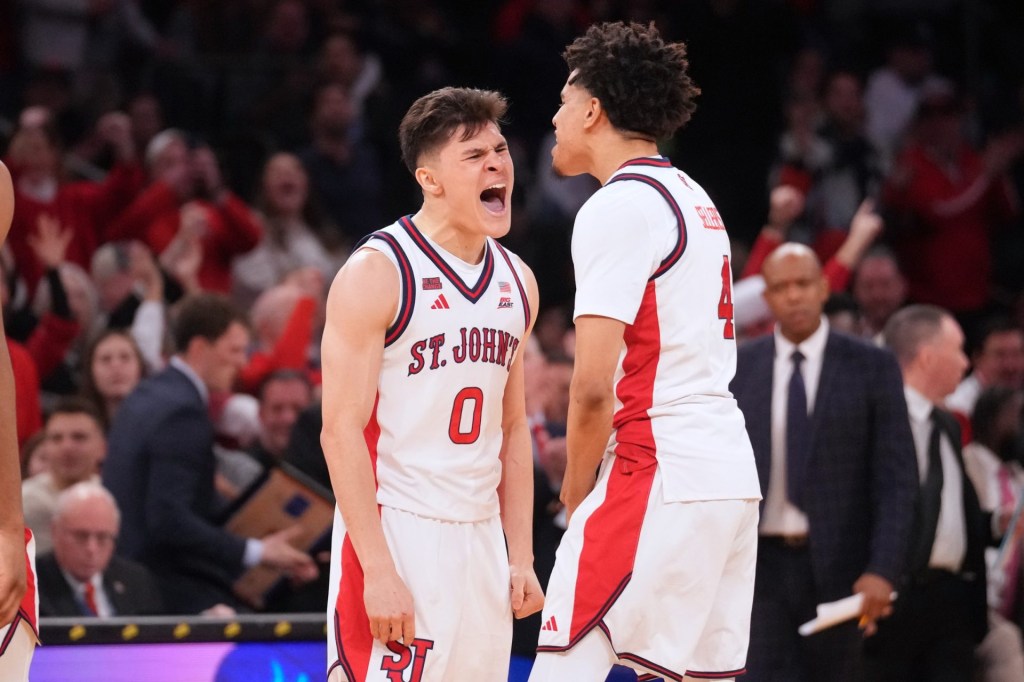
St. John’s pummelled UConn in a fast-paced, highly physical 72-52 win in front of a sold-out crowd of screaming fans clad in dueling red and blue. It’s St. John’s second consecutive Big East tournament championship—the first time they’ve won back-to-back titles in school history.
“St. John’s in the ’60s, ’70s, and ’80s dominated the East Coast,” Pitino said Friday night after securing their Big East tournament final bid. “It was a dominant basketball team. From Lapchick to [former coach Lou] Carnesecca, they dominated. And then they went into hibernation like a bear for a while, and then these guys got ’em out of hibernation.”
In many ways, it was the glory days of the Big East all over again. The two founding members of the conference met in the championship game for the first time in more than 25 years. Pitino, one of the only coaches who refuses to wear a quarterzip in the post-pandemic era, stalked the sideline wearing a suit and red tie. On the other side of the court was UConn’s coach Dan Hurley, known for the same theatrics as the Big East coaches of yore—and for his championships. (No quarter zip for Hurley either; he was wearing slacks and a blazer.)
There were signs of modernity. Billionaire Mike Repole, one of the benefactors of the St. John’s roster through NIL deals and donations to the athletic department for revenue-sharing, sat behind the Johnnies’ bench for every game. All five of St John’s starters Saturday night came from the transfer portal (though Big East Player of the Year Zuby Ejiofor has been in Queens since 2023).
A Successful Thesis
For the past decade, the thesis of the Big East was that a basketball-focused conference could still thrive in an era where big-time college football reigns supreme. A vicious round of football-focused conference realignment that tore apart the old Big East in 2013, which was rebuilt in 2014 without key members including Syracuse and UConn (though the latter school, of course, is back).
But by all metrics, the business of the Big East’s highly lucrative men’s conference tournament is booming. Every session of every Big East tournament since the afternoon quarterfinals in 2022 has sold out at MSG—that’s 24 session sellouts straight. The “World’s Most Famous Arena” has hosted the event since 1983, and in 2024 signed an extension with the Big East to keep the tournament in midtown Manhattan until at least 2032.
On TV, the network was broadcast on Peacock, NBC Sports Network, Fox, and FS1 (which Fox created in conjunction with the Big East in 2014) as part of a new media package signed next year. The company that produced a documentary on St. John’s last year produced another documentary on this year’s tournament called “March in the Garden,” according to The New York Post.
In all, the conference tournament earns several million dollars for the Big East. Conference tax filings only show conference championship revenue in aggregate, but the men’s tournament comprises the lion’s share of the $8.7 million in revenue. The only other more lucrative revenue streams are the conference media rights deal (which includes multiple networks) and revenue from the NCAA through sponsorships, grants, and basketball distributions.
“Every time I come here, I just get the goose bumps,” Georgetown coach Ed Cooley said Thursday. “Whether you’re walking up that steep hill … or you’re in the elevator and you can smell the history, it’s just so special.”
Online, a rabid and dedicated fan base known as “Big East Twitter” gleefully posted minute-by-minute thoughts throughout the week, with many of these members in attendance themselves. They made a Seton Hall fan famous for dancing shirtless with his stomach painted during the quarterfinal round. Coaches like Xavier’s Richard Pitino (son of Rick) participated by poking fun at his father’s pregame outfit. So did former players like Suns guard Collin Gillespie, a famed alumnus of one of Jay Wright’s championship Villanova programs.
After securing their semifinal berth Thursday, Seton Hall coach Shaheen Holloway said, “I try to explain to these guys about the Big East tournament and the atmosphere, but playing tomorrow night, Friday night, in the semifinals against St. John’s in the Garden at home, that’s what you play basketball for.”
A Mediocre Middle
The tournament did, however, also spotlight the conference’s biggest existential problem: the top of the Big East is very, very good, but the rest of the conference doesn’t have the rankings they’d like—and that makes it hard to send a large contingent to the NCAA tournament.
Much of the Big East tournament was no surprise, with three of the top-four seeds making it to the semifinals: UConn, Seton Hall, and St. John’s. Georgetown did upset Villanova in the quarterfinals, but the program isn’t anywhere near a bubble program.
Seton Hall, the conference’s fourth-best team, is not currently expected to make the NCAA tournament. During their respective press conferences, both Dan Hurley and Rick Pitino backed the Pirates. “I’m not sure why our league’s not getting the recognition we deserve,” Holloway said after losing to St. John’s.
“I think the Big East is well-positioned to continue to compete for national championships in the sport of basketball,” Big East commissioner Val Ackerman told Front Office Sports earlier this week. She acknowledged there were concerns about the number of bids, but that due to the “highly competitive and unpredictable nature” of the league, as well as non-conference play, injuries, and other factors, it was difficult to predict how many teams the league would send year in and year out.
During his postgame press conference, Pitino acknowledged that the conference needs more depth and called out Georgetown and Providence by name. “The Big East’ll be back, and I think it’ll be back big,” Pitino said. “We got Villanova back. We gotta get the other schools to come back right now.”
But if this week’s Big East tournament was any indication, the basketball league thesis is still working.
“I think we’re in the best possible position as a non-football league based on the revenues that we have, and the television that we have, the fact that we’re in major media markets, the fact that we have the ability to prioritize basketball to continue to do very well,” Ackerman said. “And so I’m bullish about the future.”