LOS ANGELES — Prediction markets like Kalshi and Polymarket exploded in the past year, and as they’ve risen in both usage and valuation, they have held fast to the argument that their product is distinct from sports betting because when you bet on an outcome of a real-world event on a prediction market, you’re investing in a futures contract.
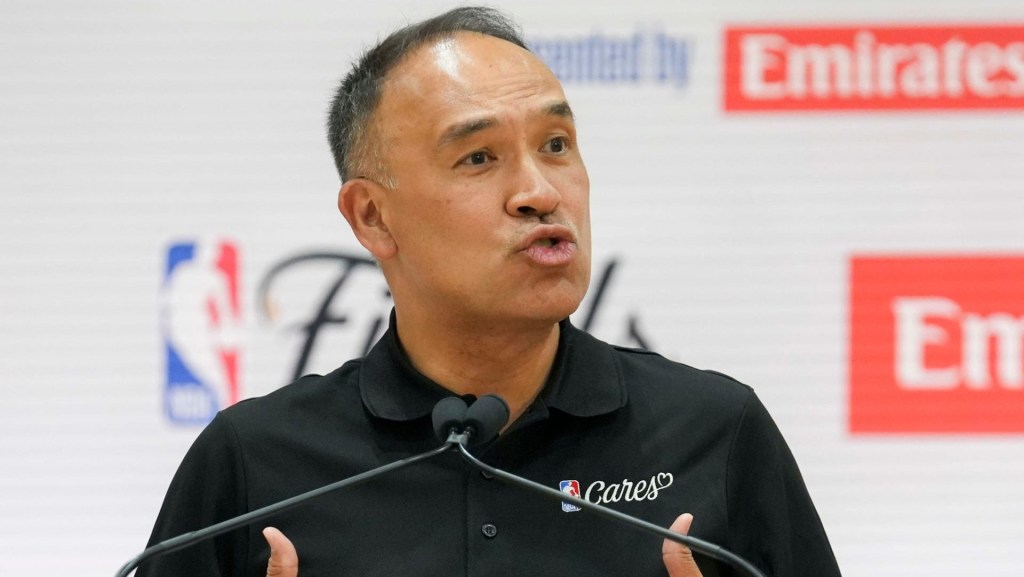
But NBA commissioner Adam Silver, in his wide-ranging press conference at All-Star Weekend, said the league views them as “essentially” the same thing.
“We currently are looking at prediction markets essentially in the same way that we’re looking at sports betting markets or sports betting companies,” Silver said Saturday afternoon in Los Angeles. “It’s rapidly evolving. Prediction markets have now come on the scene fairly recently as, I don’t know how else to say it, major sports betting marketplaces. Whether prediction markets are allowed to go forward in the form they’re in now will, I think, be ultimately an issue for the courts and for Congress.”
Kalshi and Polymarket have insisted that because their event contracts amount to an investment, they should be regulated by the Commodity Futures Trading Commission (CFTC), rather than the same state-by-state laws that apply to sportsbooks. Some states have challenged that argument; Polymarket is currently barred from offering its event contracts in Nevada for two weeks.
DraftKings, FanDuel, Fanatics, Robinhood, Coinbase, and Crypto.com are some of the many companies that have added prediction markets to their existing product offerings as the category has surged.
Fanatics Betting CEO Matt King, who is the former CEO of FanDuel, argued for why prediction markets are not the same as sports betting in an interview with Front Office Sports during Super Bowl week. “One is a two-sided marketplace,” King said, referring to prediction markets. “The other is obviously, you know, we are the house in the sportsbook … I think they will always be two distinct services.”
What the Big Leagues Have Said
The NHL has made official marketing pacts with both Kalshi and Polymarket; MLS and the UFC made deals with Polymarket. But the NBA, NFL, and MLB—the “big three” of U.S. pro men’s leagues—have all stayed away from official league-level deals.
The NFLPA and PGA Tour both do not currently let their players make individual endorsement deals with prediction markets, FOS reported last month.
Last summer, MLB sent a memo to teams and players warning them about prediction markets and alerting them that the league’s existing gambling policies apply to prediction markets. But this past week at MLB owners meetings in Palm Beach, Fla., Manfred said the league gave a presentation to owners on prediction markets because, “We thought it was important for the owners to be updated on why prediction markets are different than sports betting, why we might want to consider being in business with prediction markets in an effort to protect our integrity, to get the kind of protections we need.”
On Friday, the NBA hosted the CEOs of Kalshi and Polymarket on a panel along with executives from FanDuel, DraftKings, MGM, and Sportradar as part of its annual NBA All-Star Tech Summit, an invite-only, off-the-record event it holds at every All-Star weekend.
At his press conference Saturday, Silver used the subject of prediction markets to express concerns about the “totality” of betting on his league globally, and in so doing, he even alluded to the possibility that prediction markets will not last.
“Even if they go away,” Silver said, “the league is now dealing with essentially 40 different jurisdictions that have legalized sports betting in the United States. Still a huge illegal market. I’d say one other category that I hardly ever hear people talk about is that the last I looked, there are probably 80 countries in the world outside of the United States that also have legalized betting on the NBA. So it concerns me, in the totality of all this betting that we need a better handle, no pun intended, on all the different activity that’s happening out there.”
Silver on Giannis’s Kalshi Investment
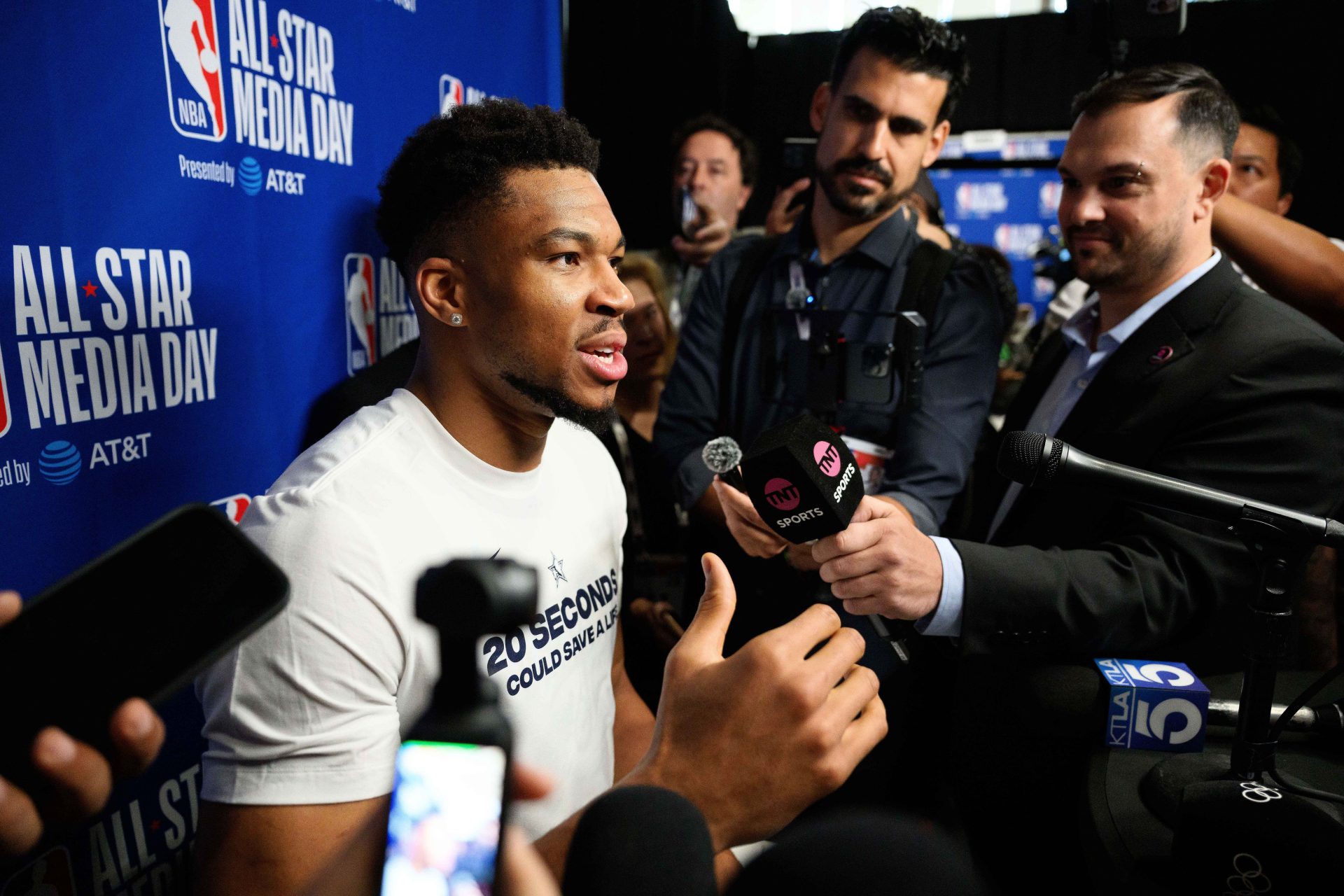
Just over a week ago, Bucks star Giannis Antetokounmpo made major waves when he announced he was “joining Kalshi as a shareholder.” He is the first NBA player to do so.
Considering the NBA has kept prediction markets companies at arm’s length, many wondered whether Antetokounmpo’s Kalshi stake is acceptable in the eyes of the league.
It is, Silver said, because of the small size of his stake.
“We have a rule that was collectively bargained with the Players Association that players can make, I will call them, de minimis investments in sports betting companies, and we’re applying the same rule to prediction markets,” Silver said. “It means their investment cannot amount to over 1%. In the case of Giannis, from what I understand, it’s a minuscule investment. Much smaller than 1%, so that does not violate the rules that have been collectively bargained with the Players Association.”