The impact of signaling in trade markets and what teams can do.

The real-time nature of platforms such as Twitter, but also of Facebook and Instagram, have completely upended sports journalism, and as a result, has also changed the way fans have consumed their media. It’s also no secret that these same platforms are looking for further integration via live streaming rights. However, social media has also changed the way front offices are operating, and may continue to do so, as they reach the so-called economic equilibrium in the new world order.
One way that social media can affect front office decisions is through signaling.
A Primer On Signaling
While the linked paper focuses on the job market, signaling theory applies to many other aspects of life — including free agency in sports and trade market (which essentially boils down to a job market anyways).
Signaling is exhibited in markets where there is asymmetric information — that is, when one party has more information than the other. In Spence’s model, education acts as a signal to employers about their capabilities. If the employer has the perception that a college degree is more likely to result in a good employee, they will also have a more positive outlook on a job applicant with a college degree.
This is actually extremely valuable in the real-world, where both sides benefit: good applicants are more likely to invest in education (with bad applicants being less likely to invest due to the costs of signaling), and employers are more likely to gain, with the assumption of costly signals.
Signaling in the Trade Market
Signals also appear in sports, particularly in both the trade and free agency market. My focus here will be on trades.
A good example applies to players who are being shopped on the trade market.
If a team is actively looking to trade a player, it is because they are not receiving sufficient value from them — the cost being either the monetary value (which especially matters in salary cap leagues, but also in non-salary cap leagues), playing time, or a negative effect on culture. If there are two teams, A (the giver) and B (the receiver), and B knows that Team A has been looking to trade a player, it can act as a signal that there is something wrong with them.
Perhaps this player is mean to his/her teammates. Maybe they don’t practice very hard. Either way, there is some invisible information that is being conveyed when the player is being shopped.
Since all teams are looking to extract maximum value out of trades, it is rational that Team A would downplay trade rumours, which would decrease their own leverage in trade negotiations.
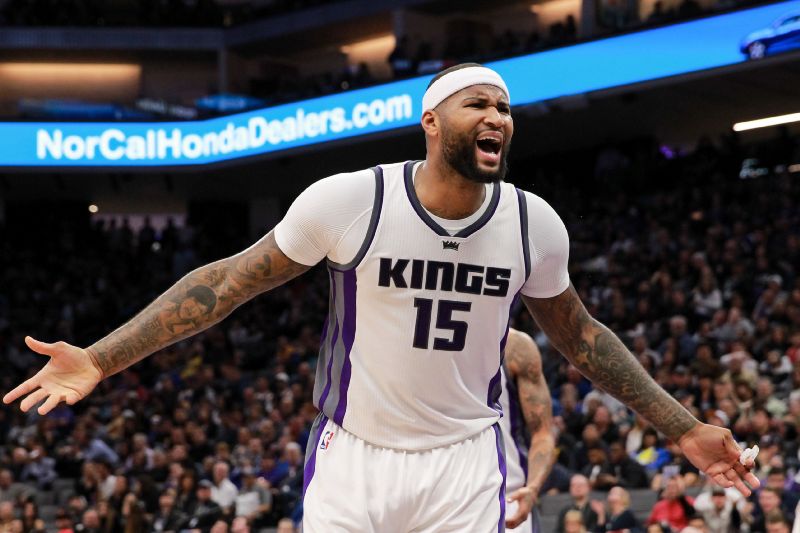
We saw this happen just last year in the NBA, when Kings GM Vlade Divac adamantly denied claims that his team’s franchise player, DeMarcus Cousins, was on the trade market — just two weeks before trading him during the 2017 All-Star Weekend.
And these denials are less effective than ever: in sports such as the NFL, NBA, NHL, and MLB, where reporters such as Adrian Wojnarowski consistently break trades, rumours, and signings, teams (and fans) are less likely to be fooled by general managers’ and team officials’ attempts to protect their player’s value.
How Signals Can Be Used for Good
Or, rather, how teams can leverage signaling theory for their own advantage.
If we split player value into tangible performance (i.e.: goals, points, assists, etc.), and intangible performance (i.e.: leadership, competitiveness, work ethic, etc.), it becomes immediately clear that, while intangible performance is important, measuring it also becomes a qualitative and imprecise science.
Much like the practice of hiring employees in traditional labor markets, measuring intangible performance comes down to the use of signals.
Signals including number of teams the player has played on, draft position, body language, and interviews all contribute to the evaluation of a player — whether this evaluation is implicit or explicit.
Since a team’s utility function will only comprise of observed variables, and since this model is more likely than not to be a mental model, front offices will place a greater weight on what they can see.
With math, there are many techniques to control for the effect of unobserved variables. Techniques such as instrumental variables and first differencing exist to help with this problem.
But if a team primarily uses mental models to evaluate intangible performance, this simply isn’t possible.
Consider this example: if there are only three possible variables to be used in evaluating intangible performance — leadership, competitiveness, and work ethic, but one of those variables are masked (say work ethic), a greater weight will be placed on the remaining two variables. Any signal that indicates leadership ability or competitiveness will be factored into an evaluation of a player, while work ethic will be ignored.
In this example, if a player’s work ethic is poor, the prospective team would have no way of knowing this.
Similarly, this can also be used in real trade markets — when unfavourable information about a given player is released, a team should release more information such that it acts as a positive signal and counterbalances the negative signal. This ensures that the negative effect of the unfavourable information on the player’s value is mitigated.
While much of this is the responsibility of many individuals on the team staff, a large burden of the responsibility will fall on the team’s public relations team. It’s one reason why good, effective PR matters! Effective PR tactics will provide value to all teams, and influence a team’s success, beyond just marketing.
This piece has been presented to you by SMU’s Master of Science in Sport Management.
Front Office Sports is a leading multi-platform publication and industry resource that covers the intersection of business and sports.
Want to learn more, or have a story featured about you or your organization? Contact us today.