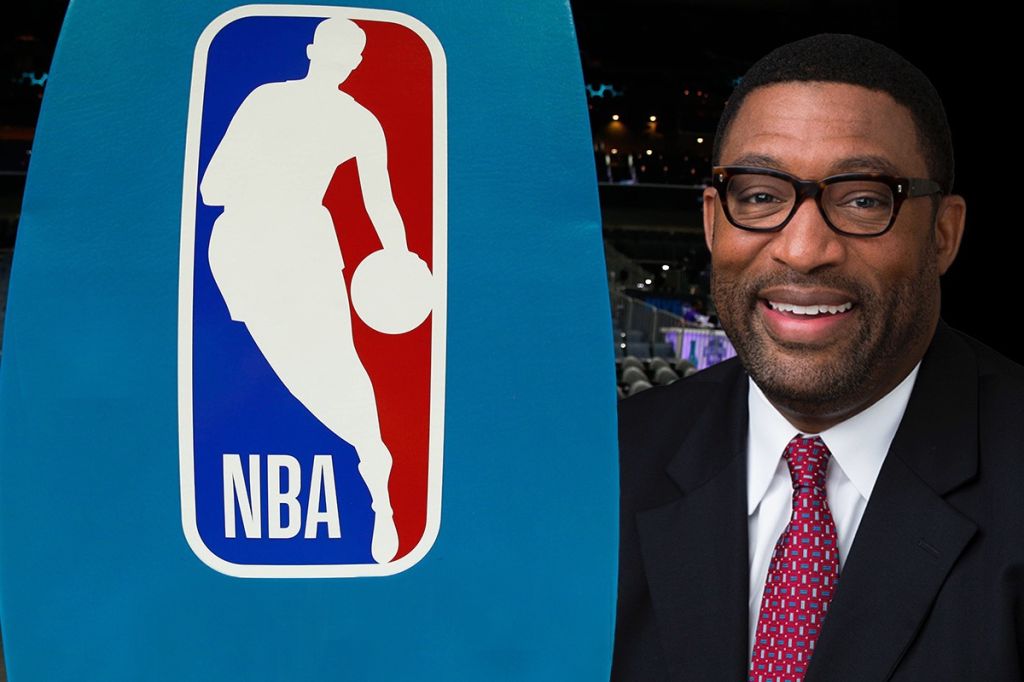
Greg Taylor has been the first executive director of the NBA Foundation for two months. His commitment to social justice issues — especially when it comes to providing career opportunities for the Black community — stretches back most of his adult life.
The NBA Foundation was created in August, weeks before Milwaukee Bucks players refused to play in protest in the aftermath of the shooting of Jacob Blake. Blake, who is Black, was shot multiple times in the back by a police officer in Kenosha, Wis. The incident was the latest example of police violence targeted at members of the Black community, which led to the deaths of Breonna Taylor and George Floyd in 2020, among many others.
Taylor, 54, will oversee that 10-year, $300 million commitment approved by the NBA Board of Governors. He started in the league office in 2013 and served as the NBA senior vice president of player development before taking on his new role with the foundation.
Taylor spoke with Front Office Sports about his plans for the NBA Foundation, the league’s response to the Black Lives Matter movement, and his efforts to give youth and young professionals in underrepresented communities a better chance to advance in the workplace.
Front Office Sports: February is Black History Month, and the NBA has again recognized the month in multiple ways. One new addition was “BUILT BY BLACK HISTORY” warmups worn by all 30 teams. But the initiatives announced by the NBA Foundation, the National Basketball Social Justice Coalition, and the teams aren’t limited to February.
Greg Taylor: The fundamental belief is every month is Black History Month. This year, obviously, there is an amazing lens focused on issues of social justice and social change growing out of the murders of Black men and women across the country. We know our players have always been amazing ambassadors for issues of civil rights and social change. Our work this month really just builds on that legacy. We think we have a platform and a voice to contribute to the amazing work that’s been underway.
FOS: The Bucks’ protest didn’t just halt one NBA game. It led to stoppages in every other major pro sports league last summer. You mentioned some reasons why the NBA is different already, but what sets the league apart in this instance?
GT: I think it was another example of the long history of player activism. What was amazing for me is to be a part of an organization that embraced that player perspective and the sentiment behind what was happening. We said we’re going to find ways to be thoughtful and responsive in that moment, and make a commitment to making some change internally around representation and leadership opportunities as a league. Then, externally establishing [a game plan] along with players and teams with both the [National Basketball] Social Justice Coalition and also the NBA Foundation.
We want to look internally at how we can be better as a league, but we also want to use our platform and partner with our players and their amazing reach to have lasting change around these issues of social justice. I would agree with you that a pivotal moment was what took place in [the] Orlando [bubble], but I would also offer that this really is a long-standing effort and a trajectory that we’ve been on for a very long time around these issues.
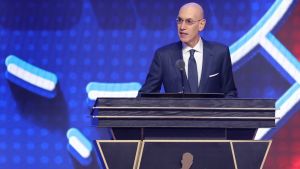
FOS: The NBA Foundation announced its first board members in October, a list that includes Charlotte Hornets owner Michael Jordan and NBA Commissioner Adam Silver, along with 76ers forward Tobias Harris and Sacramento Kings Forward Harrison Barnes. What ideas came out of the first meeting?
GT: What came out of that first meeting was a real commitment to leverage the NBA and its players’ platforms to close the economic wealth gap for Black youth, and understanding that there are decades-old wealth disparities between Black and white families and that employment opportunities are often limited.
The first board meeting focused on really sharing and identifying a true commitment to these issues, and how over the next decade, if not beyond, the foundation can be pivotal towards [addressing] these issues. I think there’s a focus on creating lasting change by using our platform, our influence, and financial resources to benefit Black youths in this country.
FOS: The NBA and its fans utilize social media in a way no other sport does, creating the kind of engagement other leagues strive for. How crucial has players’ use of Instagram, Twitter, and other social platforms been to address and advocate for social change?
GT: We are really fortunate that our players utilize social media in such amazing and effective ways. We know it’s a way to connect fans to the players and to use their voice for larger change. I’m always amazed at the ways in which the players take time to educate themselves and to use those platforms for a greater good.
I was personally involved in the bubble and was very pleased with the number of players who took time to educate themselves on the Breonna Taylor issue to think about how they wanted to use their platform and voice, and to use thoughtful and strategic ways to share their voices about the challenges that were happening in that community and around that particular issue. I think they are tremendous ambassadors for both the league and its brand, as well as for social justice and change efforts that are happening in the world.
FOS: A major part of your goal with the foundation is finding ways to address the systemic issues that have held those in the Black community back from not only getting initial job opportunities, but also advancing in their careers. This is something you’ve worked on in some form for a very long time. How hopeful are you that the foundation, and the NBA as a whole, can address the disparities in the job market?
GT: We focus our work on the foundation side on helping high school students and young people who are coming out of college, secondary education, or two-year programs get that first job. We are focused on early career professionals. That’s very intentional because we know that meaningful employment — and by “meaningful,” we mean living wage, health benefits, and professional development opportunities — is a pivotal way to contribute to society and earn revenue so you can take care of your family. It allows you to be a full contributing member of this democracy.
It’s a passion point of mine. I think it’s a passion point of our players and the league. The foundation is committed to really trying to build efforts that are solid and sustainable to really disrupt [the system] to help Black youth obtain meaningful employment. We know that there’s opportunity out there, but oftentimes opportunity doesn’t reach the population that we want to work with specifically.
FOS: Silver has received praise for his handling of social justice issues during his tenure. How vital has it been to have him as an ally?
GT: Adam has been a leading voice on social justice within the league and, I would say, out in the world at large. He represents the governors and owners around all these particular issues. It’s been an amazing thing to watch his journey in terms of leadership. His fundamental support of both the coalition and the foundation has also been amazing. I couldn’t be more honored to work with him and for him.