The Chernin Group has led a recent fundraising round in the social box score app Real, the sides confirmed to Front Office Sports.
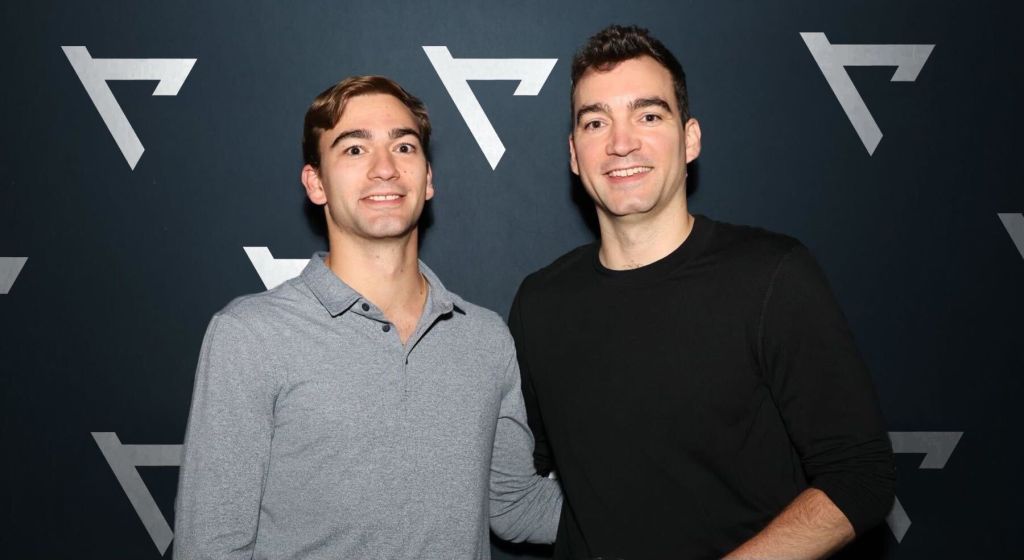
Founded in beta mode in 2020 and officially launched in 2021 by brothers John and Louis Antonelli, Real is a fast-growing app that combines live stats and play-by-play with elements of social media and gaming similar to Twitter/X, Reddit, Discord, YouTube and Twitch live chats, Roblox, and Fortnite.
Other investors in Real from its past and present rounds include venture firms Pear Ventures, Tamarisk Lane, and Operator Partners; NBA players Tyrese Haliburton, Grayson Allen, and Tre Jones; influencers Clix (Cody Conrod) and Kenny Beecham; and sports business executives, including ex-ESPN EVP of Content/Words + Pictures founder Connor Schell and CAA Sports co-head Mike Levine.
“We’ve basically been tracking and chasing these cofounders for over a year,” Chernin Group co-founder and partner Mike Kerns told FOS. “I’ve been involved with digital sports since the beginning, in the early 2000s, and I think this is the fastest-growing sports app I’ve ever come across. What’s remarkable is they’ve done it with several employees and almost zero money on paid marketing.”
The Antonelli brothers and The Chernin Group both declined to specify how much was invested and at what valuation, other than to say it was a minority stake and that the founders retain control.
John, 24, has been growing social media audiences for more than a decade. He had a big account on Vine—the short-form video platform on Twitter/X that in many ways was a precursor to TikTok—and grew the Instagram account @bball from zero to nearly a million followers while he was still in high school. His brother Louis, 34, was a founding engineer at a company called Guilded, which was acquired by Roblox, and he co-founded The Rose League, a fantasy app tracking “stats” from The Bachelor, with his now-wife. It had 50,000 users at its peak.
“One of the main theses behind Real is there are millions of sports fans who seek out content on social media, but it’s fragmented and sensationalized,” John said.
Another thesis was that the scores and stats were buried in sports apps, requiring multiple clicks to find them, and there were latency issues where the data could be delivered faster. Whereas Louis had to manually type out the “play-by-play feed” of The Bachelor, it dawned on him that sports “naturally” have data feeds that are “basically instant.”
The play-by-play feeds on Real have a comments section on each new entry, and then other fans respond to the comments with emojis (as with Slack or Discord).
“The vision was we will be the first place you hear about, engage with, and share content from,” Louis said. “It’s essentially inverting Twitter. You have a million different people tweet separately about the same big play. We are flipping that. We put out the data point—the home run, for example—and then people are commenting about that data.”
Fans who are interested in certain players or teams get push notifications during key points in games. “We bring a community around those moments,” John said.
There have been a few watershed moments for Real along the way. One of the first milestones was having 1,000 unique users engage with an NBA game back in 2021. The app’s following continued to crescendo from there.
“The time we really realized there was something here was the crazy Chiefs-Bills playoff game, that went to overtime,” Louis said of the wild Jan. 2022 postseason tilt. “The demand was crazy—it completely crashed our servers.”
When Bam Adebayo scored 83 points in March, Real had about 220,000 unique users on its app, which is often a minute or two ahead of the action on TV. “These guys seem to have really built something that is resonating with a younger demographic,” Kerns said.
Similar to Reddit, users get “karma” and “badges” for engaging with the app, including taking part in the pregame polls that approximate sports bets, but are used for building up one’s profile as opposed to wagering real money. Users also get karma and badges for “passive” engagement, meaning lurking on the app without posting.
Real makes money having a “virtual bucks” model similar to Roblox and Fortnite, where people collect digital cards and can “level-up” their favorite players and teams, and they can earn back “racks” when those players and teams do well. “It all stays in the system. There’s no cash-out. It’s why it’s very close to a video game, not like a casino or sportsbook,” Louis said.
John said that they are striving to build a kind of “Pokémon for sports” model in terms of combining collectibles and clout.
The founders say that there are currently 700,000-900,000 daily active users and 1.3 million monthly active users. Fifty million push notifications are sent out a day across its user base.
Despite its growth, Real has just five employees: the Antonelli brothers, their mother, who runs the finance department, and two additional engineers.
The Chernin Group was founded by Peter Chernin, the longtime former CEO of Fox and News Corp, in 2010. It acquired a majority stake in Barstool Sports at a $15 million valuation in 2016 and sold the company to Penn for $551 million. It also incubated The Action Network, selling it to Better Collective for $240 million, and led the seed round of The Athletic, which ultimately sold to the New York Times. Chernin Group currently owns a controlling stake in MeatEater, one of the leading outdoor content platforms. As with all investors, nobody bats 1.000; its investment in Food52 did not pan out.
The Antonelli brothers say that The Chernin Group gives them “optionality” of how to grow from here without having to take quick money for sponsorship from a sportsbook or a prediction market like Kalshi or Polymarket. “Chernin provides decades of experience within sports media and entertainment, from the media to the leagues,” John said. “They bring that layer of legitimacy.”
Real currently covers 18 leagues, including the NFL, NBA, MLB, NHL, WNBA, and some college sports and global soccer. Some of the proceeds from the latest investment round will go toward expanding the offerings to more sports, including tennis and F1.