
Want more from Front Office Sports
in your search results?
Kalshi landed a major legal win Monday, with an appeals court ruling that New Jersey cannot stop the prediction-market platform from offering sports event contracts while its case against state gambling regulators plays out.
The Third Circuit’s decision reaffirms an April ruling in federal court and represents Kalshi’s first appellate victory. It means that, for now, New Jersey cannot pursue civil or criminal enforcement actions against the platform as the case moves forward. The New Jersey Division of Gaming Enforcement had issued a cease-and-desist letter to Kalshi in March of last year, which prompted the prediction-market platform to sue.
The judges ruled 2-1 in favor of Kalshi, with U.S. Circuit Judge David J. Porter authoring the majority opinion. “Kalshi has met its burden for preliminary injunctive relief,” the judge wrote.
According to Judge Porter, the Commodity Futures Trading Commission (CFTC) has “exclusive jurisdiction” over prediction markets, and a federal law called the Commodity Exchange Act (CEA) preempts state law. Specifically, the judge wrote that sports event contracts should be treated as swaps. A swap is a contract where two parties exchange money based on how something else changes—in the sports context, for example, the result of a game. Swaps generally fall under the CFTC’s authority.
“Allowing New Jersey to enforce its gambling laws and state constitution would create an obstacle to executing the [CEA] because such state enforcement would prohibit Kalshi, which operates a licensed [designated contract market] under the exclusive jurisdiction of the CFTC, from offering its sports-related event contracts in New Jersey,” the judge wrote. “This state regulation is exactly the patchwork that Congress replaced wholecloth by creating the CFTC.”
New Jersey Attorney General Jennifer Davenport said in an emailed statement, “We profoundly disagree with today’s decision allowing certain companies to offer sports gambling in our States without following the careful gaming rules that everyone else follows.”
“States like New Jersey have always had the power to oversee all gaming in their States, and to subject gaming to important safety measures, including to guard against gambling addiction and to avoid insider trading,” Davenport added. “We’ll continue standing with our colleagues fighting off similar challenges in their States, and we’re evaluating all options in our case.”
Kalshi cofounder and CEO Tarek Mansour posted that the ruling is “a big win for the industry and millions of users.”
CFTC chairman Michael Selig applauded the ruling in a social media post, saying it “reaffirms Congress’ intent for the CFTC to have exclusive regulatory jurisdiction over trades on DCMs.”
U.S. Circuit Judge Jane R. Roth offered a dissenting opinion, and because the decision was not unanimous, New Jersey can seek a rehearing en banc, which would encompass a hearing in front of all 14 active Third Circuit judges—not just the three who issued Monday’s ruling.
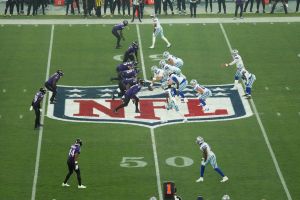
Judge Roth began her dissent by noting that event contracts on NFL games—including who will win, player props, and over/unders—are “virtually indistinguishable from the betting products available on online sportsbooks, such as DraftKings and FanDuel.”
“I see Kalshi’s actions as a performative sleight meant to obscure the reality that Kalshi’s products are sports gambling,” Judge Roth wrote. “Because Kalshi is facilitating gambling, it can be subjected to state regulation.”
The Wider Context
Kalshi’s victory on Monday came just weeks after the company was hit with criminal charges by Arizona’s attorney general. It is also currently barred from offering sports event contracts in Nevada under a preliminary ruling in that state that was initially set to last for two weeks but was extended until at least April 17 last week. Kalshi’s primary rival, Polymarket, has also been banned from offering sports event contracts in Nevada.
Despite difficulties in Nevada, prediction-market platforms have a major ally in their corner: the CFTC. Last week, the regulator sued the states of Illinois, Arizona, and Connecticut for attempting to prohibit sports event contracts in their states, representing the first lawsuits filed by the federal government against any states in the ongoing battle over sports event contracts.
In total, more than 20 lawsuits are currently winding through the U.S. court system over sports event contracts, some filed by states against platforms and others by platforms against states. Experts expect the issue will ultimately reach the U.S. Supreme Court.
Lawmakers on both sides of the aisle have been expressing concern and proposing legislation, not just about sports event contracts, but also markets that could be susceptible to insider trading, such as those related to potential military actions.
Meanwhile, as prediction markets push for continued mainstream legitimacy, Major League Baseball and Spanish soccer league La Liga recently became the latest pro sports leagues to partner with a platform—both reached deals with Polymarket—with the MLB agreement including a memorandum of understanding with the CFTC.
Download the FOS App
The business of sports, in your pocket.



Scan the QR code to get the app now.