Want more from Front Office Sports
in your search results?
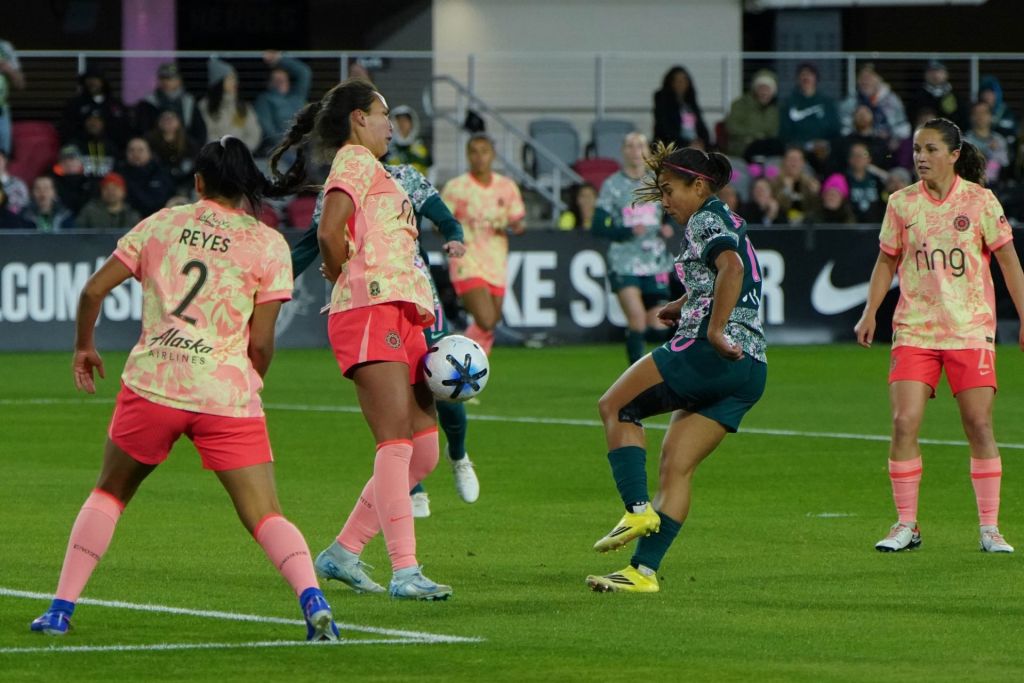
Missing out on the Trail Blazers still burns, but Lisa Bhathal Merage says her family is looking ahead with a portfolio centered on women’s sports, including two pro teams in Portland: the WNBA’s Fire and the NWSL’s Thorns.
Bhathal Merage and her brother, Alex Bhathal, own the Fire and Thorns through investment firm RAJ Capital. They’re also part owners of Sacramento Basketball Holdings Group, which is the parent company of the NBA’s Kings, the Golden 1 Center (where the Kings play), and the G League’s Stockton Kings. RAJ is also a developer of Downtown Commons, the Sacramento sports and entertainment district in which the Golden 1 Center sits.
The family made their fortune via swimwear company RAJ Manufacturing. The siblings’ father, Raj Bhathal—who emigrated to the U.S. from India in 1960—formed the company in 1967, with his wife Marta Bhathal. Lisa and Alex partnered with private-equity firm Swander Pace Capital in 2007 to acquire RAJ Manufacturing.
Last year, they tried to buy the Blazers (which would have required selling their interest in the Kings), but Carolina Hurricanes owner Tom Dundon was the winning bidder with a deal valuing the Portland franchise at north of $4 billion.
Speaking to Front Office Sports the day before the WNBA reached its new collective bargaining agreement, Bhathal Merage said tension around CBA talks had not dampened enthusiasm for the Fire, broke down where things stand with construction of a massive practice facility that will be used by both the Fire and Thorns, and more.
Front Office Sports: You’re in Los Angeles attending the second annual Power Play sports business summit, which is hosted by the sports division of Marc Lasry’s private-equity firm Avenue Capital. What’s your role at the event?
Bhathal Merage: I’m here to represent what’s been happening in women’s sports. It’s not a moment, it’s the rise of women’s sports. The event is about collaboration and leveling up the ecosystem.
FOS: You bought into the Kings in 2013. How have things changed for NBA ownership since then?
BM: In 2013, basketball was in a similar place to where the WNBA and NWSL are now: entering a tipping point where it’s going to explode. Maybe it’s my background of being in fashion for so long, but I can kind of smell things before they happen.
You can see the growth of the NBA, not just with media rights, but surrounding sports real estate. It’s just grown so much, both in value and with regard to the impact it has had on the city of Sacramento.
When we invested, the Kings played in Sleep Train Arena, which was slightly better than a high school gym. We did a public-private partnership to establish the Golden 1 Center.
FOS: After Dundon’s deal for the Blazers was announced, you sued to stop one of the minority investors, the Cherng Family Trust, from being part of the buying group, before dropping the suit in October. What’s the latest on that whole situation?
BM: That’s still the big stinger, but it’s in the past. We were vying for governorship there. What we have in Sacramento is wonderful, and we’ve built a beautiful facility there. If we were going to make a move, it would be to have that governor slot.
FOS: You own two major women’s teams in the Thorns and Fire. The Fire were previously a WNBA team from 2000 to 2002, and now you’re bringing them back after more than 20 years. What’s the excitement level as you approach the first Fire season?
BM: Across the Fire and Thorns, it feels like this is my purpose, this is why I’m here. It’s been so fun, challenging, and exciting to create this new team from scratch. And I have to give credit to the wonderful team that works for us in Portland, led by president Clare Hamill.
It’s really all about the fans, and fans in Portland are the most engaged fans across the country. With the Fire, we’re leading the league in new season ticket sales right now. There’s a tremendous amount of excitement.
FOS: You’re developing a joint practice facility for the Fire and Thorns that’s expected to cost $150 million. How is that going?
BM: We will have it open, probably, by the third quarter of this year. It has grown. We started off with 63,000 square feet, and now it’s going to be just under 100,000 square feet. There are two full-sized soccer pitches and two full-sized basketball courts.
We recently announced it will be named the Kaiser Permanente Performance Center. It will be the only women’s performance center for two pro sports teams in the world, at least for the foreseeable future.
FOS: Are there other sports or leagues that you are particularly interested in?
BM: We’re always looking, including a few things we’re looking at right now. We’re selective with what we do, and it needs to make strategic sense. So we’ll see.
FOS: You graduated from USC; have you given any NIL money to your alma mater?
BM: No, but I funded a program at the University of Miami, where I have two sons. That’s for women in sports management who are looking for internships in sports, and it started last summer. I funded it so they’d have stipends to take these internships and be able to live somewhere else and have that experience.