Want more from Front Office Sports
in your search results?
Super Bowl LX drew an enormous audience—but did not set a new record.
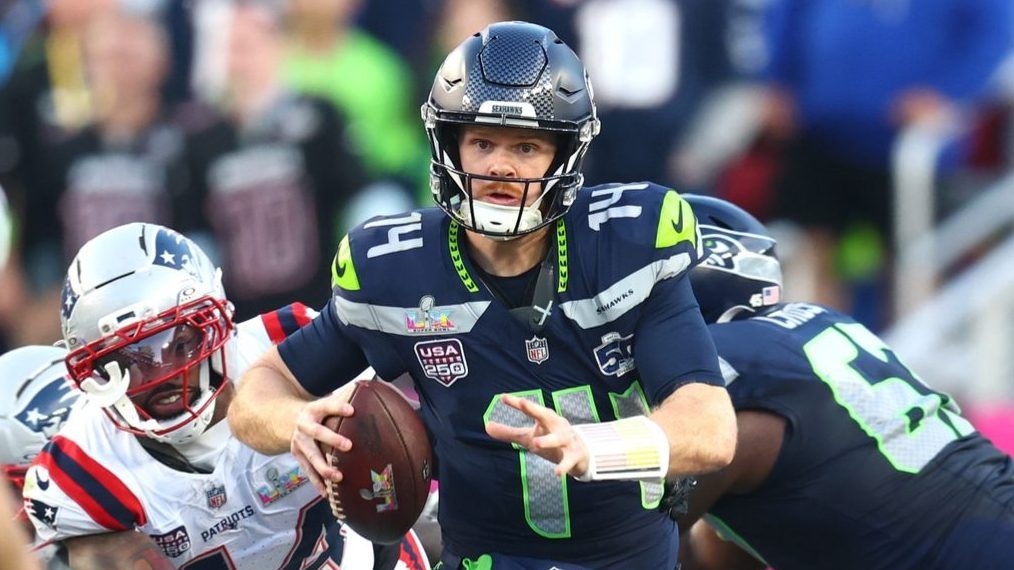
After three years of all-time viewership highs in U.S. television history in the NFL’s title game, NBC Sports said late Tuesday that Sunday’s Super Bowl LX averaged 124.9 million viewers, down 2% from last year’s game, and the second-highest audience ever. Sunday’s contest, won by the Seahawks over the Patriots in convincing fashion, was likely dragged down by a dominant defensive performance by Seattle that included no touchdowns by either team until the fourth quarter.
The game peaked with an audience of 137.8 million in the second quarter, which was a record and just higher than last year’s peak Super Bowl audience.
The Super Bowl halftime show featuring Bad Bunny, meanwhile, averaged 128.2 million viewers domestically during the quarter-hour of his performance, down 4% from Kendrick Lamar’s average audience of 133.5 million viewers, but higher than the overall game average. The NFL, however, is still compiling a full international audience number given the Puerto Rican superstar’s widespread global appeal.
The network went into the broadcast hoping for a record but did not guarantee it. Spanish-language coverage in the U.S. on Telemundo averaged 3.3 million viewers, the largest figure for a Super Bowl broadcast in Spanish, fueled in no small part by the Bad Bunny show.
The viewership numbers for Super Bowl LX were tabulated by Nielsen, and they represent the verified data following nearly 48 hours of many unsubstantiated claims circulating around the internet, particularly relating to the Bad Bunny performance.
Viewership Trends
The audience for Super Bowl LX, though somewhat downbeat, completed an otherwise banner season for the NFL with viewership gains nearly across the board. The league’s regular-season viewership hit the second-highest level in recorded history, while more milestones were set during the conference championship round, the divisional playoffs, the wild-card round, and on streaming.
Despite the Seahawks’ dominant performance, the Super Bowl LX figure also extended a trend in which the team was part of the least-watched game of the divisional playoff round, and its NFC championship game last month in a Sunday evening broadcast window was outdrawn by the AFC title game in the afternoon slot.
Notably, this was also the first Super Bowl with Nielsen’s Big Data + Panel measurement process. The methodology, first introduced last September, brings in millions of additional data points from set-top boxes and smart TVs. That expanded view of the market has helped produce viewership gains across much of live sports, and particularly pro and college football—but not with Super Bowl LX.
Next week, there will also be additional data from Nielsen’s new pilot program of enhanced co-viewing measurement that began in earnest with the Super Bowl. Figures from that test, however, will not be part of the official viewership figure for Super Bowl LX. Ironically, that additional data could help produce a figure higher than the 127.7 million viewer average for last year’s Super Bowl LIX.
International Impact
The Bad Bunny show, meanwhile, prompted widespread impact on social media and music streaming platforms.
The NFL said that the performance generated more than 4 billion social views globally in the first 24 hours after the game, up 137% from last year’s halftime show, with more than half of it coming from international markets—a key league priority. On Apple Music, which sponsors the halftime show, Bad Bunny’s DeBí TiRAR MáS FOToS claimed the top spot in the service’s album charts in 46 countries and reached the top 10 in 128 countries.
Globally, 24 of his songs were on Apple Music’s Daily Top 100 list after the show.