Want more from Front Office Sports
in your search results?
The same Tennessee judge who granted Diego Pavia an extra year of collegiate eligibility denied a preliminary injunction for his Vanderbilt teammate and other football players seeking another season.
Middle District of Tennessee federal judge William Campbell issued an order on Thursday denying a preliminary injunction in the case against the NCAA from former redshirt athletes seeking a fifth season of eligibility. The judge’s decision means the athletes will most likely not get another year of eligibility themselves as Pavia did, though the case can continue on for other athletes in similar positions.
A group of 10 Division I athletes filed the class action suit in September, arguing players should get five full years of eligibility in a five-year window. They argued the redshirt rule violates antitrust law.
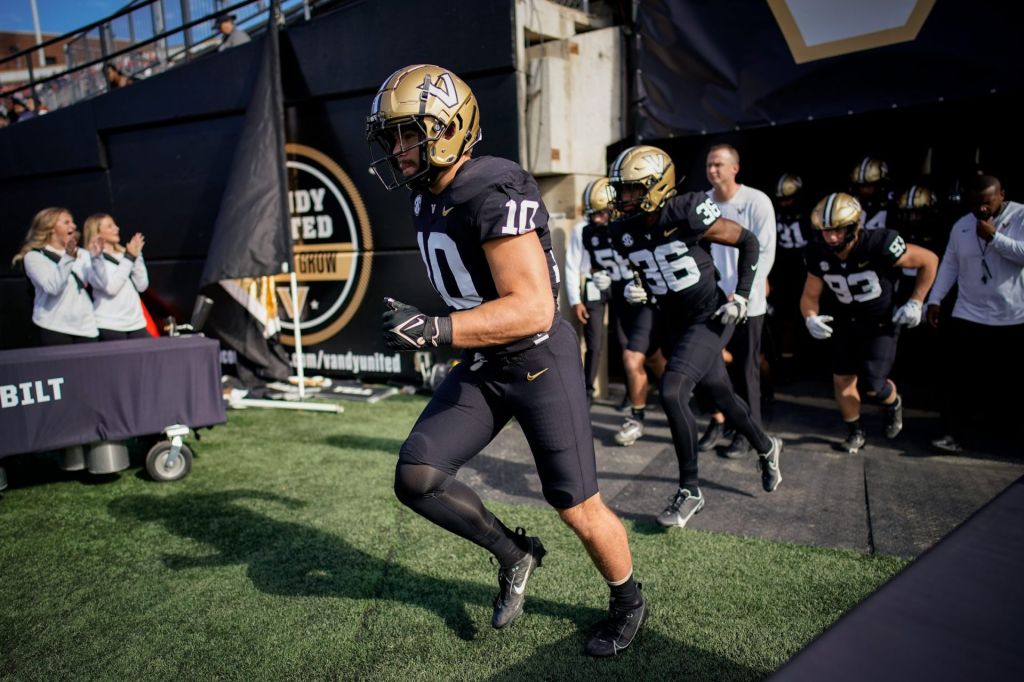
Only five of the athlete plaintiffs in that lawsuit—Vanderbilt linebacker Langston Patterson, Nebraska long snapper Kevin Gallic, and Wisconsin long snapper Nick Levy, kicker Nathanial Vakos, and tight end Lance Mason—sought the preliminary injunction to immediately get an extra year themselves. (Fellow Commodore defensive lineman Issa Ouattara dropped out of the lawsuit in November, the same day several of the others filed for the preliminary injunction.)
Ryan Downton, Pavia’s attorney who is also representing several plaintiffs in the redshirt case, said in a statement that “five for five is coming” through either a judge’s decision or the NCAA voluntarily changing its rules.
“We are disappointed that our Plaintiffs are unlikely to play next season, but we understand why the Court did not want to require such a major rule change on a limited judicial record,” Downton said. “We remain confident the NCAA has no legitimate reason to make athletes sit out most (or all) of one of their five seasons of eligibility.”
In his decision, Judge Campbell made a crucial conclusion: that the NCAA’s eligibility rules are indeed subject to the Sherman Antitrust Act because, in a post-NIL world, they are commercial in nature. (Campbell cited other cases including Pavia’s in saying “this Court is not alone in this conclusion.) The NCAA has been lobbying for antitrust protections to allow it to make sweeping eligibility rules, deem athletes are not employees, and secure other benefits from Congress, namely through the SCORE Act. But Congress has yet to give the NCAA what it wants.
The NCAA said in a statement that it is “thankful” for the judge’s decision and will continue to defend its eligibility rules against “repeated attempts to rob high school students” of opportunities in college sports.
“The NCAA and its member schools are making changes to deliver more benefits to student-athletes,” the organization said, “but the patchwork of state laws and inconsistent, conflicting court decisions make partnering with Congress essential to provide stability for all college athletes.”
Since Pavia’s historic challenge, the NCAA has faced nearly 50 eligibility lawsuits. Preliminary injunctions have been denied in roughly half of those cases, and granted in 10 of them.
Download the FOS App
The business of sports, in your pocket.



Scan the QR code to get the app now.