As the first college football season of the revenue-sharing era wraps up, the professionalization of Power 4 front offices has gone to the next level.
Nearly every major Division-I college football team has a football general manager, with just a few outliers remaining. Most of those without an official GM employ an executive with similar responsibilities and a different title.
While GMs have become more common across the country since the opening of the NIL (name, image, and likeness) floodgates in 2021, last offseason marked a new era for the position. Superstar NFL figures like Andrew Luck (Stanford), Ron Rivera (Cal), and Michael Lombardi (North Carolina) were among the new GMs hired by schools that previously didn’t have one.
In 2025, former Ohio State senior compliance administrator Paia LaPalombara tells Front Office Sports, GMs “have become the central clearinghouse for football roster construction, evaluations and recruitment, NIL strategy, and rev-share cap budgeting, allowing for head coaches to recenter their focus on football.”
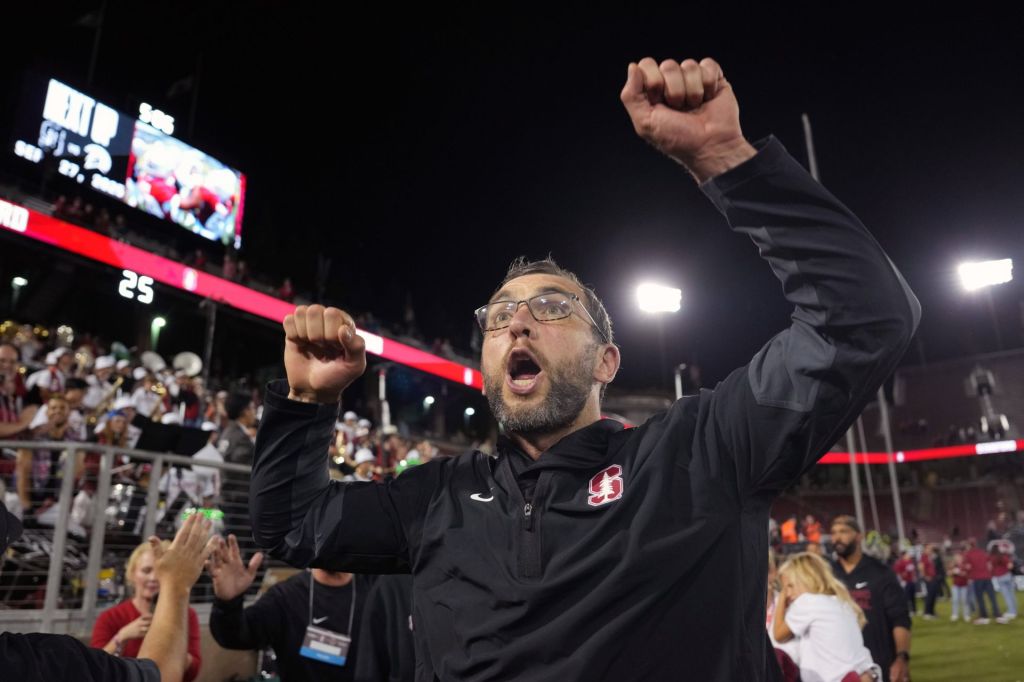
Luck made waves in March by firing coach Troy Taylor at an unusual point of the offseason. The former Pro-Bowl and No. 1 NFL Draft pick led the search for a new coach, ultimately hiring Tavita Pritchard in November.
And during the latest coach hiring and firing cycle, GMs and other front office personnel became a core part of the fast-spinning carousel.
Former North Texas GM Raj Murti, 24, is following former Mean Green head coach Eric Morris to Oklahoma State, where Murti will be the youngest GM in the Power 4. Former Iowa State front office exec Derek Hoodjer followed coach Matt Campbell to Penn State, where Hoodjer is now GM.
UCLA has poached Florida State GM Darrick Yray out of Tallahassee, and Arkansas has lured Gaizka Crowley away from Arizona. The Bruins and Razorbacks made the moves alongside hiring new football coaches.
GMs for some College Football Playoff teams are among the highest-paid in the nation, according to USA Today. Behind Lombardi’s $1.5 million annual salary at UNC, Ohio State’s Mark Pantoni and Oregon’s Marshall Malchow are tied for second, each making $900,000 annually. Alabama’s Courtney Morgan is No. 4, bringing in $825,000, and Oklahoma is paying Jim Nagy $750,000.
Notably, Indiana, the CFP’s No. 1 seed, doesn’t have a GM. The Hoosiers’ top front office exec is assistant athletic director for player personnel Matt Wilson, earning a salary of $210,000, according to USA Today. No. 3 Georgia doesn’t have a singular GM, with those responsibilities spread out across multiple execs like director of football management Jay Chapman and others.
Some GMs at Power 4 schools carry multiple hats, like Virginia’s Tyler Jones, whose official title is deputy athletics director, chief strategy officer and general manager. Jones also serves as the GM of the Cavaliers women’s basketball team. NC State’s Andy Vaughn and SMU’s J.R. Sandlin are two examples of GMs that also carry an assistant AD title.
LaPalombara, now a partner in the sports law and higher education groups at Columbus-based law firm Church, Church, Hittle & Antrim, expects the GMs role “to continue evolving into a hybrid sport administration and football operations position—closer to a pro front-office model—with increased authority over contract negotiations and long-term roster planning as institutions fully operationalize the post-House settlement framework.”
Virginia Tech is among the final Power 4 schools looking to hire a full-time GM, a commitment they have made alongside investing more into the athletics department after hiring new football coach James Franklin.
GMs and front offices are expected to become even more important, as revenue-sharing dollars increase beyond the $20.5 million that was permitted this year, and calls for more strict governance like a college football salary cap continue to gain steam.