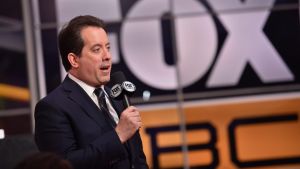
Liam McHugh is used to hosting TNT’s coverage of the NHL Winter Classic with his scarf pulled up to his eyes. But this year, as the annual outdoor hockey game heads to loanDepot Park in Miami, McHugh and his NHL on TNT cohosts are looking forward to a break from the cold.
Ahead of the NHL’s first-ever outdoor game in Florida on Jan 2., McHugh spoke to Front Office Sports about hockey in the sun, the broadcast crew’s chemistry, and the moments that still leave him in awe. This interview has been edited for length and clarity.
Front Office Sports: What are you looking forward to going into this Winter Classic?
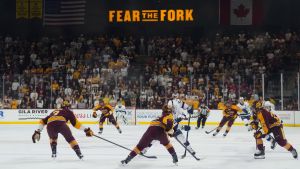
Liam McHugh: Showcasing more of Florida hockey, how it’s grown, and what a big deal it is to everyone in that area. I think the big thing is that it’s the Winter Classic, not just a regular-season game. Any time you get something different—which we do this year with warm weather, and the big contrast between beaches and palm trees and guys playing ice hockey outside—I think you want to lean into that. You want to show people that they’re seeing something that we haven’t really been able to show you before.
FOS: How are you thinking about a Winter Classic that doesn’t quite have the winter?
McHugh: I go back and think about all the places I’ve been, like in Ann Arbor, where it was a swirling blizzard. You’re freezing, but it looks amazing, and it feels like you’re in a snow globe. But this is a place where you want to see fans walk in the building in shorts.
When Henrik Lundqvist was playing, he told us that every time he was in Florida for a game, he’d go to the beach and he’d show up for the game sunburned. I think that that’s the idea—you get to spend the day in Miami and then walk into this outdoor game. It’s winter in Miami, it’s hockey in South Florida.
You have to embrace that it’s a novelty that we’re showing that they can do an outdoor game here. And it’s really an amazing feat that they’re able to put this on. Hockey matters here, and this is what their lives are, right? They just don’t have to bundle up.
FOS: The Winter Classic is this interesting mix between diehard hockey fans and voyeurs who are tuning into the biggest spectacle game of the year. That might be more the case than ever, since everyone is dying to see how ice in Florida works out. How do you balance broadcasting to both?
McHugh: It’s something that we have to remind ourselves about every single year. The first thing is just to look around your settings, be curious, and see what stands out to you. It’s different every year—last year we were at Wrigley, and we did Fenway, and so much of what we want to show is, like, ‘Wow, I just walked into this iconic ballpark.’ We get to be here and the viewers at home don’t, and we want to show them everything that we think is cool.
This is different in that regard. We don’t really have that with the ballpark, instead it’s the fact we have that retractable roof. I think casual fans and hardcore fans are both interested in the background, because it is so different. I loved it in the past with other Winter Classics where you’re a sports fan and you’re flipping around, and then you turn the TV on and you say, ‘What is this? I’m just going to sit here and watch this for a while because this is wild.’ I think here, you’re going to see these guys playing ice hockey outside and you’re going to see a lot of New York fans in that stadium along with Panthers fans, and people are going to be locked in, and then you keep them there.
We have [the Rangers franchise] that has so much history in celebrating the centennial season, but it’s going through changes and struggling right now. And then you have a Florida team—which it’s still mind-boggling to people out there that there’s a Florida Panthers team on top of the hockey world.
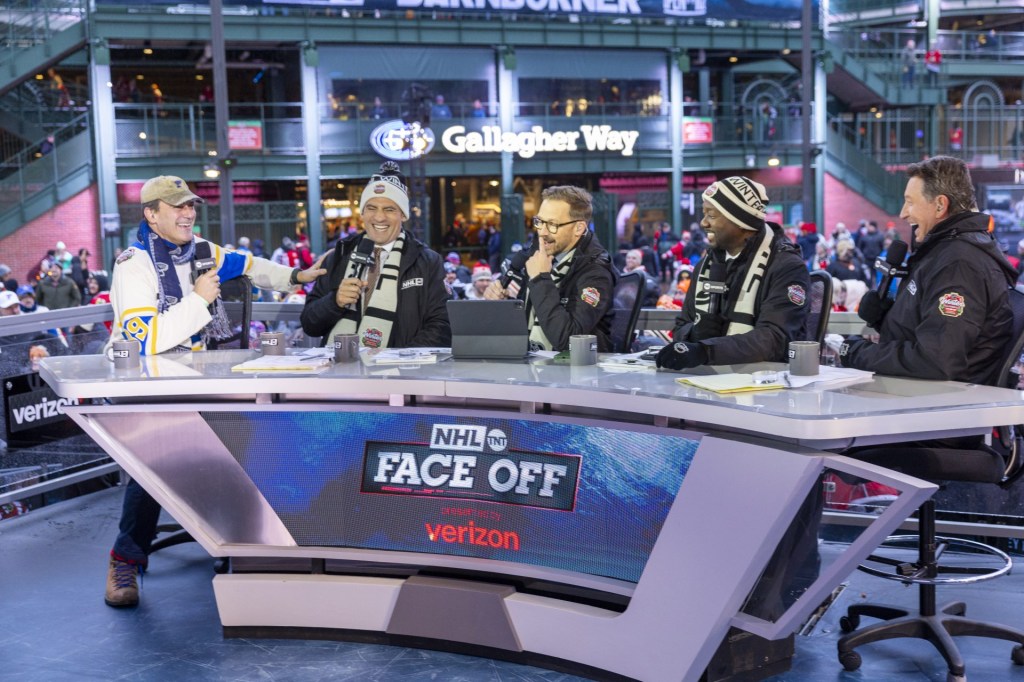
FOS: What’s the chemistry like on the broadcast crew?
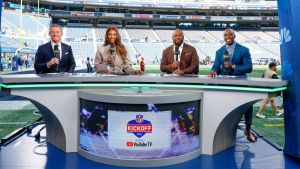
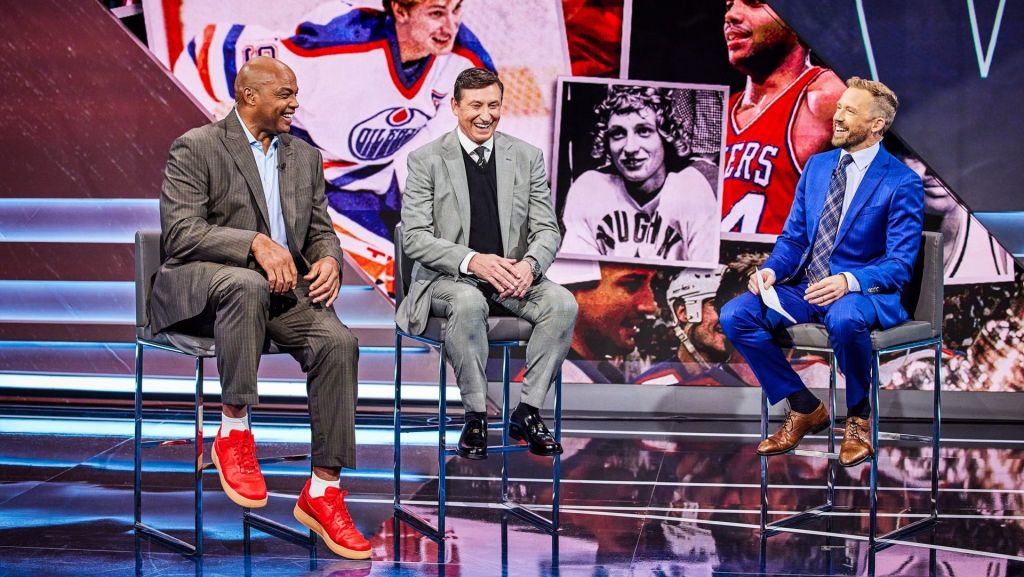
McHugh: I knew a few of these guys, at best, casually. I knew Anson Carter well from NBC, so that certainly helped, but I think we have a cast of very different characters. The fact that you can have Biz [Paul Bissonette] on one end of the set and Wayne Gretzky on the other, and they can play off each other, and they can respect each other—it’s very much like a hockey locker room where everybody has different roles, and while someone may be a superstar and someone may be a grinder, everyone’s role is important.
It’s a show that takes the sport seriously without taking ourselves seriously at all. And I’m very lucky to work with a group like this, where they’re prepared, and they’re excited to talk about the game, but they also embrace the fact that this show is going to go off the rails at times and that we can leave it off the rails.
And I’m very, very lucky to have found this group of people who want to do a show like this, and lucky with TNT—it started with Inside the NBA that they trust us enough to do a show where we can take wild turns.
FOS: Paul Bissonette has developed quite a rapport with many of the players, chirping with them—especially Brad Marchand, who we’ll see with the Panthers at the Winter Classic. What’s that dynamic like on set, and why does it work so well for him?
McHugh: He just disarms people quickly. He’s been a great personality and he’s self-deprecating, so I think the big thing is even if he chirps Brad Marchand, he knows that the expectation is that Marchand’s going to chirp him back, and it’s probably much more personal and much worse.
What I love about their rapport now is that we will bring Brad out to talk to, and before I even get through, like, ‘Hey, thanks for coming on,’ he is already just on Biz, giving it to him before we even got a question out.
The fun part about this and the reason it works so well is it’s all well intentioned. You never come away from this being like, ‘Wow, he is really being nasty to someone there or trying to be mean or trying to make himself look bigger by putting someone else down.’ You don’t know where the questions are going to go, which I think for players at first was probably a little frightening. Now, when you expect the unexpected, you go into an interview going, ‘All right, this could go anywhere.’ For Biz to be able to pull it off as often as he does, it’s pretty remarkable.
FOS: Let’s talk about Wayne Gretzky. In other sports, you get just a few appearances from the great athletes, and he’s a mainstay, part of the core. How do you work alongside the GOAT?
McHugh: I get text messages [from friends] like, ‘I can’t believe you’re sitting next to that guy.’ It doesn’t feel that way, and Gretzky is one of these people who makes you feel pretty comfortable right away. He’s kind and interactive and makes you feel like you’re just having a regular conversation with him.
What I love about him is he’s into the show even when he’s not here. He is regularly texting us during the show. I think Biz floated the idea that he could be a head coach a few weeks ago, and we got a text from Gretz three minutes later and he was like, ‘I’m all on board.’
I think the fact that he gets the show and he wants to be a part of it, and he wants to share his story [makes it work]. So many of these stories stay in the locker room and get told when guys get together and they’re drinking beers up late, but they don’t make air. Hockey players have these fantastic stories, and Gretzky has been willing to share them on air and unprompted a lot, where he just says, ‘Oh, wow, that player, that moment, or that interaction reminds me of something that happened with the Oilers right back in the day.’
His willingness to do that is really one of the things that powers us. When you can get stories from the GOAT, especially for younger viewers, it’s mind-blowing to hear what players went through or the fact that Wayne Gretzky during games in the locker room was eating hot dogs. We’re very fortunate not only just to have him on the show, but he is someone who gets the show, loves the show, and makes it so much better.
FOS: I love the idea of being on a casual group text with Wayne Gretzky.
McHugh: I basically just get a text from him, and I have to sit there and going, ‘What?’ Or my kids pick up my phone, and it’s a [Gretzky text]. Those are the moments right here where you can’t believe this is your life.
FOS: What goes on behind the scenes that we don’t know about? What do we not know about you all as people off screen?
McHugh: No one ever leaves a room feeling sore or angry at each other. You get strong opinions and you get guys who don’t want to back down, because it’s still the old hockey players around the ice. Nobody wants to back down from what they’re saying, so you get a little bit of that.
But for the most part, I would say what you see on air is a lot of what you see behind the scenes, except some of the language that would get us in trouble with on air is being used by all.
The other cool thing is we still see the NBA guys—the interactions we get have with those guys because it’s kind of a small space that we’re all occupying. To have Charles Barkley come in the room and immediately start talking hockey, not really asking questions but just giving his opinion about who’s gonna win [and who] he likes this season, having Shaq come in and tell us that he’s been working on his skating—it’s a bit of a circus. And those are the moments—even more so than Gretzky texting—where you’re like, ‘What world am I in?’
FOS: What else should viewers know going into this event?
McHugh: I think [the Winter Classic] is still special and just because something isn’t brand new [doesn’t mean] it can’t be great, that it has to be different all the time. This is a great event. It’s great every year. It’s such a celebration, and I just can’t wait for sunshine all day and hockey in warm weather at night.