Want more from Front Office Sports
in your search results?
There’s no such thing as a quiet week in prediction markets.
DraftKings rolled out its stand-alone prediction-markets app Friday, two days after Coinbase revealed its own entry through a deal with Kalshi—a company that drew scrutiny this week for self-certifying, but not ultimately listing, an event contract tied to whether college athletes would enter the transfer portal, a market Polymarket has previously offered to users.
Coinbase, meanwhile, wasted no time going on the offensive, suing state regulators in Illinois, Connecticut, and Michigan over their efforts to constrain prediction markets. In Arizona, the state’s gaming regulator revoked Underdog’s fantasy sports license and threatened enforcement action, citing the company’s offering of sports event contracts in the state. Robinhood also joined the week’s flurry, introducing preset parlays and player props for pro football powered by Kalshi.
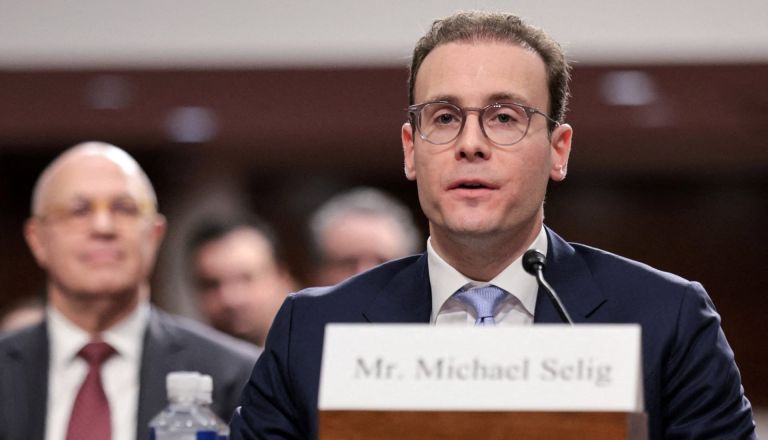
The regulatory spotlight intensified with the confirmation of Mike Selig as the new chair of the Commodity Futures Trading Commission (CFTC), which oversees sports event contracts. During a recent hearing, Selig repeatedly deferred to the courts when asked about sports-related contracts, as more than a dozen lawsuits continue to wind their way through jurisdictions across the country.
The marketplace is crowded and continues to evolve, but DraftKings believes it has built-in advantages that will help it stand the test of time. Those include existing relationships with regulators and leagues, underlying technology infrastructure and a decade-plus track record of understanding how consumers engage with sports.
“This has been a different product launch than anything we’ve dealt with before,” DraftKings chief product officer Corey Gottlieb tells Front Office Sports. “There’s a double-edge; we want to be fast, but we care more about building something that’s scalable, responsible, and sustainable long-term. We’d rather be thoughtful than rush.”
That’s the same sentiment espoused by JB Mackenzie, VP and GM of futures and international at Robinhood, who recently told FOS, “We may be slower to market for something because we want to make sure we are doing it in the right way, and we’re O.K. with that.”
“Conversations With Literally Every Regulator”
DraftKings and Robinhood are already mainstream companies, while Kalshi and Polymarket are newer entrants trying to gain market share, including through provocative social-media strategies. Kalshi and Robinhood have each been targeted by multiple state regulators over their sports event contracts, but Gottlieb says DraftKings has made a point of looping in regulators from the very beginning.
“We’ve had ongoing conversations with literally every regulator,” Gottlieb says. “These aren’t first-time introductions—these are relationships we’ve built since the earliest days of daily fantasy sports and sports betting.”
The same goes for leagues like the NFL, NBA, and MLB, as well as individual teams. The NFL, NBA, and MLB have not yet come around to prediction markets due to concerns about a lack of proper regulation. The NHL is the only one of the big four North American sports leagues that has embraced prediction-markets; it has partnerships with both Kalshi and Polymarket.
“We are in communication with every one of our league partners, and team partners, and alongside them we will form the evolution and understanding of this space,” Gottlieb says.
In the press release, DraftKings said it will leverage “key strategic relationships” with partners like ESPN and NBCUniversal. Gottlieb says those particular name drops were done “consciously.”
“Both have expressed real excitement about this space, and very much want to be partners in figuring out how to enter the market,” he tells FOS.
The new app, called DraftKings Predictions, is initially launching in 38 states. Sports event contracts will be available in states only where online sports betting is still illegal, such as California, Texas, and Georgia. Other states will have access to mostly financial markets, like the prices of gold and crude oil, although Gottlieb says there are plans to “pretty quickly” roll out contracts on other subjects, including pop culture.
At launch, the app is connected to an exchange powered by CME Group, which is the derivatives exchange that FanDuel plans to partner with for its own prediction-markets app expected to become available soon. RailBird, the federally licensed exchange DraftKings agreed to buy in October for $250 million, will be added at a later date.
The fluid nature of product launches, the questions around regulatory scrutiny, and the flood of prediction-markets-related lawsuits show just how fast the industry is evolving and the challenges operators face. Gottlieb is confident DraftKings will figure out the path to success.
“We don’t pretend to know exactly what the perfect product looks like a year from now,” Gottlieb says. “But in every space we’ve entered, we’ve figured that out over time. Our technology and infrastructure are second to none.”
Download the FOS App
The business of sports, in your pocket.



Scan the QR code to get the app now.