Thursday, June 18, 2026

How the NCAA Plans to Stop Employment in Its Tracks After Settlement

  • The NCAA will use the House settlement as a tool to end the debate over athlete employment status.
  • If the NCAA does succeed in getting a law passed saying athletes are amateurs, however, other lawyers will likely challenge it.
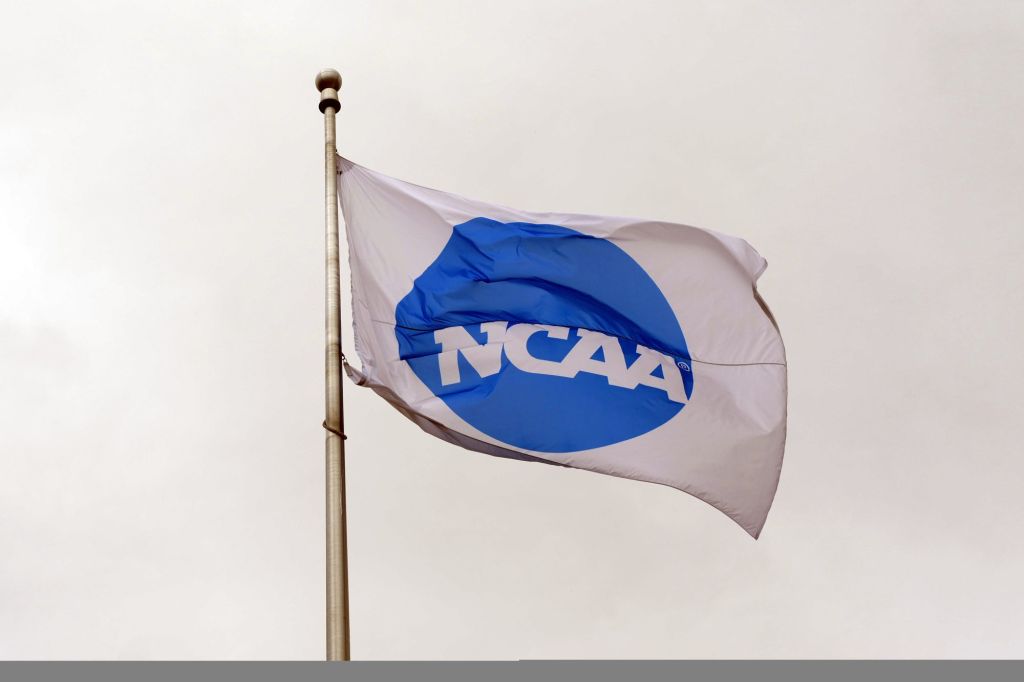
Jun 4, 2024; Eugene, OR, USA; A NCAA logo flag at Hayward Field.
Kirby Lee-USA TODAY Sports

In May, the NCAA and power conferences agreed to settle the House v. NCAA lawsuit—conceding, for the first time in college sports history, to share revenue between schools and players. But now, the NCAA is hoping to use the settlement to end an even bigger debate: whether athletes should be considered school employees.

House v. NCAA, first filed in 2020, argued athletes who couldn’t capitalize on name, image, and likeness deals deserve backpay, and that power conference schools should share revenue with all athletes going forward. As part of the settlement agreement, power conference schools will begin revenue-sharing up to about $22 million per year with athletes.

Because the settlement doesn’t address the athlete employment question, however, it doesn’t protect the NCAA from the three ongoing cases arguing athletes should be considered employees, co-counsel Steve Berman confirmed to Front Office Sports.

The NCAA hopes to resolve this indirectly. Since 2019, the NCAA and power conferences have waged a multimillion-dollar lobbying campaign in Congress to reverse the athletes’ rights movement by granting an antitrust protection (giving the NCAA the power to enforce compensation rules) and by deeming athletes amateurs. The NCAA hopes Congress will see the House settlement as an earnest attempt to make major reforms to college sports—and that Congress should step in so they wouldn’t have to make more. President Charlie Baker and the power conference commissioners even went so far as to call it a “roadmap” for legislation.

As part of the settlement, plaintiff lawyers have agreed to help the NCAA with that lobbying effort—but they likely won’t go as far as the NCAA would like. Berman says he and fellow counsel Jeffrey Kessler would be willing to argue that Congress should grant a limited antitrust exemption to allow the NCAA to cap revenue sharing, for example. But they won’t help the NCAA in its main goal of getting broad antitrust protections and have not agreed to lobby against athlete employment status.

“If the NCAA asks us to, we will express our views to Congress that they should be free from future lawsuits that raise the same issues that were raised in our litigation,” Berman says. “We will not comment on anything beyond that.”

Even if the NCAA succeeds in codifying amateurism without House lawyers’ help, it could still face future challenges. 

One of the attorneys on the Johnson v. NCAA federal court case over athlete employment status, Paul McDonald, tells FOS that he would challenge a law saying college athletes are not employees. He believes it would be unconstitutional, given that non-athlete students are allowed to be employees.

“Any federal legislation to single out college athletes to be denied the same employee status, rights and hourly pay as fellow students in work study-style programs (e.g., student employees in dining halls, libraries—even selling popcorn at NCAA games) would be unconstitutional on Equal Protection grounds,” he says. That’s also the premise of the Johnson v. NCAA case, which argues that Division I athletes should be classified as employees under the Fair Labor Standards Act, and that they should be entitled to hourly minimum wage.

McDonald notes that other lawyers involved in the space would likely consider challenging a law codifying amateurism. “It’s a bridge to nowhere.”
This field is for validation purposes and should be left unchanged.

Sign up for
The Memo Newsletter

Get the biggest stories and best analysis on the business of sports delivered to your inbox twice every weekday and twice on weekends.

This site is protected by reCAPTCHA and the Google Privacy Policy and Terms of Service apply.
Linkedin
Whatsapp
Copy Link
Link Copied
Link Copied

What to Read

Sen. Ted Cruz (R-TX) listens as Sen. Maria Cantwell (D-WA) speaks during a hearing on the “Protect College Sports Act” before the Senate Commerce Committee, on Capitol Hill in Washington, D.C., U.S., June 3, 2026. REUTERS/Evan Vucci

Amended College Sports Bill Leaves SEC, Big Ten Concerns Intact

The amended bill doesn’t alleviate the Big Ten and SEC’s biggest concerns.
Brendan Sorsby runs with the ball during the Texas Tech football team's spring game, Friday, April 17, 2026, at Jones AT&T Stadium.

Sorsby Brings Unprecedented Intrigue to NFL Supplemental Draft

No players other than Sorsby have entered the supplemental draft.

Sorsby Leaves Texas Tech, Declares for NFL Supplemental Draft

The news comes hours after the Big 12 sued Texas Tech.
Texas Tech's Brendan Sorsby goes through warmups before the spring football game, Friday, April 17, 2026, at Jones AT&T Stadium.

Big 12 Sues Texas Tech, Texas AG Over Potential Sorsby Sanctions

The lawsuit comes one week after Sorsby was granted an injunction.

Featured Today

Wisconsin Badgers forward Laila Edwards, left, and defender Caroline Harvey celebrate after Edwards scored against the Minnesota Gophers in the first period in a game Saturday, February 8, 2025, at LaBahn Arena in Madison, Wisconsin.

Two Rookies Are Rewriting Women’s Hockey Stardom

Their platforms are a mutual boon for the PWHL and its players.
Ai sports slop
June 5, 2026

How Sports Became Ground Zero for AI Slop

The category is the perfect breeding ground for AI content churn.
FILE PHOTO: Soccer Football - FIFA World Cup - UEFA Qualifiers - Group A - Germany v Luxembourg - Rhein-Neckar-Arena, Sinsheim, Germany - October 10, 2025 Germany coach Julian Nagelsmann
June 4, 2026

‘Weird Corners of the World’: How to Find a World Cup Coach

National associations look for a winning record—and also hope for serendipity.
June 3, 2026

The Elite High Schools Hosting World Cup Teams

Spain, Morocco, Croatia, and Switzerland chose schools as their tournament base camps.
Texas Tech's Brendan Sorsby runs with the ball during the spring football game, Friday, April 17, 2026, at Jones AT&T Stadium.

Big 12 Mulls Brendan Sorsby Options as Legal Threats Loom

Both Sorsby’s legal team and Texas’s AG sent letters to the conference.
Jun 5, 2026; Morgantown, WV, USA; West Virginia Mountaineers fans sing “Country Roads” after defeating the Cal Poly Mustangs at Kendrick Family Ballpark. Mandatory Credit: Ben Queen-Imagn Images
June 12, 2026

How Troy and West Virginia Baseball Met Unprecedented Demand

Troy and West Virginia open Men’s College World Series play on Friday.
Dec 31, 2025; Las Vegas, NV, USA; Utah Utes quarterback Devon Dampier (4) and tight end JJ Buchanan (81) celebrate after a touchdown against the Nebraska Cornhuskers in the first half during the SRS Distribution Las Vegas Bowl at Allegiant Stadium. Mandatory Credit: Kirby Lee-Imagn Images
June 12, 2026

University of Utah Finalizes Private-Equity Deal

Utah is the first athletic department to sign a private-equity deal.
Sponsored

Midge Purce Sounds Off on the Trinity Rodman Rule

Midge Purce discusses the Rodman Rule and the future of NWSL.
Apr 18, 2026; Athens, GA, USA; Georgia Bulldogs running back Dwight Phillips Jr reacts after scoring a touchdown during the Georgia Spring football game at Sanford Stadium.
June 11, 2026

One Year After House Settlement, NIL Enforcement Is Still Muddled

Problems include long wait-times, rules disputes, and a new lawsuit.
June 10, 2026

Texas Tech Boycott Could Cost Non-Conference Opponents Millions

Oregon State would have to pay Texas Tech $1 million to cancel its matchup.
June 10, 2026

Sorsby Ruling Could Become Flashpoint for College Sports Bill

It’s unclear if the bill would prevent Sorsby from suing for eligibility.
NCAA golf chaampionships
June 9, 2026

NCAA Golf Hosts Ready to Bid on Championship Extension

The North Course at Omni La Costa in Carlsbad has hosted for three years.