INDIAN WELLS, Calif. — The women’s tennis calendar, everyone seems to agree, is too crowded.
In January, Aryna Sabalenka, the best player in the world, called it “insane.” No. 2 Iga Świątek said it’s “too intense.”
Players are essentially tied to playing around 20 tournaments a year to keep pace in the standings as ranking points take into account their 18 best results over a 12-month period. There are also penalties that come with missing tournaments, particularly mandatory events, which include six WTA 500s on top of four Grand Slams and four 1000-level tournaments.
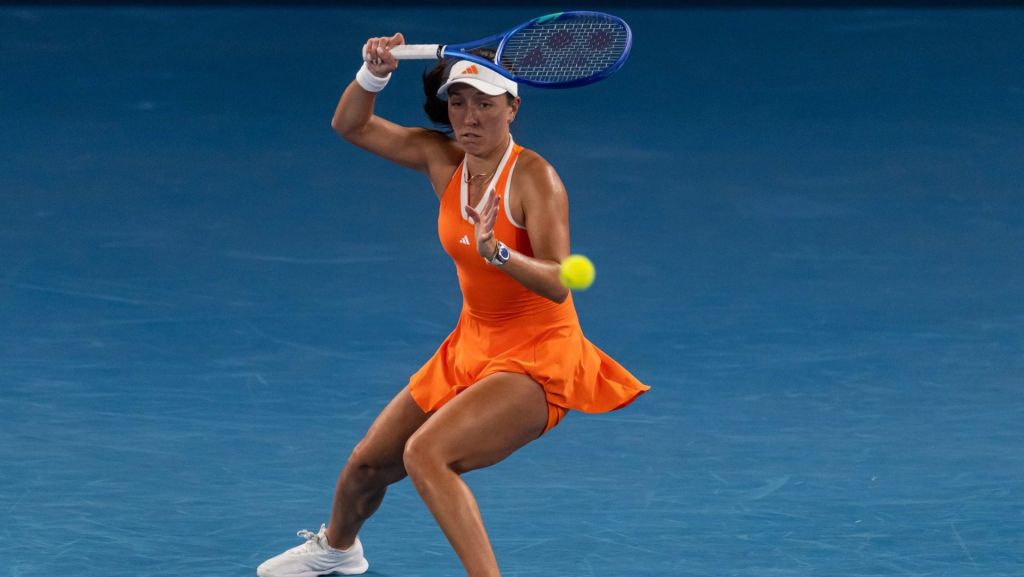
This came to head in February when dozens of players, including Sabalenka and Świątek, dropped out of the Dubai Tennis Championships, a WTA 1000 event. Jessica Pegula won the Dubai tournament, and told Front Office Sports that it wasn’t “overly surprising” that so many players withdrew.
The world No. 5 cited the difficult early season schedule, which has the Australian Open, four WTA 1000 events—including Indian Wells—and five WTA 500 events in the first quarter of the year.
Fixing the calendar appears to be one of the immediate priorities of new WTA chair Valerie Camillo, who joined the tour in November after serving as president and CEO of Spectacor Sports & Entertainment, which owns the NHL’s Flyers.
She announced a Tour Architecture Council last month tasked to fix it—coincidentally the same week players were dropping like flies in Dubai—and she wants a resolution quickly. In her announcement letter, she asked for the council to provide potential recommendations to be “implemented as soon as the 2027 season.”
Pegula, who was named chair of the council, spoke highly of Camillo’s desire for change.
“I don’t know if we’ve seen that much initiative out of somebody that really wants to prioritize a topic,” Pegula told Front Office Sports ahead of the BNP Paribas Open.
Greek player Maria Sakkari, who was also named to the Council, also heaped praise on Camillo, who joined the WTA in November.
“I saw her during the offseason. We had a coffee together. That was the first time I met her and I was very impressed,” Sakkari told FOS. “We couldn’t have asked for a better person to be next to us.”
The council had its first introductory call last week that Pegula described as an “open sounding board of all these different ideas.” Sakkari called it a “beneficial” meeting.
Pegula agreed, saying players were free to “throw everything that you want to complain at the wall.”
But it’s clear that the tour and its players are still far from finding an answer. Sakkari said she didn’t really have any concrete ideas yet on a possible fix. Pegula said some additional “flexibility” would help the players, but admitted it would only be a temporary fix.
“I can’t say I have an actual idea,” Pegula said. “I think just more flexibility would be a quick fix to just show the players that we’re trying to fix this. It’s probably not the perfect long term plan. I do think more flexibility if you’re sick or hurt, you shouldn’t feel like you’re forced to play an event—that is something that’s pretty standard across the world.”
The problem is all the more complicated by the sport’s fragmented nature. The WTA and its players are far from the only stakeholders. Each tournament has its own organizers that want to make money; broadcasters across the world also have influence on business decisions; the Grand Slams are independent.
Those stakeholders profit from the presence of the sport’s biggest stars.
The complexity is why many doubt that something can be done. After Świątek complained about the schedule in 2024, former men’s professional Patrick McEnroe told FOS “nothing really significant is going to change.”
“They’ve been talking about the schedule in tennis for like 50 years,” McEnroe said at the time.
When asked how players can feel confident that this council can find a long-term solution, Pegula said: “That’s something that we’re going to have to prove to players a little bit.”