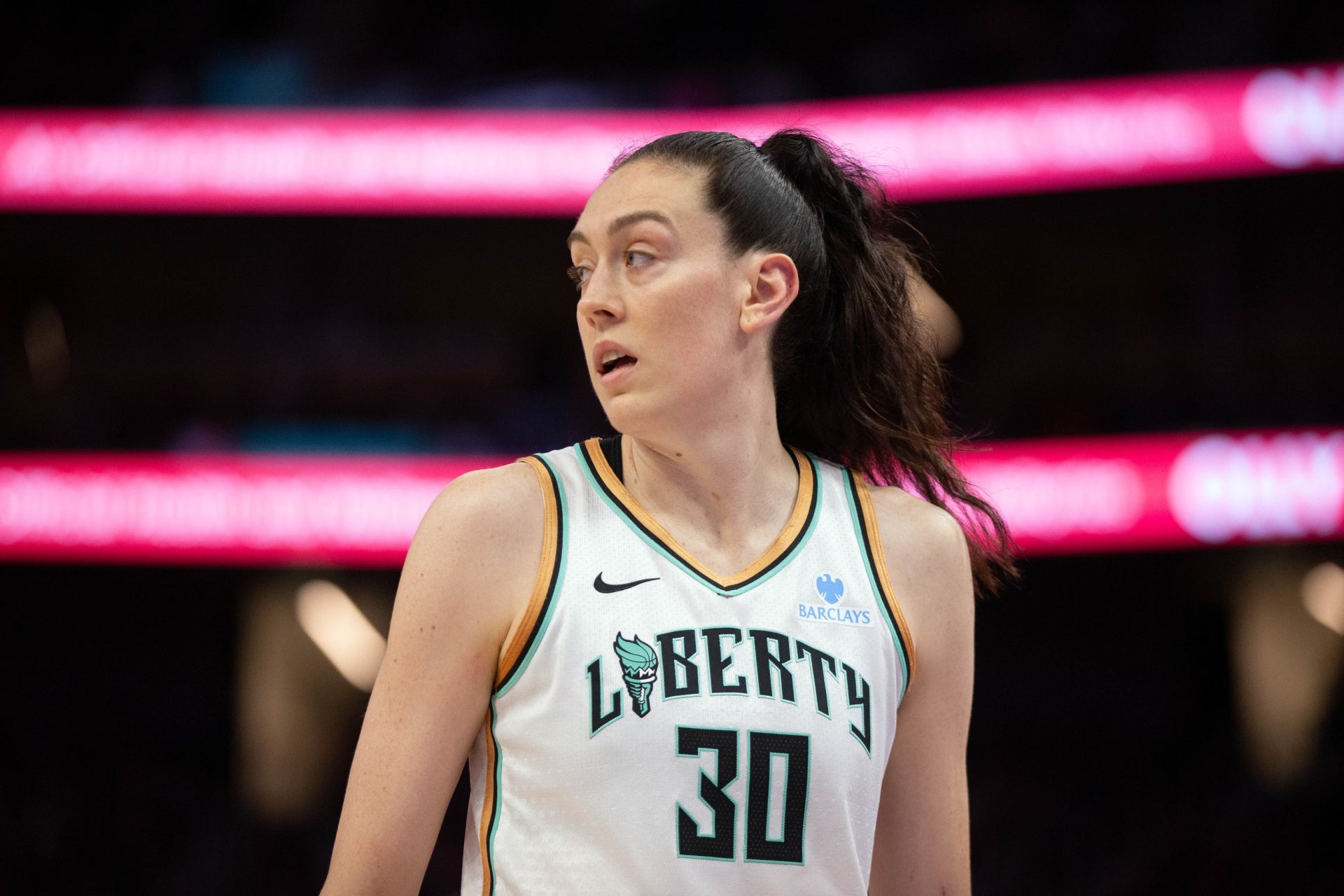
MIAMI — Just over 24 hours before the WNBA’s collective bargaining agreement was set to expire, union vice president Breanna Stewart made it clear where negotiations stand.
“We’re not coming to an agreement by tomorrow,” Stewart said. “I can tell you that.”
The Jan. 9 deadline was the result of a second extension agreed to on Nov. 30, minutes before the CBA was set to expire. When asked for clarity on whether a third extension would be agreed to, Stewart said she was told there would be no extension.
“We’re just going to continue to negotiate in good faith,” Stewart said Thursday.
A league source with knowledge of negotiations told Front Office Sports that a deal is not expected to be reached by the deadline and there will be no extension. The source confirmed Stewart’s assessment that negotiations would enter a period of status quo.
Stewart—who is also the co-founder of the 3-on-3 league Unrivaled—has been one of the leading voices expressing concerns over what players have perceived as a lack of urgency on the WNBA’s part throughout negotiations. The league has not yet responded to a proposal submitted by the union roughly two weeks ago.
In that proposal the union was seeking roughly 30% of gross revenue and a salary cap around $10.5 million, sources confirmed to Front Office Sports. The league believes that proposal would result in $700 million in losses for the WNBA over the duration of the CBA, according to a report from ESPN. When asked what her confidence level was regarding the impending deadline, WNBPA vice president Kelsey Plum paused before letting out a hearty laugh.
“I wish I could give you a better answer,” Plum said. “It doesn’t necessarily mean a lockout … It doesn’t necessarily mean a strike … It’s probably more of a status quo thing and negotiate in good faith.”
To Plum’s point, both sides failing to agree to a third extension does not mean a work stoppage would immediately follow. The union elected to authorize a strike in December in a vote that included 93% participation from players; 98% voted to let the WNBPA executive committee call a strike when necessary. Under the terms of the CBA extension agreed to on Nov. 30, the union would not be able to call a strike without first terminating the extended agreement.
If a third extension isn’t agreed to and neither side initiates a work stoppage, negotiations would enter a period of status quo, meaning the sides would continue negotiating while maintaining the conditions of the current CBA. In this scenario the union could strike with no advance notice, though Stewart said Thursday no strike was imminent.
“The strike authorization was something for us to show that we’re all on the same side,” Stewart said. “We all are understanding where we’re at. It’s not something that we’re like going to do right this second. But being able to have that in our back pocket.”
Though Stewart said no strike was coming “right this second,” on Thursday the WNBPA launched a collective of “WNBPA Player Hubs,” a global network of training facilities offering players access during the WNBA offseason.
Stewart emphasized the players’ desire to continue productive negotiations with the league. Any in-person negotiations would likely have to be in Miami where Unrivaled will be stationed until March. Most players active in leadership are in Florida for the Unrivaled season.
The union originally opted out of the CBA—which was set to run through 2027—in October of 2024, giving both sides a year to negotiate a new agreement. Stewart said the most frustrating part of negotiations was that both sides “didn’t do our best” in the early stages.
“We just have to get players, owners, everybody in the same room,” Stewart said. “Obviously you have the PA side, then you have the W side. But you also want the [owners’ Labor Relations Committee] and the [union executive committee] those people having these conversations because sometimes it gets a little bit too finicky about wording and this and that. While we both are seeming like we’re very far apart there is a place where we can come and find mutual ground.”
The league’s latest offer, which came in early December, includes players receiving roughly 70% of net revenue, which sources familiar with negotiations believe equates to less than 15% of total league revenue. The salary cap would increase to $5 million, up from $1.5 million in 2025. The max player salaries would be more than $1.3 million, with the league’s proposed revenue-sharing model factored in. Average salaries would exceed $530,000, including revenue sharing. Max salaries and average salaries would increase to $2 million and $780,000, respectively, over the course of the WNBA’s proposed deal.