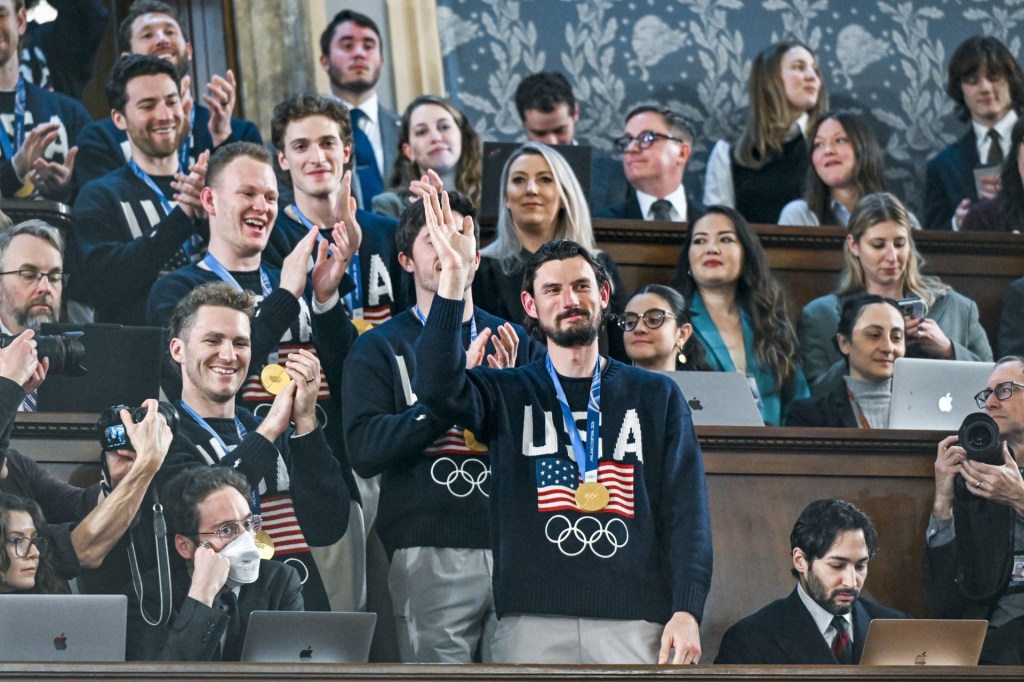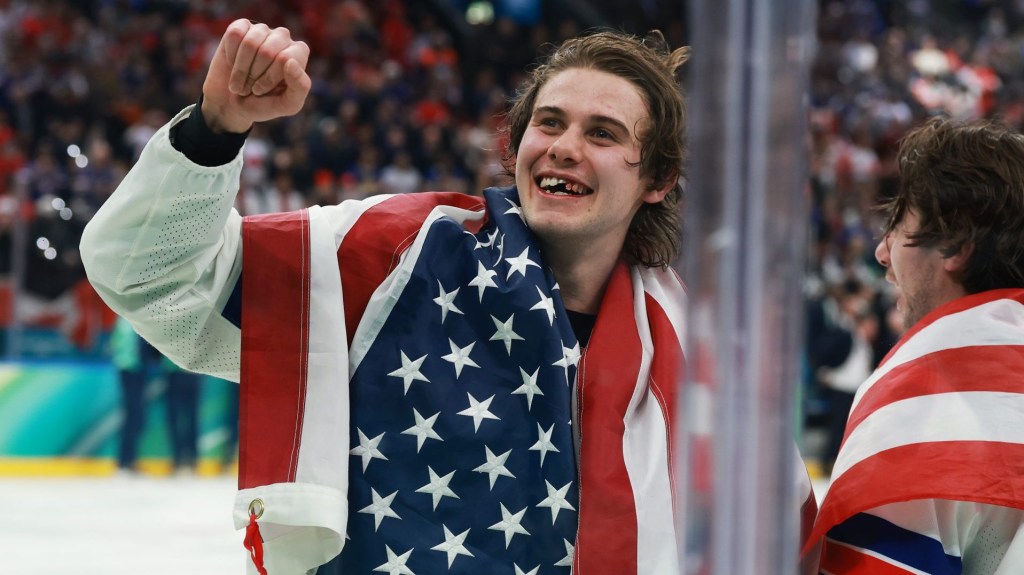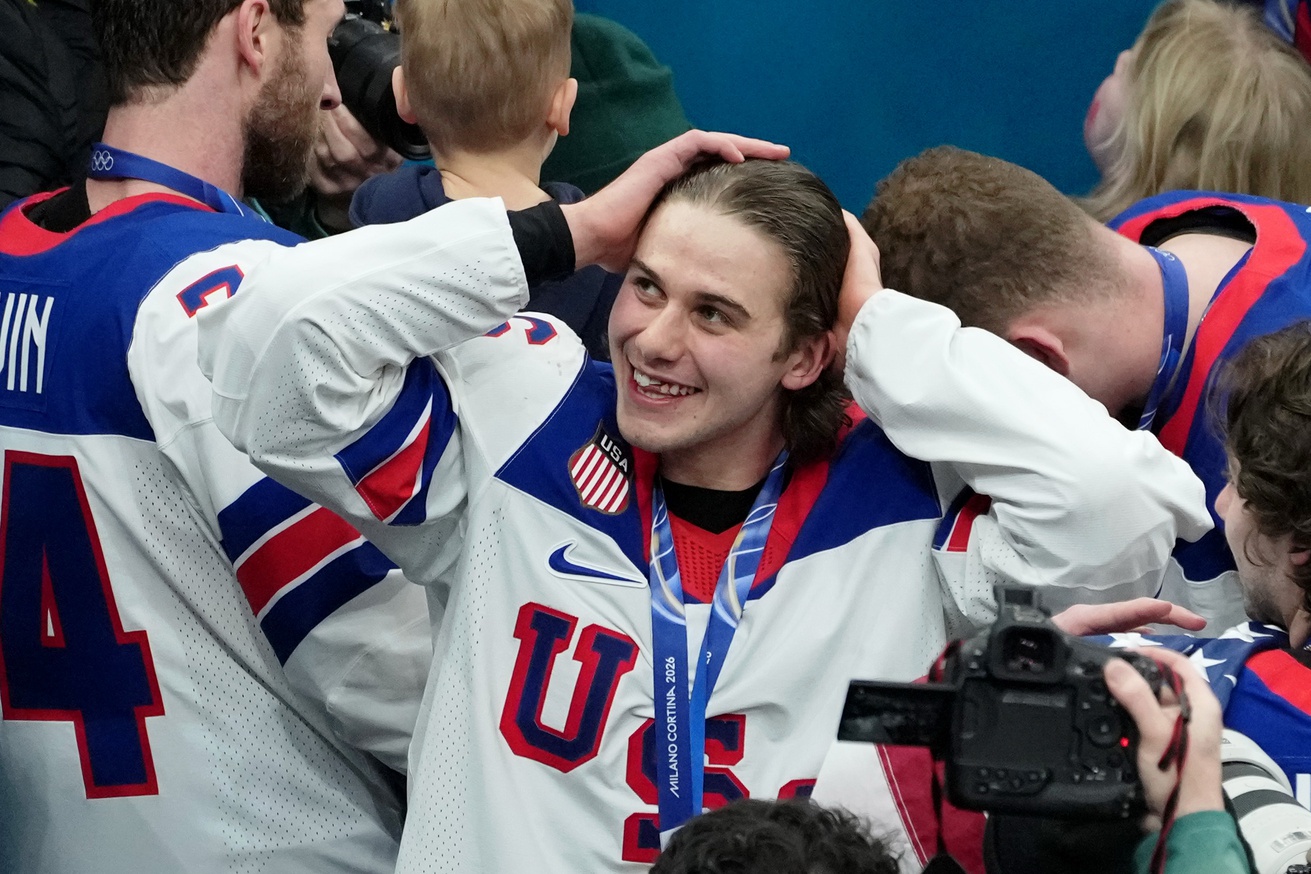
It was the storybook matchup with the storybook ending: the U.S. defeated Canada in the men’s hockey gold-medal game on Sunday.
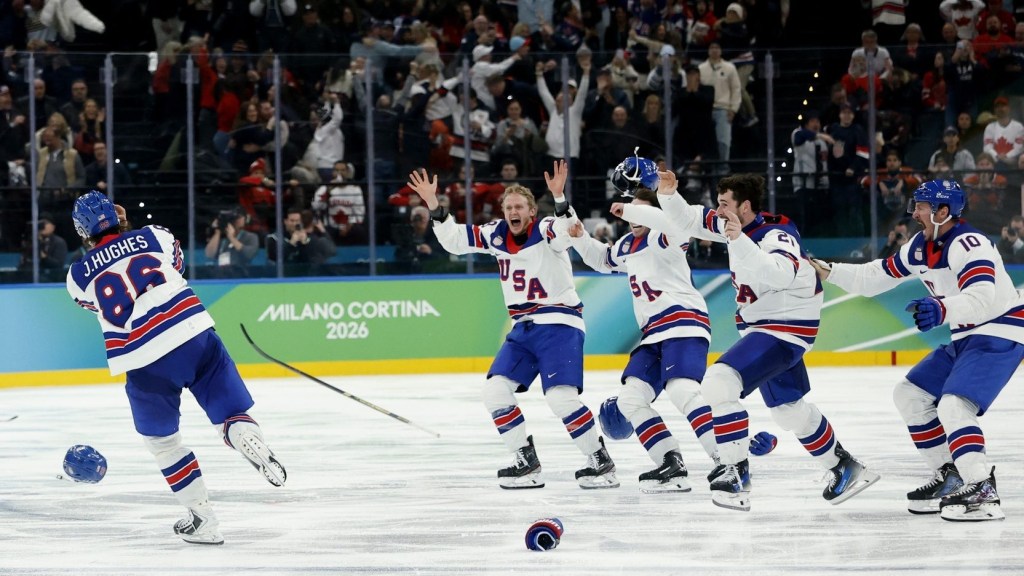
With NHL players returning to the Olympics for the first time since 2014, and on the anniversary of the 1980 Miracle on Ice, the victory came in overtime off the stick of Devils forward Jack Hughes. The win marks the most gold medals the United States has ever won in a single Winter Olympics.
The game delivered everything both fans and NBC could have dreamed of. Scoring opened early in the first period with a goal by the U.S.’s Matt Boldy. Team USA also crucially killed off a 5-on-3 Canadian advantage during the second period. Late in the second, though, Canada’s Cale Makar knotted the game. The teams traded successful third-period penalty kills to send the game to overtime, where Hughes netted the sudden-death winner for a 2–1 victory.
Notably absent was Canada’s captain, Sidney Crosby, who was ruled out hours before the game with an injury sustained in the quarterfinal versus Czechia. In 2010, Crosby scored the golden overtime goal against the U.S. to win Canada the Olympic gold.
The wild final sets up what could be massive ratings returns for NBC on the last day of the Milan Cortina Olympics, which has already had historic viewership in the U.S.
Due to the timing of the closing ceremonies, the puck dropped at 8:10 a.m. ET—an unfavorable time zone for the West Coast, which could put a dent in the final number. Yet many people across social media posted that they woke up early to take in the game, anyway. The broadcast was presented without commercial breaks during play on NBC and Peacock.
NBC is coming off a hugely successful women’s hockey gold-medal game that also featured an ideal U.S.–Canada matchup, where Team USA similarly beat the Canadians in a 2–1 overtime thriller. The Feb. 19 game, which aired midday ET, averaged 5.3 million viewers across USA Network and Peacock, peaking at 7.7 million viewers during the contentious overtime period.
The men’s hockey finale was already set up to be a spectacle. On Saturday, amid a blizzard warning in parts of New York, Gov. Kathy Hochul suspended state liquor laws to allow bars to open early Sunday morning. In Canada, Ontario and Manitoba also allowed establishments to serve alcohol beginning at 6 a.m. ET.
The excitement for the rivalry game also fed off the halo effect of the NHL’s wildly successful 4 Nations Face-Off last February. The tournament, which delivered record ratings for ESPN, also featured a highly contentious U.S.–Canada matchup. The teams split the two games, but Canada took home the gold in another overtime final that became the most-watched NHL game ever in the U.S., averaging 9.3 million viewers.
There has been a dark spot, though. One of the NHL’s concerns over the years about returning its players to the Winter Games was the potential for injury, which has happened in prior Olympic contests. As feared, competition has resulted in some major injuries that will affect players’ remaining pro seasons.
In the preliminaries, Swiss Kings winger Kevin Fiala sustained a leg injury that will keep him out for the rest of L.A.’s campaign; Sweden’s Jonathan Lekkerimäki, who plays in the Canucks system, suffered a season-ending shoulder injury. Jets defenseman Josh Morrissey also did not return to Olympic ice after Canada’s group opener against Czechia. The headliner, though, is Crosby, whose status remains unclear for Pittsburgh going forward.
The good news: Fans will not have to wait another four years for another international best-on-best competition. The NHL and NHLPA’s World Cup of Hockey will return in 2028, setting up a biennial calendar of top global clashes—which could put the U.S. and Canada on yet another collision course.